Here’s a first challenge, for all of us

Sitting, Movement

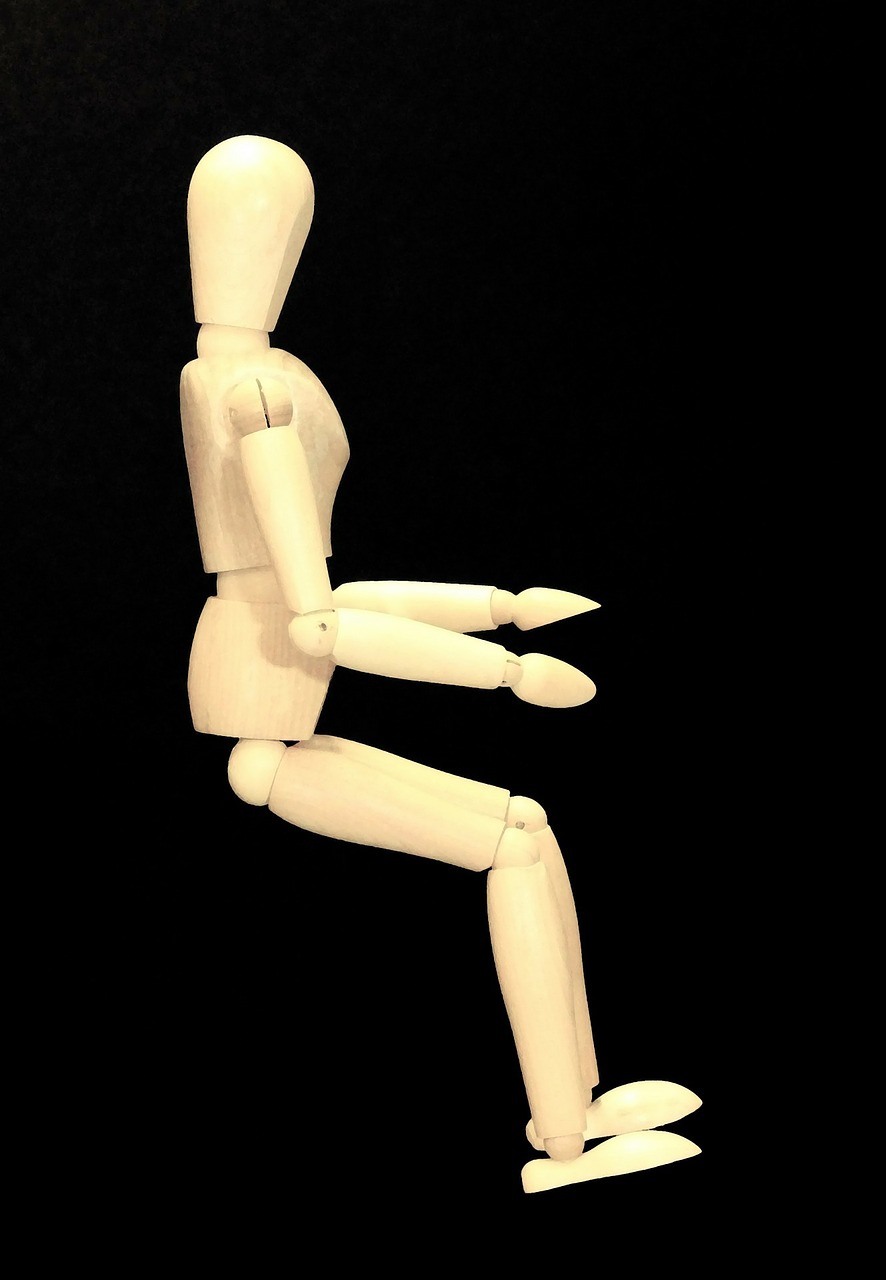
Let’s go from this…

Part of what I am trying to do with my “spare” time is help people become more fit, and ultimately healthy, through No-brainer Fitness and some coaching for Team in Training. (Full disclosure: I have a full-time job unrelated to fitness, am very happily married to a wonderful woman, and travel quite a bit between Montreal and Boston, so “spare” time is what it is.)

But what does it mean, really, to help people become more fit, and how can I hope to achieve that?

Well, one of the mechanisms I have set up is what I call “No-brainer Fitness E”, where the E stands for Everyday.

In a nutshell, it is a service I offer to develop some good habits in terms of exercise, and reduce the bad habits in terms of diet and lifestyle. Among other things.

Today, instead of explaining more about No-brainer Fitness E (feel free to check out the page), let me give you a first challenge, very much along the lines of what subscribers would get (for a ridiculously low price, I might add, and stop the marketing pitch at that):

Daily Exercise Challenge: Pick a moment, other than your usual lunch time, in the middle of your busy day, and go for a 10 minutes walk. Preferably outside, preferably brisk, but the key thing is to move. (With the E service, you would not get to pick the moment, but receive a notification to do it, right now, or postpone by at most x minutes. And the challenge would be different on each day.)

Weekly Diet Challenge: Pick a day, any day of this week, and make sure you eat only food you have prepared yourself from base ingredients. No restaurant, no prepared food bought at grocery stores, etc. (As this requires some planning to have ingredients handy and some food for a lunch, it is a weekly challenge that you get notified of on Sunday so can prepare for it.)

Weekly Habits Challenge: On four of the seven days of this week, set 5 minutes aside to perform a simple meditation exercise, focusing only on your breathing. (Habits challenges are more repetitive, yet should demand very little time. But the benefits are real, well proven, and so the aim is to start forming new positive habits.)
Movement, Exercise, Everyday

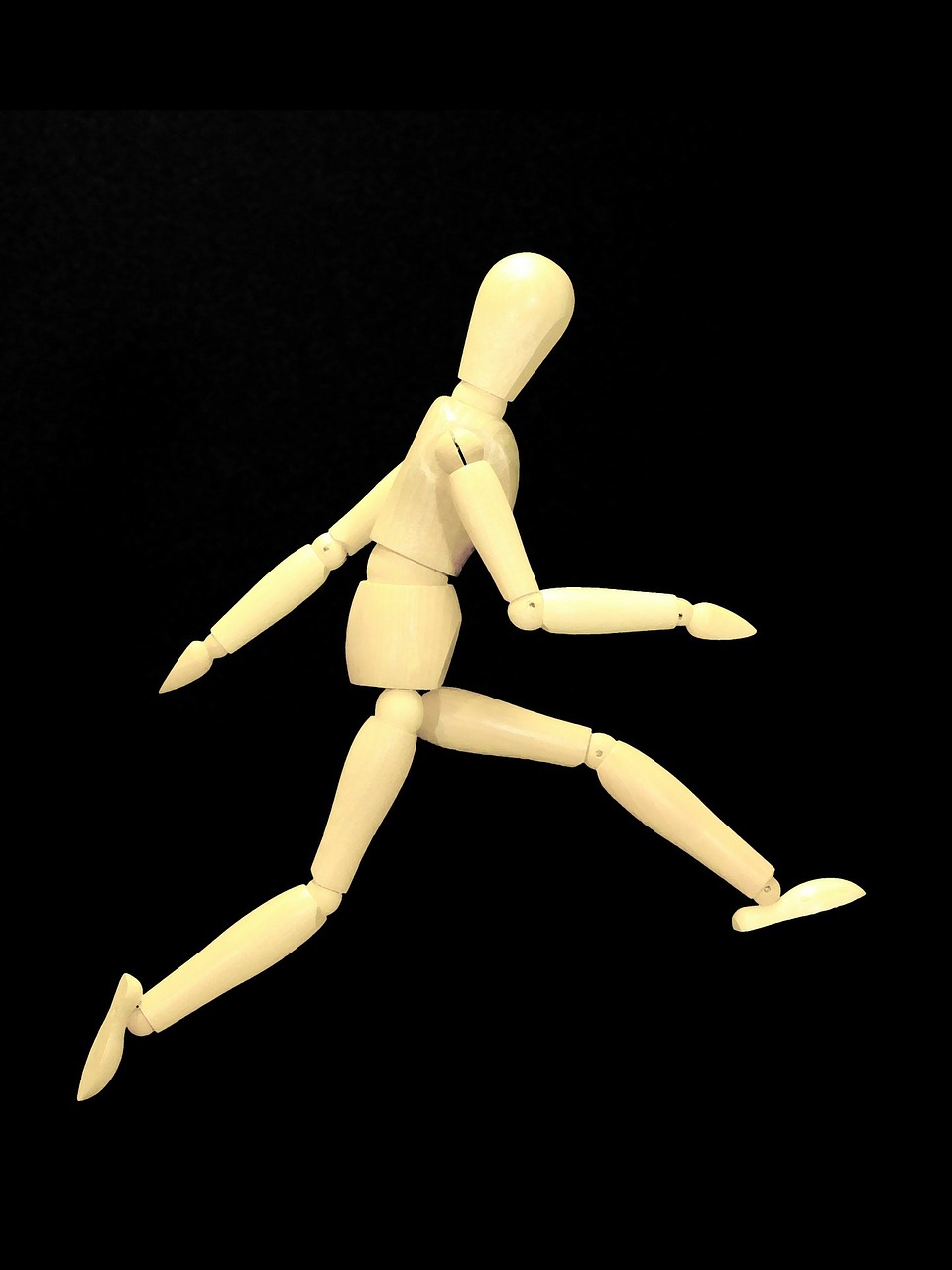
…to this. Just not in a wooden way.

That’s it. Three simple challenges.

Can you do that?

Do you dare challenge yourself?

Do you dare challenge yourself everyday, and turn burgeoning habits into long-term behaviors?

It starts with simple actions, and it’s up to each and everyone of us.

Photos from Pixabay.
The Big Picture

Exercise, Fitness, Everyday

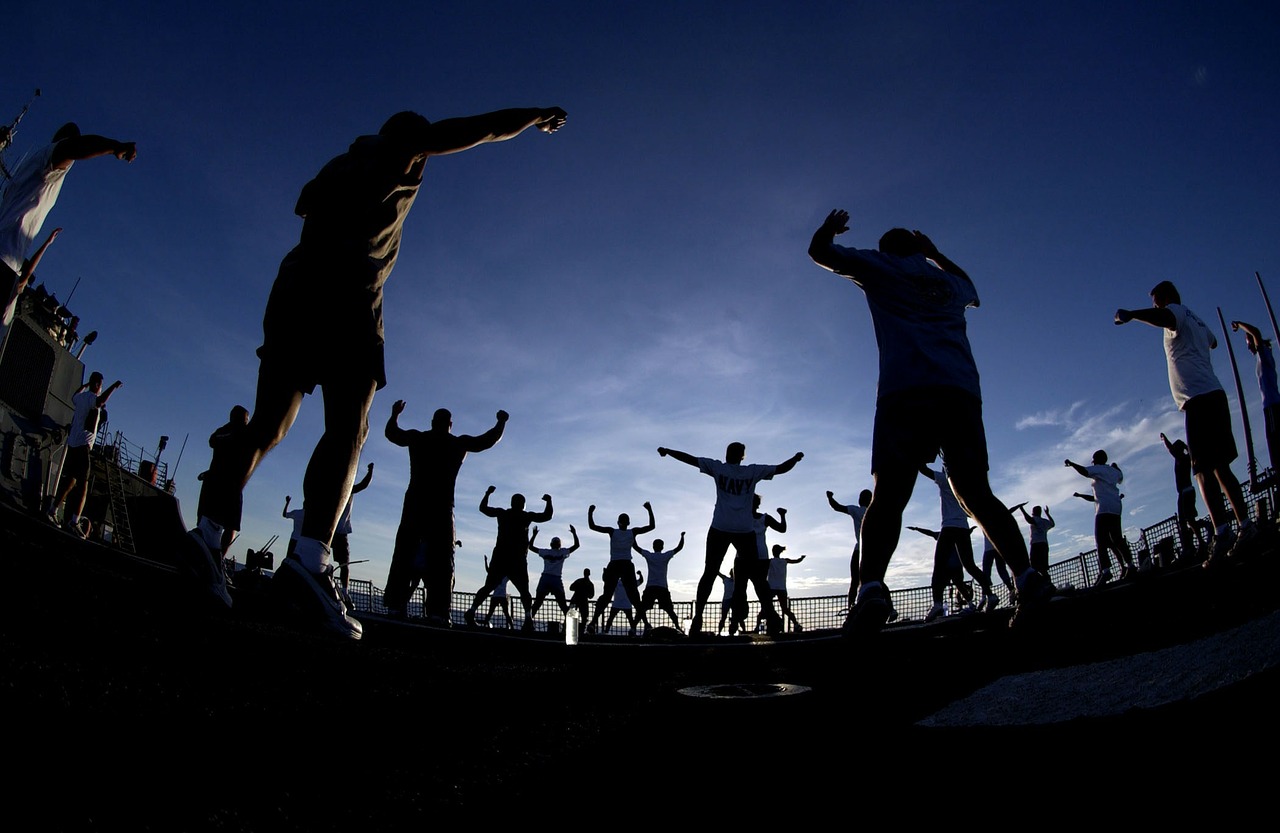
All together now…

So far, I’ve attempted to lay the foundations of what No-brainer Fitness is, and what my approach to fitness looks like.

As hinted at in another post on diet, in order to be healthy, there is a lot more you can (and should) do. But I have yet to provide a more complete recipe, a “big picture” of what I’m talking about.

There’s no time like the present, as they say. So here’s what a complete approach to the way you can maximize your odds of living a long, active life in which you thrive, not just survive:

  • Move, exercise, train, whatever you want to call it, regularly, daily, everyday, in a sustainable, balanced way. Don’t remain seated at any time for extended periods of time. Etc.
  • Eat a diet of real food, not too much of it, avoiding processed products, mostly but not exclusively from plants. Get rid of all NOT FOOD items.
  • Rest sufficiently, also on a daily basis. Yes, that means get enough sleep, no matter how much pressure you feel to do more in a day.
  • Get rid of counter-productive habits, in a health sense: smoking, drugs of all kinds to excess (yes, that means coffee and alcohol, too, though perhaps there we could agree to curb excesses, and enjoy reasonably).
  • Seek ways to better handle the stress of daily life. If you are exercising daily, you are already doing some good, but look also into a little meditation, spending quality time with loved ones, getting “back” to nature, etc. Some would call this looking after your social and spiritual sides. Call it what you want, but don’t neglect it…

There’s nothing revolutionary in there. You’ve probably heard that advice time and time again, from many different sources.

If it is old news, why aren’t we all more healthy, or as healthy as we want to be? Why aren’t we all fit and full of zest?

What we need to do, and it is an everyday thing also for me, is believe in the plan enough to actually do what needs to be done. We need to keep the end goal in sight at all times, and take small but repeated steps in the right direction. And be an example to those around you, without feeling the need to preach what you practice. As they watch you do, others will catch on, I guarantee it.

We have a recipe. The big picture is pretty clear. Over the weeks and months ahead, I will do my best to guide you through the details that make a big difference… (That’s me saying “stay tuned”!)

Photo from Pixabay.

What about the stuff we eat?

Food

Nice, real food. Not too much of it.

So, what about the stuff we eat, what about our diet in relation to fitness, I can almost hear you ask…

Obviously, diet is an important topic, because it is a key element of being healthy. And I have a page devoted to it on No-brainer Fitness, so it must be important!

Fitness, in a natural environment, would stem from the food ingested and the activities to procure that food… But that’s no longer the case for us. We have in large part decoupled the two, and therein lies the complexity at times. After all, if we were still all eating what we have to hunt, gather, harvest, or scavenge on a daily basis, this would be a very short blog post.

I have so far stayed away from the topic of diet, in the general sense of “what we eat”, for two main reasons:

  1. I am not an expert on nutrition. I know what I like to eat, and I pay attention to what I eat, but I am largely like most people: I still struggle to figure-out what’s “best”, and I still like to indulge from time to time. (Yes, I’m a chocolate fiend, and I love ice cream…)
  2. Although very important to health, nutrition really comes second to exercise. Granted, without food, we can’t live, end of story. However, given some food, our bodies are extremely resilient; we can make do with very little quality of food. Provided we move enough, we can handle a “much less than optimal” diet for a pretty long time.

The single best thing you can do to improve your health prospects is move more. But don’t get me wrong: Of course, it is better if you also pay attention to what you eat. But the reverse, only paying attention to what you eat and moving too little does not have the same long-term effect. That is in large part why weight-loss regimens never work by themselves.

Nutrition is indeed a complex topic, so I prefer to rely on the advice of true experts in this field, and focus on getting more fit through exercise. I invite you to do the same.

Which is not the same as saying I won’t provide advice on the subject. I will, you can count on that. Simple advice. Safe advice. No-brainer advice, you might say. The rest will be up to you.

For instance: One simple change you can make right now, this very instant, to lasting benefits for your health: never, ever, drink sodas (pop, soft drinks, etc.), no matter how tempted on a warm day, no matter if “unsweetened” or “0 calories”. Soft drinks are NOT FOOD, and should be treated as such.

Food is something that comes from nature, as directly as possible. NOT FOOD is something that you could not possibly find in nature, or easily make from stuff you find in nature. (You can bet this topic will come back time and again…)

Down from the soap box, on which I can be found from time to time. Where does that leave us? Ah, yes, experts.

Here is one I have a lot of respect for:  Dr. David Katz. He gives solid, unbiased advice, and spends a lot of his energy fighting the good fight against bad nutrition, and bad nutrition advice. For instance, his What’s wrong with us? post is an excellent review of nutrition and our modern industrial food processing complex. I highly recommend his blog.

When it comes to nutrition and diet, the best advice I can give you is to be careful of the advice you receive. There is no magical ingredient that burns fat, no optimal combination to prevent disease, no silver bullet to a long, healthy life.

There is perhaps only one other bit of advice, not originating from me (it’s from Michael Pollan), that you should consider:

Eat food, not too much, mostly from plants.

Photo from Pixabay.

Slow, smooth, steady… healthy!

Slow is smooth...

Slow is smooth…

There is a saying in swimming: Slow is smooth, smooth is fast.

Simply put, you are better off having a slow, technically sound rhythm, which makes for smooth motion in water, rather than rushing through your movements (and splashing about a lot more, which is NOT smooth), because ultimately smooth movement through water will make you go fast.

This saying applies to life in general. Better to act in a “slow” (read: planned, thoughtful, methodical, mindful) way, which will cause you to do whatever you do smoothly, and ultimately to complete projects and tasks faster than if you rush through and must correct mistakes and re-do the work over and over again.

And, of course, it applies to fitness and health as well. (Otherwise, I would not be writing this post.) Though, to bring the point home, I might re-phrase it thus:

Fitness is daily, daily is healthy.

Basically, putting yourself through grueling workouts 3 or 4 times (or more?!) per week, thereby risking injury and burning-out, can be counter-productive. Especially if the rest of the time you minimize your activities, sitting on your chair at work, on your couch at home, and in your car in-between.

Don’t get me wrong: working out hard can be a lot of fun. And it can serve the purpose of preparing your body for big events like running a 10k, doing a triathlon, etc., which are extra-ordinary demands to put on your body. And working out hard can be a great feel-good moment in your week. But if it is unsustainable, it becomes like yo-yo dieting, and that’s not healthy for your body.

The key to fitness that leads to long-term health, ultimately, is to have good, steady habits on a daily basis. It is everyday fitness that will protect you from having to re-start a training program over and over again because each time you do it becomes overwhelming, or you end up hurting yourself.

So be slow, be smooth, be steady in your activities. Be an everyday athlete. And increase your odds of being healthy for a good, long time.

...smooth is fast.

…smooth is fast.


Photos from Pixabay.

A neat idea for moving more

Wanna know how to get moving more without breaking the bank, and without breaking (much of) a sweat?

Over the course of writing this blog, I’ll provide as many ideas as I can. Much of it will not be news to you. But some ideas, I hope, will be practical enough, and you will adopt them.

This first one did not originate from me. My wife told me this is what they do at the hospital where she works. I think it is a fantastic idea for getting yourself moving more, and getting more people around you to do the same.

Here it is:

In a stairwell between two of the main levels in a Boston hospital (not to be too specific), there are sign-up sheets for the “stairwell club”. Basically, when you enter the stairwell, you sign your name, and when you get to the other level, you sign on the other sheet there.

That way, anyone can become part of the “club”: all it takes for someone to go up (or down, of course) at least once. Presumably, the more you do it, the more you name is going to be on the sheets, and the more it might get noticed…

Now, I’m a big fan of stairs. Scratch that: I’m a HUGE fan of stairs. I use them as much as I can, everywhere. It frustrates me when I get some place and I can’t find, or use, the stairwells (not to mention it is a security issue, so it is always good to know where they are). I’ll talk about stairs repeatedly on this blog.

It is THE perfect exercise you can do without actually doing “exercise”. It works your biggest muscle groups (glutes, quads, hamstrings) and is pretty good cardio if you do enough of them in a row. But even if you do just a little at a time, not enough to break a sweat, you still get benefits. To top it all off, it works almost as well whether you are going up, or down.

So if you are willing to start doing stairs and are really out of shape, you can start by going down. Resistive work (using the muscle strength against the direction of movement, precisely like going down a stair) is actually better for muscle tone and strength, while the overall demand is less due to the gravity assist. You cannot lose by doing stairs that way.

What’s really neat about this idea of a “stairwell club” is that you don’t need to gather people and organize it: it will organize itself. Just prepare the sign-up sheets and post them. Don’t ask for permission. Don’t worry if the sign-up sheets get taken down by the cleaning staff: just put up new ones. And then watch what happens.

Who knows, you might get to meet like-minded folks in your building. You might get some help with the club, or spark a bit of friendly competition to see whose name is most visible on the sheets…

The way I see it, for fitness, stairs have no downside!

stairs-182016_1280

Photo from Pixabay.