Dieting Does Not Work

Dieting does not work

Trying to lose weight? Stay away from the D verb…

It’s been a long time coming, and for that I must apologize. I was on a sort of “vacation” from No-brainer Fitness. Sort of.

Not an excuse, just the reality of starting a new job and upping my own training for my next Ironman(TM) (IM Louisville, on August 24th, in case you are curious).

And I took the opportunity to do quite a bit of reading, for this post, future posts, and just to relax…

So here it is, the post I’ve been planning for quite some time.

First, let’s be clear about what I mean, and what researchers in this area mean, when we talk about “dieting”.

A “diet” is, as I’ve indicated elsewhere in this blog and on No-brainer Fitness: D, what we eat. The word, a noun, in itself has no implied value of the quality of said diet; it simply is the correct term to describe the overall nutritional intake.

In contrast, when we use the verb “dieting”, or when we say “go on a diet”, we mean following a specifically designed diet that is providing a lower total quantity of calories than is generally required for sustaining normal activities. In effect, dieting is restricting the caloric content of your nutritional intake through a particular set of constraints as to which foods are eaten, or which quantity of food is eaten. Or both.

So it is fair to say things like “that’s not part of my diet” when talking about certain foods, or NOT FOOD items. But careful with anyone saying “I don’t eat that because I’m on a diet.” That spells trouble.
Dieting does not work

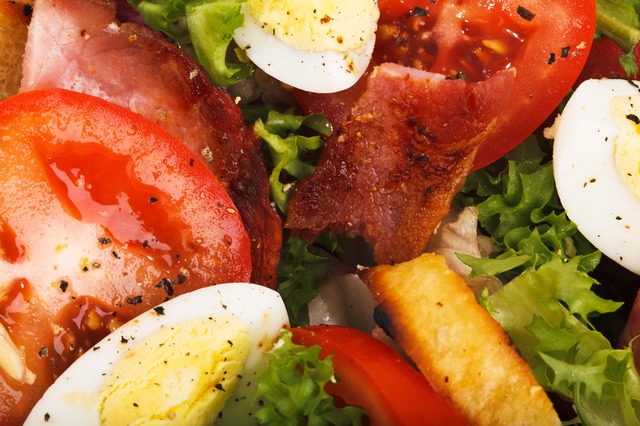
Eat well, not too much…

Why?

Because dieting does not work.

You don’t believe me? Perhaps you’d take someone else’s word on it:

“The typical outcome of dieting is that you will gain weight.” -Sandra Aamodt, in a TED Talk

Ah, yes, but that’s hardly better, since you don’t know who she is, and even though she has done way more research on the subject than I have, that’s still no guarantee.

Ok, so perhaps a comprehensive review by researchers on behalf of Medicare? That’s exactly the conclusion reached back in 2007 by researchers at the University of California. The title of the paper would be enough, but it would make for a very short post: “Medicare’s Search for Effective Obesity Treatments – Diets Are Not The Answer”.

The main conclusion is that, while some weight loss occurs in the short term, if you follow the dieters for a while after, and it does not even need to be very long, you’ll find that dieting alone will lead to weight being gained back. And often some more.

This is why programs designed to cause weight loss based only, or in large part, on food intake changes are misguided at best, bad for your health at worst.
Dieting does not work

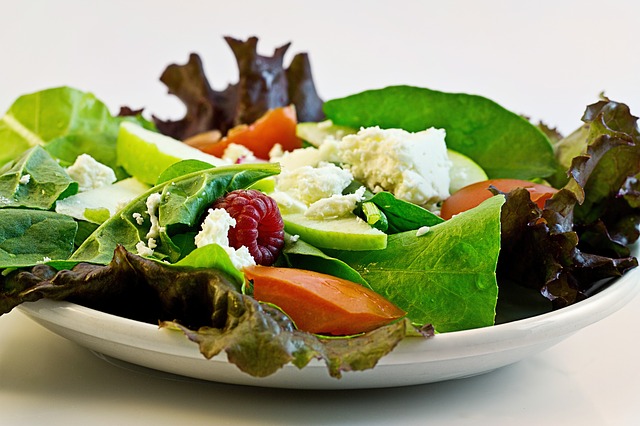
… mostly plants. And don’t forget to move more!


Still not convinced? Here are some cherry-picked quotations from the Traci Mann et al. paper:

“As noted in one review, ‘It is only the rate of weight regain, not the fact of weight regain, that appears open to debate’ (Garner & Wooley, 1991, p 740).” Traci Mann et al., 2007, p. 221.

“There is some evidence for the effectiveness of diets in leading to other beneficial health outcomes, particularly in helping people stay off antihypertensive drugs and preventing diabetes, but this evidence is not consistent across the studies. In addition, it is not possible to detect whether the diet components of these interventions were potent, as the interventions all contained other components that may have reduced hypertension or prevented diabetes (e.g. increases in physical activity, reduction in smoking, alcohol use, and sodium).” Traci Mann et al., 2007, p. 224.

Speaking of the effect of exercise, because although not the focus of the research, it was mentioned, here’s a good one about one of the very few studies they came across that indicated a weight loss:

“These results may not directly be due to the diet part of the intervention, but in fact participants in the lifestyle intervention engaged in large amounts of physical activity (averaging 227 minutes per week), and this may be the potent factor.” Traci Mann et al., 2007, p. 222.

A final one, “for the road”:

“In sum, the potential benefits of dieting on long-term weight outcomes are minimal, the potential benefits of dieting on long-term health outcomes are not clearly or consistently demonstrated, and the potential harms of weight cycling, although not definitely demonstrated, are a clear source of concern. The benefits of dieting are simply too small and the potential harms of dieting are too large for it to be recommended as a safe and effective treatment for obesity.”

Don’t, not even for a moment, entertain the thought that, because it is no good for fighting obesity, it may be any better for “just losing a little weight.” The evidence is in, and anyone who tells you dieting works is trying to sell you something.

It appears clear, from this and other sources, that the solution on the food side of things is not to restrict calories and disallow some foods, or focus food intake on some nutrients or particular foods, but rather to promote a more healthy balance of whole foods in a quantity that is sufficient to sustain daily activities. It is a simple recipe: Eat food, not too much, mostly from plants.

As to weight loss, if it is a desired outcome, it must come from increasing the level of activity. There is simply no other sustainable, or healthy, way of achieving that.

So: Eat well, and move a lot.

References:

Traci Mann et al., Medicare’s Search for Effective Obesity Treatment – Diets Are Not The Answer, American Psychologist, April 2007, Vol. 62, No. 3, 220-233.

Here’s a link to Sandra Aamodt’s TED talk

Pictures from Pixabay.

The best moment of the day to exercise

Movement, Daily, Morning

Seize the day!

We all should be moving all the time, be true Everyday Athletes. But let’s face it, most of us have jobs that tie us down to a desk for large chunks of the day.

So the question can be raised: When, on any given day, should we exercise in order to fit it all in?

The answer, of course, is: first thing in the morning.

There you go, question answered. Shortest blog post ever!

Ok, maybe not.

Leaving aside the facile answer (which, for many reasons, remains probably the right answer for many), let’s have a look at the pros and cons of various moments of the day.

Assume for the sake of this discussion, that you are doing “some” exercise only. It could be the basic program of No-brainer Fitness: E, or some other light to moderate training regimen…

The Morning: Seize the Day!

The main positive aspects of exercising first thing in the morning is that you can make sure that it gets done. Especially if it is a short routine that only takes a few minutes, there’s no time like the present to get it done!

You are also mentally most energetic at this time of day; your stores of willpower and decision-making energy are full from a good night’s rest, so there is less chance you will give up in the middle of your routine.

However, be careful of eating a little something (unless you are purposefully training “on empty”) because you might not feel enough physical energy.

The main drawbacks to exercising in the morning come from family life and logistics in general. If you have kids, it is often hard to get everything prepared and the kids ready and fit some exercise in the morning. Also, having to get everything or everyone else ready then head over to a gym or pool, and then get ready yourself for work, is a major hassle.

It may be difficult to get the kind of class or training session you seek at a time and location that is practical for you in the morning. So perhaps mornings are not best for you.

However, for short exercise routines that don’t need to be done at a gym or pool, and especially with a good partner to share the load, the morning time remains ideal for exercise.

Also, a lot of the morning pressure can be lifted by getting up earlier, for instance well before the kids, and doing your exercise then. This can become your personal time. But make sure to get to bed earlier as well (getting to bed too late is a major problem in modern life, about which it is high time I write something on this blog…).

Lunch Time or Mid-Day: Re-energize!

The main positive aspect of exercising in the middle of the day is that it provides a very good break from work, and can even replenish your energy levels for the rest of the day.

It is certainly always a good change of pace, if you can swing it.

Unfortunately, most people’s lunch time is often too short to be of much use, especially considering the need to go somewhere, get changed, exercise, get changed again, go back, and still find time to eat something.

If you can just zip out for a run or a brisk walk, that’s great. And there might be some short fitness classes offered near your work. Much of anything else is sure to be a logistical challenge.

Our modern schedules are bad. We really should be able to take the time we need during the day to stay fit. Our productivity would soar! But until that’s the case, exercising in the middle of the day won’t be ideal.

Evening: Make or Break Time!

Everybody’s favourite time of day; freed from work, time for ourselves… and family/household obligations.

The evening provides far more flexibility for exercising, and there are plenty of activities to choose from. It would seem ideal at first, but there are major drawbacks.

By this point, even if you’ve psyched yourself all day, you are at your most tired mentally. And at the greatest risk of simply skipping the workout.

Also, there are equally many things to juggle at night: cooking, homework, dishes, catching up on your partner’s day, etc. Making time for exercise is even more an issue in the evening as it may seem to be in the morning. And without clear deadlines (school or daycare time, being at work, etc.) the temptation to take it easy so as to stress less often leads to overruns and something having to drop. Care to guess what is most likely to get dropped?

If you are still keen and decide to exercise “later”, say as last thing in the evening, then you face the worst possible scenario: needing another meal, and not being able to fall asleep for quite some time. Indeed, the boost to your hormonal levels and wakefulness due to exercise, and the need to refuel, will push your bedtime to the point of making getting up the next day a Herculean task.

Some light routine, a bit of strength work and relaxing stretches, or making sure your training is before dinner time, can work just fine.

So there you have it, more fully.

When’s the best moment to exercise? Whenever it works best for you.

But if you are thinking about starting a new routine, consider making it a morning one, and making sure you get that sense of accomplishment first thing in the morning, to give a positive outlook on your entire day…

(And this turned out to be one of my longest posts. But it could have been the shortest.)

Photo by Pixabay.

A Primer on No-brainer Fitness: E

Movement, Daily

Time to get moving!

In case you were wondering about it, or are generally interested in moving more, this is a kind of “Origin Story” for No-brainer Fitness: E (a.k.a. Everyday).

As the E page indicates, No-brainer Fitness: E is a kind of service to help you put more movement, more exercise, and better food (and less NOT FOOD) into your daily life.

It is not like signing up for a gym membership, a fitness cult, er, I mean class, or turning up at exercise bootcamps multiple times per week. It is a highly individual commitment to doing the simplest thing (though not necessarily the easiest) of moving more, by making it a habit.

As such, it is something all of us can benefit from, no matter what your current level of activity might be.

Some perspective

What is the idea behind this daily service?

It came through the realization that, while I enjoy racing triathlons and marathons, true fitness is something that should happen on a daily basis.

Towards the end of an Ironman(TM) race a few years back, I realized the silliness of what we (some 2,700 of us that day in Lake Placid) were doing.

More to the point, I realized how, while a great deal of fun and very demanding, our accomplishment of completing a long course triathlon would have seemed much less to our great-grandparents. Particularly those used to 12+ hour days of tilling fields, cutting down trees, harvesting, and performing a wide range of physical activities on a daily basis.

Going back even further, our hunter-gatherer ancestors had to keep moving to find their food, run to hunt (not to mention avoid being eaten themselves), and generally carried everything they owned on them without the benefit of cars (or modern backpacks, for that matter).

This is not to put on a pedestal that way of living of days gone by. It is simply a realization that nowadays we take great pride in being able to do certain things that, while challenging, would not have seemed so outlandish to our ancestors. (Except perhaps in the gear needed, and choice of venues.)

Let’s face it, modern life is a lot more pleasant. But in becoming “modern”, we’ve lost a key aspect of our animal nature: quasi-constant movement. We’ve also lost perspective on what it takes for us to be healthy: quasi-constant movement, and real food.

Back to now

In an effort to regain some of that perspective, there is a growing movement to be more active, and it leads a lot of people to endurance sports and “fitness training”. And to a large extent, to obsession about getting fit.

But it is often with the wrong focus: to look a certain way, to perform at a certain level, to lose weight…

What we should be focusing on is movement on a daily basis. What we should obsess about is doing some on a daily basis, never staying put for too long at a stretch. What we should remind ourselves is that skipping one workout is not the end of the world, as long as we keep on moving regularly.

The rest will follow, in time.

That’s why Everyday No-brainer Fitness is a service designed to provide advice and reminders to keep moving on a daily basis.

It is what brings it all together: the exercise, the diet, the lifestyle. The E stands for “everyday”, but it could just as well stand for “everything”.  And now it also stands for “explained”.

All it takes is a desire to get started, and a friendly helper to guide you along…

I’m not saying it is easy, but it is simple. It is definitely a no-brainer. And the beauty of it is that you can get some help to get you started, and keep you going.

So that’s it.

If this sounds interesting, if you are ready to sign-up or need some more information, turn to No-brainer Fitness: E, and fill the form at the bottom.


Photo from Pixabay.

From the Library of No-brainer Fitness

Books, Exercise, Diet, Willpower, Happiness, Paleo

So many books, so little time…

A really short post, for a change. You probably did not think it possible coming from me, yet here it is.

Here are books I’ve recently read, or am currently reading, and that I highly recommend. Perfect for a rainy Sunday afternoon…

The Paleo Diet for Athletes: The ancient nutritional formula for peak athletic performance. By Loren Cordain, Ph.D., and Joe Friel, M.S. Not exactly a day-to-day guide to nutrition since I don’t subscribe to everything that is “paleo”, but certainly an inspiration for reducing carbs and eliminating processed foods and NOT FOOD (a work in progress). I particularly like the pragmatic approach to eating paleo when doing endurance sports, which is of course not a strict paleo diet.

The Willpower Instinct: How self-control works, why it matters, and what you can do to get more of it. By Kelly McGonigal, Ph.D. This book is structured like the lecture series she gives at Stanford University, and contains exercises to be done week after week, so it takes a while to get through it in order to really benefit from the material. But it is worth the effort. One of the key elements for having more willpower is to be fit (exercise, sleep well, etc.), and of course some willpower is useful to keep us moving everyday. So it is a positive feedback loop.

Spark: The revolutionary new science of exercise and the brain. By John J. Ratey, MD. I just started this, after first encountering him in a FranklinCovey lecture and then listening to his TED talk, so too early to give a review, but very promising.

Eating on the Wild Side: The missing link to optimum health. By Jo Robinson. This is from an investigative journalist in the field of food (agriculture, nutrition, “field”, get it?). What’s really interesting is the discussion about changes some 10,000 years of human selection and hybridization of plants have made to what we put in our digestive systems. Basically, a truly paleo diet is impossible nowadays, because the food that existed then no longer exists. Case closed. A quick read, and quite enlightening, and many interesting tips that can be consumed over time.

The Happiness Advantage: The seven principles of positive psychology that fuel success and performance at work. By Shawn Achor. A bit of a personal thing, but highlighting how important it is to have a balanced life, to exercise, eat, and sleep well. Let’s face it: it is all inter-related.

All of the above are easy to find in either paper or electronic versions.

Next on my list is to read Dr. David L. Katz’s book on nutrition and health; once I’ve done that, I’ll likely spend much more time talking about it.

Good reading!

Photo from Pixabay.

Discipline, Motivation, and Purpose

How are we to be everyday athletes, to move and exercise regularly, and eat well?

If you think it is all a matter of discipline, you are not alone. If you think it is about motivation, you are in good company. And, like most people, you are wrong in either case.

There is a lot of confusion about discipline and motivation. And little is usually said about purpose. For a long time, I was not clear on those concepts either. People would tell me I must have a lot of self-discipline, and in fact I possess a good amount, but it was not what would get me up in the morning to train. I was simply very motivated. And like all things that come from motivation, eventually it died down, and I was left empty.

Until I found my purpose.

It all makes sense now, because a good friend recently explained it to me. So I’ll try to explain it as I understand it; maybe it will make sense to you as well.

Imagine you are working out and feeling the urge of going harder or longer than the plan called for, just because it feels so good. Discipline is stopping yourself from going off the plan. Discipline is necessary to make sure we do what we are supposed to do, no more, no less, and thus avoid undermining our health and future training sessions. Discipline is what keeps you from turning an easy session with a friend into a race against your friend. Poor discipline combined with high motivation is a recipe for burnouts and injury.

If you use discipline as the way to get yourself to exercise, to keep yourself going, then you are in an authoritarian regime where the stick is all you know. It is a harsh way of doing things, and not healthy in the long run because it lacks the balance that comes from other aspects of life, like listening to your body, and just letting go at times.

Motivation is related to our very natural tendency to want, the reward center of our brains. It is what gets you to sign up for a fun cardio-zumba-yoga-boxing class, to join a gym with cool instructors and funky new ways of working out, or to launch yourself passionately into a new sport. It is at times what keeps you going when going through a rough patch, like a divorce; it is the desire to make a change in your life. It is pleasure; a shiny carrot, in comparison to discipline’s stick.

But motivation is fleeting; wanting is the true constant. The fun new class eventually becomes just one more thing on your busy schedule, before being dropped altogether. It is why once you’ve overcome the rough patch, or been around the block of the new sport a little, it loses its appeal, and motivation is gone. Motivation leads to lack of motivation, and it is only natural, because we tend to want the next shiny new carrot…

Purpose, then, is what drives you. It is effortless, because it comes from within; neither a stick nor a carrot; it is simply who you are. The problem is that we seldom know what our purpose truly is, in life in general, but particularly when it comes to fitness.

How do you find your purpose in a sense that will guide you to fitness? You must first ask yourself, frankly, honestly, how you want your life to be in the long term. We could spend a lot of time figuring it out, and some day we might, but for now I can offer some tricks to make it take shape.

Exercise, Everyday, Movement

Living a long, active, and healthy life.

To some, it may be the realization of wanting to live a long, healthy life with a partner. Perhaps the vision of growing old and active with kids and grand-kids around. To others, it may truly be to become cardio-zumba-yoga-boxing champion, when it is finally included in the Olympics.

It may be tempting to define it in terms of what you don’t want your life to become (overweight, sick, dependent on others, etc.) but it is far more powerful to envision your purpose in positive terms, whatever you choose it to be. Fear can kick-start better habits, but it is purpose that will keep you going.

Beware of framing something too short-term, even if it is a major life event like doing an Ironman, or crossing the US on your bike. Such goals might do you for a spell, but once realized, the motivation (because that’s really what they are) will fade. Aim for how you want your life to be, not just for the things you want to do.

Imagine your life’s end-goal, voiced and pictured in enough details that it becomes part of you. And once you’ve done that, once you’ve found your purpose, and you can remind yourself of it easily, the daily decisions are easy. Being active and making the right choices becomes a no-brainer.

Through your purpose in fitness, whatever it turns out to be, you can keep yourself doing the right thing forever. Well, for a really long time.

Just keep a dash of discipline handy, to avoid doing too much at times…

Purpose

Your purpose is what will get you to fitness.

Photos from Pixabay.