Another Simple Idea

Movement, Meetings, Everyday

Need to meet? Step right out of your office…

I recently came across a very interesting segment of Quirks & Quarks, the science radio show of the Canadian Broadcasting Corporation.

It was about sitting for long periods of time, and how bad it is for our health. (The segment is from the March 22nd, 2014, show.)

Basically, if you spend lots of time sitting, you are putting the wrong kind of load on your bones, and causing a major slowdown of your metabolism. Even if you exercise regularly, which is better than being a total couch potato, sitting for long periods of time is detrimental to your health.

The only way to compensate is to move regularly. As in every few minutes.

So it reminded me of a tip for moving more that I had been meaning to write about. So here it is.

You’ve probably heard it before, but like most of us you’ve not done it yet. Now’s the time to try it. Take it as a challenge for the coming week.

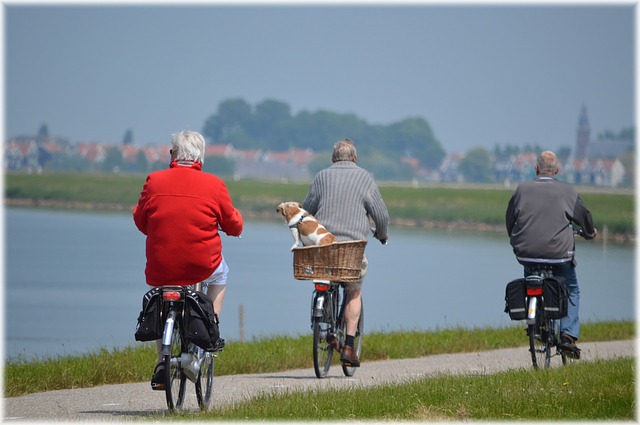
It’s quite simple: Have a walking meeting.

It doesn’t matter if it is a business meeting, or a personal conversation; instead of sitting in an office, or a conference room, or at a restaurant, or on your couch at home, get up and go for a walk.

This is obviously easier to manage with one-on-one meetings, but it works really well. It adds a dynamic aspect to the discussion.

More importantly, it gets you, and your meeting partner, moving, instead of sitting.

Just don’t spring it on the person at the last minute. It is better to plan for it a little.

If you are a runner, and you know the person you are to meet with runs, you could even make it a running meeting. But that brings about possible complications that are better left for another post.

Walk first, run later…

Try it. Once. This week.

Then make it a new habit…

Photo from Pixabay.

In Praise of Coffee

NOT FOOD, Diet, Everyday

Coffee, can’t live without, or can we?

This post could also be called “Almost an Apology for Including Coffee in the List of NOT FOOD”.

A recent post, by which I fully stand, brought me some comments from people very close to me. (Ok, my wife and I had a conversation about it.)

You see, we both love coffee. As I’m sure many of you do.

Yet I went and put coffee on the list of NOT FOOD! Sacrilege!

Well, not quite.

Let’s be honest with ourselves: Coffee is NOT FOOD; it is a drug, albeit a mild one, but a drug nevertheless.

Most of us consume said drug not because we particularly enjoy the taste, but because we believe we need it for going about our daily activities. Or simply as a habit. Much of the blame for that falls squarely on our tendency to get too little sleep (more on sleep hygiene in a later post) and some on “just doing like everyone else”.

It is my contention that given a good regimen of everyday exercise, good sleep, and proper diet, the industry that has been built around coffee would collapse.

Or maybe not. Some people really like coffee. I’m one of those. The bitterer the better. So I drink my espresso black, and I have 2-3 short ones per day, or a short one and an “allongé”.  Almost always before noon.

And I can go days without having any. In fact, I was completely off coffee for many years, at one point in my life. (No, I don’t mean when I was a child, about which I have a funny story, for some other time.)

Coffee is likely here to stay. And that’s OK. As long as we are clear that it is NOT FOOD.

Therefore, when drinking your coffee, beware of the following:

  • It should not be a reflex action. Make it a conscious decision, and be fully aware of what that choice means. For instance, if you don’t like it black, be aware of how much sugar and/or milk/cream/other stuff is in there. Your coffee can all too rapidly become a calorie bomb, and in so doing negate any hoped-for gain in wakefulness by causing an insulin peak and an energy drop later. Then you get trapped in “needing” another coffee to “help” when in fact it is causing more harm. Not to mention the long-term effect of so many calories on your body.
  • A coffee should not automatically be accompanied of something sweet. Forget the doughnut (donut), cookie, chocolate, or whatever you may absent-mindedly just consume with your coffee. Not only is that likely also NOT FOOD, but it probably packs a punch of calories you don’t really need.
  • Coffee should definitely not be consumed regularly in the evening, or even afternoon. While many claim that it has no incidence on their ability to fall asleep, it may have a negative effect on the quality of that sleep. From sleeping badly, to waking up and not being able to fall back asleep. Then, having not slept enough during the night, the cycle of drinking coffee resumes in earnest in the morning.

But it is not all doom and gloom: You are probably not among those I describe in this post. I’m sure you manage your coffee intake well, and that you are aware that it is NOT FOOD. That’s key: knowing this, you can deal with it, and consciously decide to have some, once in a while. Or regularly. But on your terms.

Just in case, try this little trick: When you see a coffee, impose on the image a label that says “NOT FOOD”. That should trigger the correct reaction in your mind.

Then enjoy some, black, no sweets on the side. Or perhaps not black, and some sugar to “kill” the bitterness, but then only a small coffee, and something truly nutritious to dampen the sugar rush.

I know I will.

Photo from Pixabay.

Discipline, Motivation, and Purpose

How are we to be everyday athletes, to move and exercise regularly, and eat well?

If you think it is all a matter of discipline, you are not alone. If you think it is about motivation, you are in good company. And, like most people, you are wrong in either case.

There is a lot of confusion about discipline and motivation. And little is usually said about purpose. For a long time, I was not clear on those concepts either. People would tell me I must have a lot of self-discipline, and in fact I possess a good amount, but it was not what would get me up in the morning to train. I was simply very motivated. And like all things that come from motivation, eventually it died down, and I was left empty.

Until I found my purpose.

It all makes sense now, because a good friend recently explained it to me. So I’ll try to explain it as I understand it; maybe it will make sense to you as well.

Imagine you are working out and feeling the urge of going harder or longer than the plan called for, just because it feels so good. Discipline is stopping yourself from going off the plan. Discipline is necessary to make sure we do what we are supposed to do, no more, no less, and thus avoid undermining our health and future training sessions. Discipline is what keeps you from turning an easy session with a friend into a race against your friend. Poor discipline combined with high motivation is a recipe for burnouts and injury.

If you use discipline as the way to get yourself to exercise, to keep yourself going, then you are in an authoritarian regime where the stick is all you know. It is a harsh way of doing things, and not healthy in the long run because it lacks the balance that comes from other aspects of life, like listening to your body, and just letting go at times.

Motivation is related to our very natural tendency to want, the reward center of our brains. It is what gets you to sign up for a fun cardio-zumba-yoga-boxing class, to join a gym with cool instructors and funky new ways of working out, or to launch yourself passionately into a new sport. It is at times what keeps you going when going through a rough patch, like a divorce; it is the desire to make a change in your life. It is pleasure; a shiny carrot, in comparison to discipline’s stick.

But motivation is fleeting; wanting is the true constant. The fun new class eventually becomes just one more thing on your busy schedule, before being dropped altogether. It is why once you’ve overcome the rough patch, or been around the block of the new sport a little, it loses its appeal, and motivation is gone. Motivation leads to lack of motivation, and it is only natural, because we tend to want the next shiny new carrot…

Purpose, then, is what drives you. It is effortless, because it comes from within; neither a stick nor a carrot; it is simply who you are. The problem is that we seldom know what our purpose truly is, in life in general, but particularly when it comes to fitness.

How do you find your purpose in a sense that will guide you to fitness? You must first ask yourself, frankly, honestly, how you want your life to be in the long term. We could spend a lot of time figuring it out, and some day we might, but for now I can offer some tricks to make it take shape.

Exercise, Everyday, Movement

Living a long, active, and healthy life.

To some, it may be the realization of wanting to live a long, healthy life with a partner. Perhaps the vision of growing old and active with kids and grand-kids around. To others, it may truly be to become cardio-zumba-yoga-boxing champion, when it is finally included in the Olympics.

It may be tempting to define it in terms of what you don’t want your life to become (overweight, sick, dependent on others, etc.) but it is far more powerful to envision your purpose in positive terms, whatever you choose it to be. Fear can kick-start better habits, but it is purpose that will keep you going.

Beware of framing something too short-term, even if it is a major life event like doing an Ironman, or crossing the US on your bike. Such goals might do you for a spell, but once realized, the motivation (because that’s really what they are) will fade. Aim for how you want your life to be, not just for the things you want to do.

Imagine your life’s end-goal, voiced and pictured in enough details that it becomes part of you. And once you’ve done that, once you’ve found your purpose, and you can remind yourself of it easily, the daily decisions are easy. Being active and making the right choices becomes a no-brainer.

Through your purpose in fitness, whatever it turns out to be, you can keep yourself doing the right thing forever. Well, for a really long time.

Just keep a dash of discipline handy, to avoid doing too much at times…

Purpose

Your purpose is what will get you to fitness.

Photos from Pixabay.
The Principles Underlying Everything

Not everyone needs a deep philosophy in order to strive for better fitness, and ultimately health, yet this just might help some of you. For me, it is fundamental, and helps guide my actions on a daily basis, and the advice of No-brainer Fitness.

So allow me to state what I consider to be fundamental aspects of being human we must come to grips with in order to be optimally healthy. I call those “Principles” for what follows…

Brains, Animal, Evolution

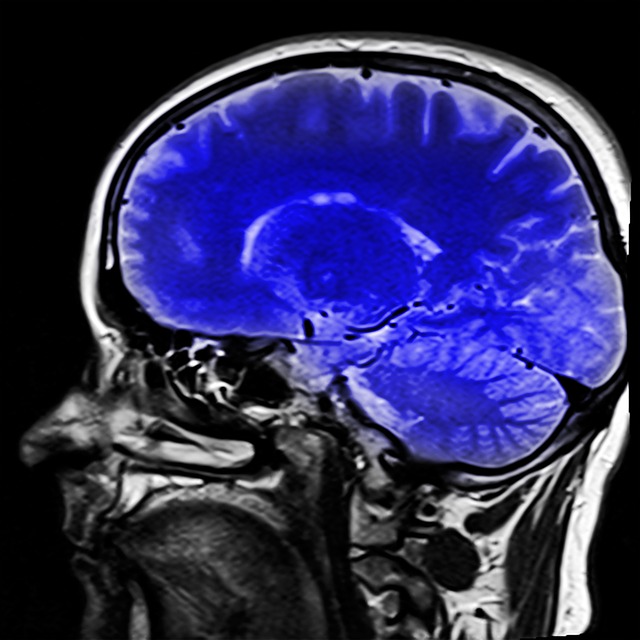
Our big brain, result of our evolution, cause of our problems and source of the solutions…

First Principle: We are animals. Animals with big brains, to be sure, but animals nevertheless.

Second Principle: Evolution is real. We have been, and continue to be, subject to evolution. That’s how we’ve inherited our animal bodies, and big brains.

Third Principle: We can be masters of our impulses. That’s where the big brains comes into play, in a variety of ways.

Fourth Principle: Sometimes we need help. There’s no shame in that; it’s called being human. Also something our big brains should be useful for.

So let’s have a bit of an explanation, for now, of those Principles (you can be sure that I will come back to these topics in future posts):

First Principle: Our bodies are part of nature, not something outside of it, different from it, or “above” somehow. We have faculties that set us apart somewhat in terms of what we are capable of, but they do not give us any special rights or dominion. If anything, with great power comes a fiduciary mandate to use it well (a.k.a. “great responsibility”).

Take for evidence how our closeness with our pets. This is in large part because we recognize in them aspects of ourselves. Many other species on Earth exhibit aspects of what we call human characteristics. Another piece of evidence: studies show that we recover faster from illness and surgery when afforded a view of nature…

Second Principle: our bodies are what they are because they have been shaped by the blind forces of genetics and nature. This has shaped what our bodies are able to do, what they need to thrive, but also how our minds work. Through hundreds of thousands of years we have become equipped with the means to be the dominant species on the planet, and to do away with much that was limiting in our natural environment.

In our current environment, this leads to two main types of problems: a loss of health due to over-consumption of previously scarce ressources (the modern diet), and widespread (and at times engineered) opportunities to distract ourselves from what would be well adapted behavior (lack of movement). A big brain that comes at least partially programmed to “take it easy” and eat as much as possible of things that are pleasant can be a terrible burden.

Third Principle: Given the first and second principles, it is very tempting to just give up, to admit defeat and say “that’s how things are, so it is not MY fault. BUT: as animals who have evolved to possess quite impressive intelligence, we actually have what it takes to deal with the situation.

A big chunk of it consists in using that intelligence, and an understanding of what drives us and what we need, to effectively fight the instincts and impulses that tend to cause us to not move enough and eat too much of the wrong things. It is possible; many of us are already doing it. We are all capable of doing it.

Fourth Principle: But let’s be fair: it is not easy. I’ll be the first to admit it (you can be second): sometimes I need help to get me up and moving, or to resist that brownie for dessert (or instead of a proper breakfast, for that matter).  There is no shame in being helped, and it is only right to be the help at times as well.

That help can take many forms, including laws to reduce certain negative influences or promote positive ones. But that is often counter-productive because of the fight against powerful, established interests, and, more importantly, the natural tendency of all of us to resist change that is imposed on us.

Acting one on one to change our habits and help each other is an essential, albeit longer-term, part of the battle. Vote with your forks, shoes, and wallets, everyday, and we will all be the change we need…

We have the brains, let’s make the most of them!

Brains

Let’s use ’em!

Photos from Pixabay.

Here’s a first challenge, for all of us

Sitting, Movement

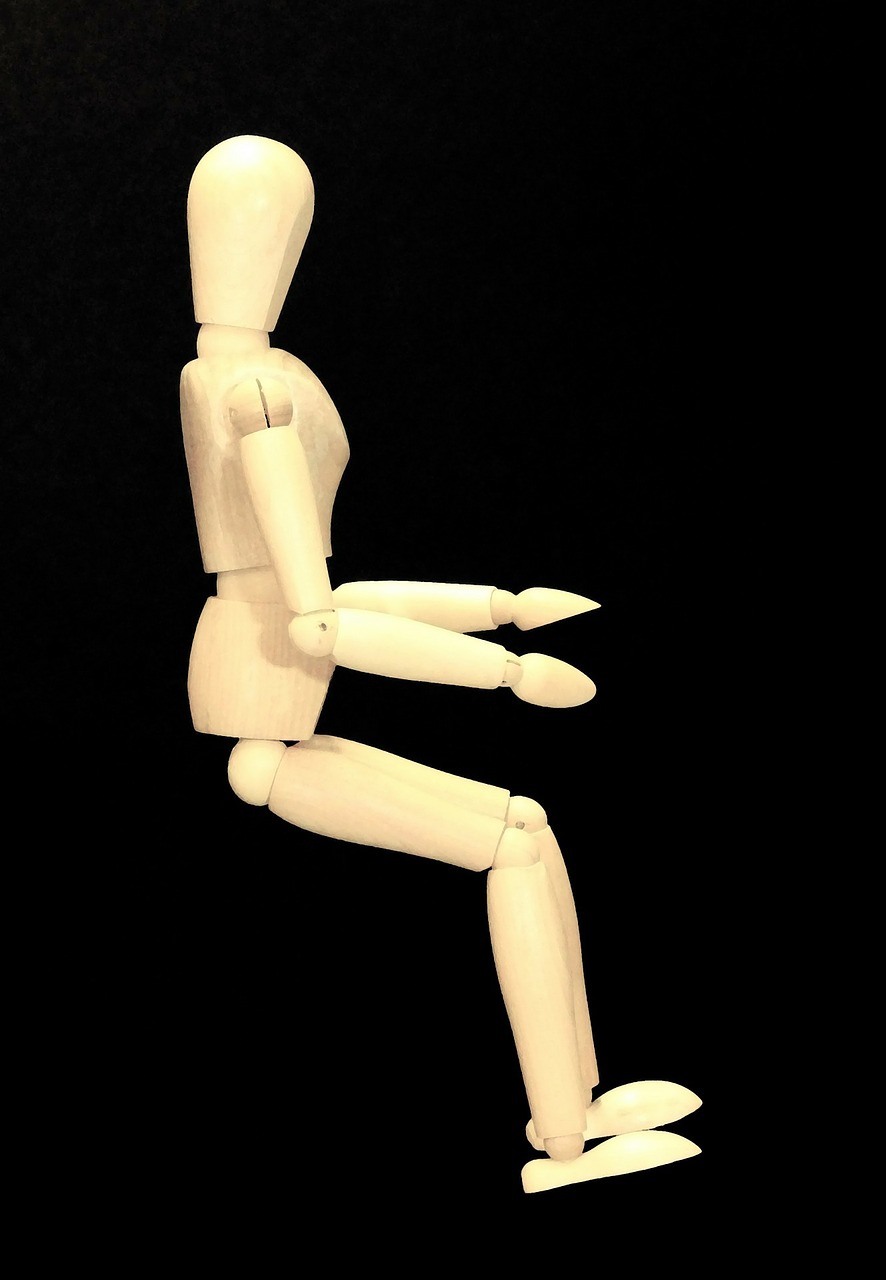
Let’s go from this…

Part of what I am trying to do with my “spare” time is help people become more fit, and ultimately healthy, through No-brainer Fitness and some coaching for Team in Training. (Full disclosure: I have a full-time job unrelated to fitness, am very happily married to a wonderful woman, and travel quite a bit between Montreal and Boston, so “spare” time is what it is.)

But what does it mean, really, to help people become more fit, and how can I hope to achieve that?

Well, one of the mechanisms I have set up is what I call “No-brainer Fitness E”, where the E stands for Everyday.

In a nutshell, it is a service I offer to develop some good habits in terms of exercise, and reduce the bad habits in terms of diet and lifestyle. Among other things.

Today, instead of explaining more about No-brainer Fitness E (feel free to check out the page), let me give you a first challenge, very much along the lines of what subscribers would get (for a ridiculously low price, I might add, and stop the marketing pitch at that):

Daily Exercise Challenge: Pick a moment, other than your usual lunch time, in the middle of your busy day, and go for a 10 minutes walk. Preferably outside, preferably brisk, but the key thing is to move. (With the E service, you would not get to pick the moment, but receive a notification to do it, right now, or postpone by at most x minutes. And the challenge would be different on each day.)

Weekly Diet Challenge: Pick a day, any day of this week, and make sure you eat only food you have prepared yourself from base ingredients. No restaurant, no prepared food bought at grocery stores, etc. (As this requires some planning to have ingredients handy and some food for a lunch, it is a weekly challenge that you get notified of on Sunday so can prepare for it.)

Weekly Habits Challenge: On four of the seven days of this week, set 5 minutes aside to perform a simple meditation exercise, focusing only on your breathing. (Habits challenges are more repetitive, yet should demand very little time. But the benefits are real, well proven, and so the aim is to start forming new positive habits.)

Movement, Exercise, Everyday

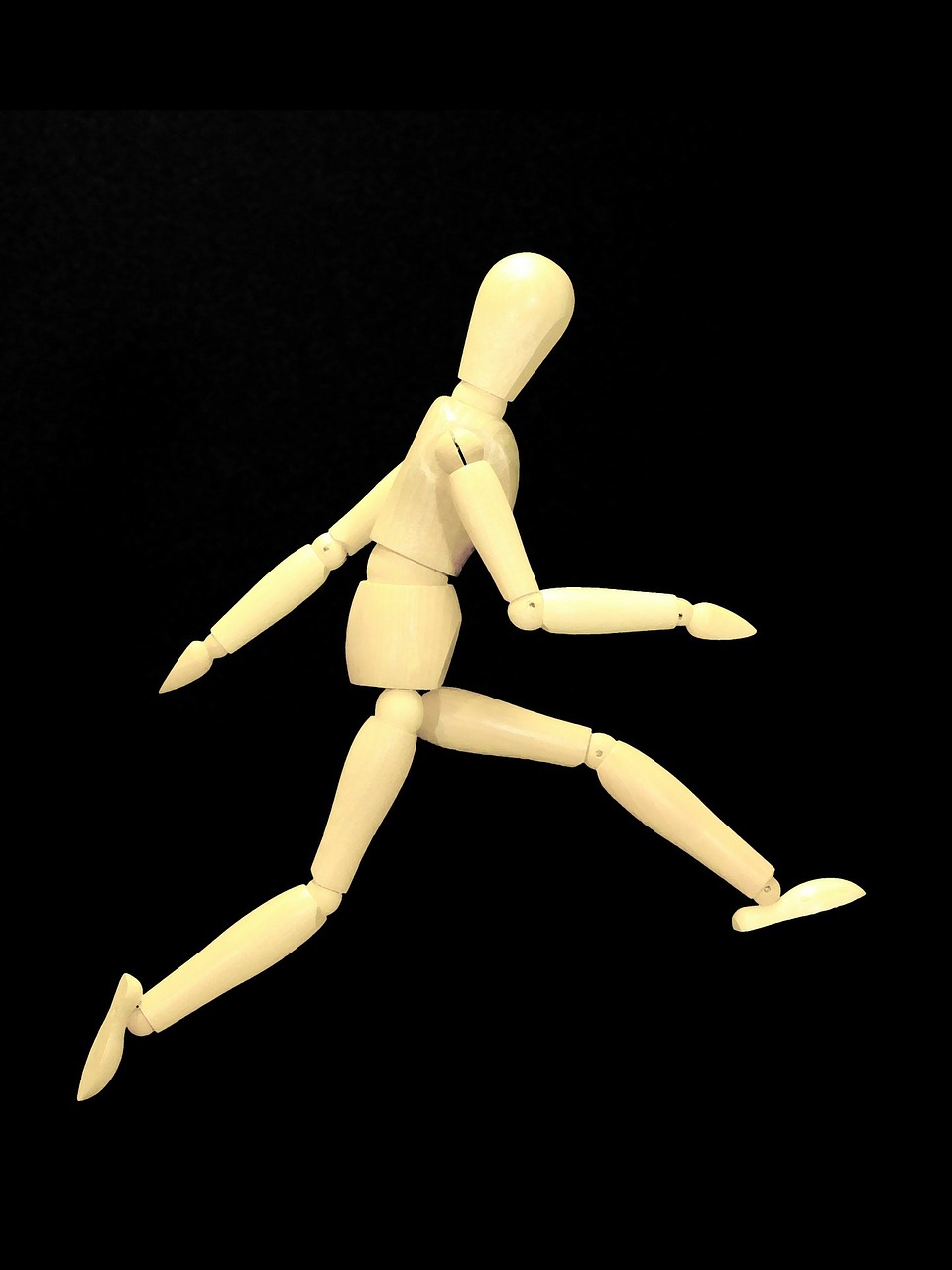
…to this. Just not in a wooden way.

That’s it. Three simple challenges.

Can you do that?

Do you dare challenge yourself?

Do you dare challenge yourself everyday, and turn burgeoning habits into long-term behaviors?

It starts with simple actions, and it’s up to each and everyone of us.

Photos from Pixabay.