Not all advice is good advice

Coaching, Training, Swimming

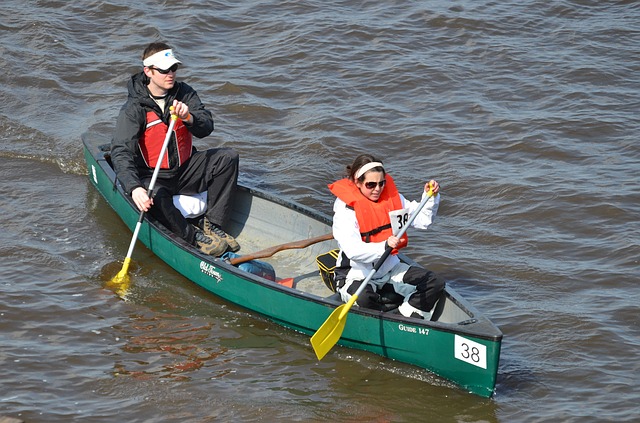
Online advice as replacement for a real coach? Photo credits: Sophie Tremblay-Paquet

Should you really trust the advice you read online? Should you seek such advice, instead of turning to a coach?

(What follows is a spoof, NOT meant to be taken as real advice. Anyone tempted to do so would only prove my point, but I’m sincerely hoping everyone has more sense than that. Enjoy at your own risk…)

Take your triathlon racing to the next level

Wanna take your triathlon racing to the next level? Wanna win races in your age group? Perhaps you still have this nagging feeling you could have been a pro?

Here’s how to get one step closer to that dream, and take your racing to the next level. You’ll be amazed how simple it is:

Have all your teeth removed and replaced by dentures.

Your training and racing will benefit in many ways from this little change in your body configuration:

1) While you recover from the surgery, the mostly liquid diet combined to extensive endurance sessions will cause you to lose a lot of weight, improving simultaneously your power to weight ratio and VO2 max.

2) Since in the beginning you’ll have a hard time eating anything, this is the best time to do a lot of training on an empty stomach, thereby improving your body’s ability to use lipids from fat reserves as fuel.

3) After you’ve recovered and been fitted with dentures, every time you’ll be racing, you can leave your dentures in transition (or at home), and be at an even better racing weight than the rest of the field thanks to the reduced weight to carry around. (And since you are also fueling your race mostly with gels, you don’t really need your teeth anyway.)

Be the first in your age group to do this. You won’t regret it! Besides, if you can still smile on your finisher’s photos, you’ve clearly not pushed hard enough…

(End of spoof.)

Back to our regular program

As a coach, I’m amazed at how much advice you can obtain by simply going online and performing a cursory search.

It is to the point that one hardly ever needs to turn to professional coaches for advice. Or buy well-written, well-considered books on how to train.

Or is it?

The Web is indeed shock-full of running, swimming, and triathlon advice (not to mention other sports, but those three appear to be popular nowadays). However, is it always good advice? More importantly, can such random bits of (generally good) advice really be the best course of action for athletes hoping to develop in their sports?

My main concern, because I am a coach, is with what coaches do: provide the best guidance possible at every stage of an athlete’s development. My contention is that advice sought on the Web, or pushed in our faces on social media, is NOT, in fact, the best advice. It may not even be good advice.

Why?

Because it does not consider where in his or her development an athlete might be.

It is advice out of sequence; out of the flow of development of abilities, endurance, and speed.

Some of the advice, I’m afraid, even goes against optimal health, generally in the name of enhancing performance. (I’m really talking about triathlon advice here, not other kind of performance enhancing advice or products.)

I’m preparing a few posts on coaching, and I will address this concern at length, but to set the stage, I thought I’d offer this short spoof of some triathlon advice I recently came across.

And I’d like to hear from you about your impressions of the advice you get online. Do you seek it? Do you follow it? Do you use the services of a coach?

More to come on this topic… and looking forward to hearing from you.

Photo by Sophie Tremblay-Paquet.

Couples that exercise together…

Training, Exercising, Couples

…stay together.

We’ve all heard the rumours about marriages being destroyed by Ironman(TM) training. I’m sure there is some truth to them, considering the kind of commitment such pursuits demand, even though my personal experience cannot be blamed on that.

What I have witnessed first hand, however, is how difficult relationships can be when one partner exercises a lot and the other one doesn’t at all. That has certainly lead to divorce. Let’s face it, such differences in lifestyle and outlook on health are hard to reconcile, although not impossible.

What is less obvious is that even if two life partners do exercise regularly, even intensely, training together as a couple can still put a lot of strain on the relationship.

Yet there are few greater joys in life than being able to train as a couple. I am convinced it makes for a stronger relationship. So let me provide a few tips, based on my own experience and anecdotal evidence, on how to overcome the main pitfalls of exercising with your significant other.

Pitfall 1: One of the two is a lot faster than the other.

This is typically the case with running and cycling, and never applies to yoga (about which there is still a pitfall). Let’s face it, very few couples are evenly matched when it comes to speed.

But you can always do your long training sessions together, at the slower person’s speed. Yes, this is good for the faster person, too. Actually, the faster person might develop more endurance than previously enjoyed. Try it.

You can’t do tempo work as a speed-mismatched couple, but intervals are great opportunities. I’m a big fan of running slow together, then going fast for a while and coming back together during recovery. For additional kicks, go slow together, then fast for a time at the slower person’s fast speed, and then separately for a time at the faster person’s fast speed while the slower just jogs along. Then join again for recovery at a slow speed. Call it “interval ladders”; it’s very intense, especially if you do long intervals.

The pool is also a good place to train together, but careful of the slippery slope to yoga-like situations…

Pitfall 2: One of the two does a lot more exercise/training than the other.

This is where understanding is key. Understanding on the part of the person training less: a large amount of exercise often fulfills a need for personal achievement that has nothing to do with the couple. But also understanding on the part of the person training more: you still need to pull your weight around the house, buddy, even if you are tired. And you need to take your partner out on a date once in a while, even if it is beyond your bed time!

As I said, the key is understanding.

Pitfall 3: Both want to do an Ironman.

Exercise, Couples

Find things you can do together.

This one is more about sharing. Imagine you are both keeners, and intense on the training. You already have a great advantage in that you are sharing a commitment to a sport and philosophy of life. Perhaps you can both do the same event; I’ve seen folks get engaged at the finish lines of some races. Good for you!

But perhaps you need a different kind of sharing. For instance, while you can talk about the feelings of the preparation and racing, it is important that you let each other feel things differently as well, to each have a personal experience. Furthermore, the needs of each athlete, especially for such long events, are different, so one size does not fit all, and you each need some alone training.

So, by all means, do train together for long runs and long bike rides (see Pitfall 1), but also train on your own, because you need it. I strongly recommend the “alternate years” approach whereby each of you takes turn doing an Ironman. This also helps with Pitfall 2, and becomes mandatory with Pitfall 4.

Pitfall 4: Children

This is all about sharing. Sharing the load, sharing the responsibility, sharing the lack of sleep when the kids are young. But it is also about sharing your passion for exercise with the kids.

Nowadays, there are so many good strollers and buggies you can take the kids in while out on a run or bike ride. Careful with swimming though. But the point is: get equipped, and share!

However, you’ll likely need to tone it down; go for shorter outings, not go as fast, etc. And perhaps get a less competitive bike on which you can install the additional gear. But it is all worth it. And you could probably use a bit of a break from being an endurance nut.

The best advice here is: enjoy it! They grow up so fast. And then, use the “alternate year” approach and even the “alternate days” to give each other a break from chores by going out on your own for a more intense session. Or just a nap.

Pitfall 5: Bitching

It is bound to happen at some point: when the going gets tough, the toughs get going, but sometimes there is bitching involved as well.

This is where communication is key. The bitching part of the couple must remember to say that the bitching is not directed at the significant other, and the significant other must not respond too much; simply nod and otherwise show compassion. It helps to sprinkle some “I love you” in there as well. For instance, while running or cycling (not applicable to swimming, somehow):
“I really hate this f$&@ing rain. Are we there yet? And I love you!”

To which the other replies, carefully:
“I know how you feel, and I love you too.” (After a pause, smiling gently.) “It is all the fault of the meteorologists, but it could happen during the race we are training for. And I love you!”

In case you have not caught on yet, always use “and” before “I love you.” Trust me. And deflecting responsibility does not hurt, either.

This, by the way, is also valid advice for traffic jams and standing in a crowd for last-minute X-mas shopping. Always find a way to blame meteorologists; they are used to it.

Pitfall 6: Yoga

This is probably the most dangerous pitfall of them all. The way it typically goes is: one person is into yoga, the other is into endurance sports. And then you try to meet somewhere in the middle.

While yoga is good for you as an endurance nut, and yoga nuts could use more cardio in their lives, there is a big problem that is bound to lead to arguments: the outfits. In particular, people striking all sorts of interesting poses and sweating in skimpy outfits. One of the two is bound to stare a little too much, and/or make a comment, and then the next thing you know you are having an argument.

It is not worth it. Just stay away. Let the person doing yoga have yoga, and the endurance nut have endurance.

Pitfall 7: Snooze and Snuggle

This is the most tricky, in my experience. You are so comfortable in bed that getting up and training becomes difficult. So you snooze and snuggle together. And don’t train as much as you are supposed to.

Keep in mind that recovery is important when you train hard. But you still need to get up and train. Thus the conflict.

I have no solution for this one, so if you do, I’d like to hear from you…


Recovery, Exercise, Training, Couples

Down time is also needed.

Pictures from Pixabay.

Dieting Does Not Work

Dieting does not work

Trying to lose weight? Stay away from the D verb…

It’s been a long time coming, and for that I must apologize. I was on a sort of “vacation” from No-brainer Fitness. Sort of.

Not an excuse, just the reality of starting a new job and upping my own training for my next Ironman(TM) (IM Louisville, on August 24th, in case you are curious).

And I took the opportunity to do quite a bit of reading, for this post, future posts, and just to relax…

So here it is, the post I’ve been planning for quite some time.

First, let’s be clear about what I mean, and what researchers in this area mean, when we talk about “dieting”.

A “diet” is, as I’ve indicated elsewhere in this blog and on No-brainer Fitness: D, what we eat. The word, a noun, in itself has no implied value of the quality of said diet; it simply is the correct term to describe the overall nutritional intake.

In contrast, when we use the verb “dieting”, or when we say “go on a diet”, we mean following a specifically designed diet that is providing a lower total quantity of calories than is generally required for sustaining normal activities. In effect, dieting is restricting the caloric content of your nutritional intake through a particular set of constraints as to which foods are eaten, or which quantity of food is eaten. Or both.

So it is fair to say things like “that’s not part of my diet” when talking about certain foods, or NOT FOOD items. But careful with anyone saying “I don’t eat that because I’m on a diet.” That spells trouble.

Dieting does not work

Eat well, not too much…

Why?

Because dieting does not work.

You don’t believe me? Perhaps you’d take someone else’s word on it:

“The typical outcome of dieting is that you will gain weight.” -Sandra Aamodt, in a TED Talk

Ah, yes, but that’s hardly better, since you don’t know who she is, and even though she has done way more research on the subject than I have, that’s still no guarantee.

Ok, so perhaps a comprehensive review by researchers on behalf of Medicare? That’s exactly the conclusion reached back in 2007 by researchers at the University of California. The title of the paper would be enough, but it would make for a very short post: “Medicare’s Search for Effective Obesity Treatments – Diets Are Not The Answer”.

The main conclusion is that, while some weight loss occurs in the short term, if you follow the dieters for a while after, and it does not even need to be very long, you’ll find that dieting alone will lead to weight being gained back. And often some more.

This is why programs designed to cause weight loss based only, or in large part, on food intake changes are misguided at best, bad for your health at worst.

Dieting does not work

… mostly plants. And don’t forget to move more!


Still not convinced? Here are some cherry-picked quotations from the Traci Mann et al. paper:

“As noted in one review, ‘It is only the rate of weight regain, not the fact of weight regain, that appears open to debate’ (Garner & Wooley, 1991, p 740).” Traci Mann et al., 2007, p. 221.

“There is some evidence for the effectiveness of diets in leading to other beneficial health outcomes, particularly in helping people stay off antihypertensive drugs and preventing diabetes, but this evidence is not consistent across the studies. In addition, it is not possible to detect whether the diet components of these interventions were potent, as the interventions all contained other components that may have reduced hypertension or prevented diabetes (e.g. increases in physical activity, reduction in smoking, alcohol use, and sodium).” Traci Mann et al., 2007, p. 224.

Speaking of the effect of exercise, because although not the focus of the research, it was mentioned, here’s a good one about one of the very few studies they came across that indicated a weight loss:

“These results may not directly be due to the diet part of the intervention, but in fact participants in the lifestyle intervention engaged in large amounts of physical activity (averaging 227 minutes per week), and this may be the potent factor.” Traci Mann et al., 2007, p. 222.

A final one, “for the road”:

“In sum, the potential benefits of dieting on long-term weight outcomes are minimal, the potential benefits of dieting on long-term health outcomes are not clearly or consistently demonstrated, and the potential harms of weight cycling, although not definitely demonstrated, are a clear source of concern. The benefits of dieting are simply too small and the potential harms of dieting are too large for it to be recommended as a safe and effective treatment for obesity.”

Don’t, not even for a moment, entertain the thought that, because it is no good for fighting obesity, it may be any better for “just losing a little weight.” The evidence is in, and anyone who tells you dieting works is trying to sell you something.

It appears clear, from this and other sources, that the solution on the food side of things is not to restrict calories and disallow some foods, or focus food intake on some nutrients or particular foods, but rather to promote a more healthy balance of whole foods in a quantity that is sufficient to sustain daily activities. It is a simple recipe: Eat food, not too much, mostly from plants.

As to weight loss, if it is a desired outcome, it must come from increasing the level of activity. There is simply no other sustainable, or healthy, way of achieving that.

So: Eat well, and move a lot.

References:

Traci Mann et al., Medicare’s Search for Effective Obesity Treatment – Diets Are Not The Answer, American Psychologist, April 2007, Vol. 62, No. 3, 220-233.

Here’s a link to Sandra Aamodt’s TED talk

Pictures from Pixabay.

Things we don’t like to hear

We don't want to hear

We don’t want to hear

It has been a while.

Perhaps you thought I had gone away.

But that’s not the case; it is simply a matter of having recently started a new job, running a trial program of No-brainer Fitness: E, and getting caught in doing research for a post on dieting.

All of that busyness got me thinking about some of the things we don’t like to hear. So I decided to write this short post before finishing the more serious one.

In part preparation for the dieting post, and in part as a reaction to having to face the fact that there are simply not enough hours in any given day, here are some of the things we don’t like to hear. But must come to accept if we are to succeed in being fit and healthy for the long-term.

There are no such things as Super Foods

Most claims on Web sites are about a single item, more often than not a vegetable, sometimes a fruit, and on occasions red wine. It changes depending on the site you browse to on any given day. The fact is that any one food will not make you healthy. And in large enough quantity, any one thing is toxic. Yes, even kale.

The flip side: I once saw a list of so-called “super foods” that consisted of 63 or so items. That’s longer than my typical grocery list, despite the fact that I get kudos from the health-conscious store clerks where I usually buy groceries.

If you have to buy and eat so many different food, then clearly no single food is that super.

As is generally the case, with a balanced and diversified diet of mostly plants, you don’t need anything to be super. The overall diet is what is super. Because it is real food.

Food supplements simply don’t work

In the sense that they will not make you healthy. Especially those that claim to do precisely just that.

In situations where someone is truly lacking some essential vitamins or minerals, or to ensure that you have plenty (as for pregnant women), there may be benefits in taking some, if only to have complete peace of mind.

But claims of miracle dietary supplements to make you lose weight or cure you of whatever you are lead to believe (typically from the same ads) you suffer from, are hogwash.

But at some point, we have to grow up

But at some point, we have to grow up

It requires (some) effort on your part

This could also be called “there are no free lunches.” (Or, at least, no healthy free lunches.)

Basically, to be fit, you have to put in some sweat capital. Fitness does not come from a pill; you can’t get fit by hooking yourself up to a machine and letting it do the work for you. You have to do the work.

The trick is to find the kind of working out that is pleasant for you, and the purpose to commit and maintain good habits. But you have to move, lots, and regularly.

Coffee, wine, chocolate, and a few other things we like are NOT FOOD

Sorry. That’s just the way it is. Enjoy in moderation.

Dieting doesn’t make you lose weight in the long run

That’s the intro to my next post. You have to take my word for it. For now. But the evidence is pretty damning…

*****

Since first writing this post, a few interesting (and timely) tidbits came my way, so I’m adding links to other readings you might consider after being done here:

Diet Lures and Diet Lies is an interesting piece along the lines of the above discussion of super foods and supplements.

Why I don’t do CrossFit is all about the importance of not training too hard. Better yet, if you read the text carefully, you’ll notice mention of how Olympians train, and that is what I am driving at with the notion of being an everyday athlete…

Photos by Pixabay

The correct way to run

Running, Technique, Shoes

Shoes matter, but so does technique…

*** Modified post. I’ve been able to get a hold of the original paper about transitioning to Vibram FiveFingers. So read on, or read again, for some slight changes to the text. ***

There’s been noise lately about a settlement that Vibram, the maker of the famous (or infamous, according to some) FiveFingers “shoes”, has agreed to pay to their customers.

The issue is over false claims, or so the class action lawsuit alleged, that FiveFingers prevent injuries and make muscles and tendons stronger.

A quick search on the subject will surely reveal quite a bit, but I’ve sprinkled a few links in this post, to provide more details. First, the oldest reference to the lawsuit I could find, from July 2012.

Blog item from ABC

The most recent article, in a Canadian magazine, appears to provide the conclusion of the process. Note that Vibram has agreed to pay; I’m no lawyer (I’m a scientist), so I would be willing to bet that the issue revolves around what would constitute a solid enough proof of the statements made by Vibram. I’m pretty sure no scientist would be willing to proclaim the statements are proven beyond a doubt. That’s just the way science works…

Blog in Canadian Running

But what fascinates me about this is the tone of some of the articles. Some “reporters” and bloggers clearly showed their stripes and did not hesitate to bash Vibram, minimalist shoes, and the whole barefoot running movement. It felt like a deep, quasi-religious, fighting line has been drawn. I won’t bother you with those articles; the ones in reputable running magazines were far more neutral, and carefully written, as they should be.

Some, however, did something very clumsy, unlike the main magazines: They linked the lawsuit to a piece of research pertaining to indicate that wearing FiveFingers leads a high percentage of runners to foot bone injuries. You can read the news about the report there:

Report on study in Runner’s World

Note that the study, and the lawsuit, are in no way related. But it sure is convenient as a coincidence. Especially for the makers of conventional running shoes.

Before going any further, allow me to state a few key points, just to be clear:

  1. In my experience as runner and coach, it is possible to run correctly in almost any pair of shoes, be they “conventional running shoes” or “minimalist”.
  2. I do not believe there is a conspiracy by running shoe manufacturers to cause harm to runners by making shoes that they know will cause injury. Even though by some accounts 70% of runners using “conventional running shoes” will get hurt at some point.
  3. What I do believe is this: there is a natural tendency to want to protect your business and market share. That’s called having a vested interest in a certain situation. There is no need for any kind of conspiracy when the incentives are aligned. Companies will do what is in their best interest.
  4. There is a correct way of running, and it is easily demonstrated. No matter what anyone in the running shoe industry says about each of us being different. They only try to muddle the issues, and it is very sad.
  5. What has probably happened with the minimalist and barefoot movement is not an indication that the safety and benefits of those shoes have been overstated, but rather that the weakening of our bones, muscles, and tendons over the years of walking, and especially running, in shoes designed to “protect us”, has been grossly under-estimated.

Now, perhaps the lawsuit was brought about by someone “strongly encouraged” to do so by the big shoe manufacturers. And maybe the study referred to in Runner’s World was also similarly sponsored. (There are some issues about that research, so please see at the end of this post for my notes. But the main problem I’ve encountered is that the second-hand source all seem bent on using it to point nasty fingers towards Vibram and minimalist and barefoot running, whereas the research paper was pretty much simply stating that transitioning must be done slowly, and carefully.)

But, ultimately who cares? The lawsuit was settled, so let’s move on. Preferably, by continuing to run.

Full disclosure: I currently own 3 pairs of FiveFingers, and a fourth one I used to own recently “died” after a long and satisfying life. Like some of the commentators on the blog posts and articles I’ve read, if I get a refund from Vibram, I will use the money to get an extra pair of FiveFingers, and I’ll keep using them for running. I even got married in a pair of FiveFingers. I hesitate to call them shoes as to me they are more like gloves for feet. I also own Ecco’s Biom Project shoes, and Asics runners (2 pairs), which I still use at times, when running marathons and ultras, and when racing triathlons. So there.

Now allow me to finish with the main point, before I forget: The correct way to run.

It is my contention that there is such a correct way, as already stated, and that it can be done in any pair of shoes. How do I know?

Not from understanding physics (which I do) and its application to bio-mechanics, or coaching a lot of runners (which I have), or transitioning myself late in life from a heel striker to a forefoot runner (which I have, over a period of 2 years). The answer is actually much easier to understand.

Consider the animals that we are. Remove us from this modern society we’ve built, and in which, by and large, we are no longer fit in an evolutionary sense. Let’s travel to the Land Before Shoes. How did we run then? Not on our heels, that’s for sure!

Test it for yourself. Take your shoes off, and try to run, even if for just a few steps.

You’ll immediately, instinctively, switch to a forefoot striking gait, and that striking will be absorbed in large part by the arches and ankles of your feet, and the tendons and muscles of your legs. Because that’s what they have evolved to do! (Normally, I urge people to do this test on soft grass, but it is possible to heel strike on very soft ground, so be cautious, and do it on a hard but clean surface, for full effect.)

Watch young children run barefoot. You’ll immediately notice that when not taught otherwise, we all run with a forefoot striking gait.

That is the correct way to run.

It’s just that over years of under-use, over-protection, we have not developed the needed sturdiness to run that way as adults.

It takes time, much more than a few weeks, to compensate. And it can be painful. And you risk injury if you try to do too much, too soon. So it should probably only be attempted with the help of a good coach.

Yet the conclusion is inescapable: There is a correct way of running.

It just may not be the way everyone can run in this day and age. For having run too long in conventional shoes, or lacking the patience to rebuild their bodies…

Running, Shoes, Technique, Coaching

In case of doubt, wear shoes, and make a run for it!

Photos by Sacha Veillette.

Notes on the original research paper by Sarah T. Ridge et al.

For those interested, and because I am a scientist first and foremost…

In terms of methodology, the design of the research was sound, as far as it went. However, I have concerns over the following items, some of which may invalidate the conclusions:

  1. While selection of FiveFingers users was random (among each group of men and women, so that’s good), all runners were experienced runners. Which means they were all used to running in conventional shoes, and had not been injured (or said so) in recent past. So far, so good. Except for a bit of psychology of running: Although the runners were given instructions on how to transition, most runners who are used to running a certain distance per week have a tendency to think they know what they are doing. In a word: they feel they can do it, no matter what. The odds of the FiveFingers group actually having followed the transition plan are slim, in my estimation. And my estimation is supported by the reported fact that FiveFingers users peaked their training volume in week 4 of the study, way too early! Simply put: they probably tried to run more with the FiveFingers than they should have, got hurt, then scaled it back down, but it was too late.
  2. Regarding the MRI results, which I’m told were taken with a somewhat low quality machine, the convention of what constitutes remodeling of the bones and injury is arbitrary. And perhaps a bit conservative. Being slightly less conservative, by only one level on the scale used, might change the conclusion. Interesting fact also reported in the article: the results are comparable to having sedentary people start running and doing it for 7 days straight. No one should go from 0 to seven straight days of running, but you would expect major work to begin in the bodies of those who do, and yes, some injuries to result from the abrupt change. Duh!
  3. There were initially 43 participants recruited for the study. They were divided roughly equally between the FiveFingers, and the control. Which means there should have been 21 and 22 participants in each group. 19 completed the study in the FiveFingers group, so a drop of 2 or 3, whereas 17 completed in the control (a drop of 5 or 4, depending on the exact split between the groups). The numbers and specific reasons for the drops were not disclosed on a per-group basis, but we know 3 participants did not show up at the end for the MRI, 2 got injured for “unrelated reasons” during the training, 2 never returned calls (so probably did not even train, or perhaps trained and got hurt right away). Hiding what exactly happened to those participants is one way to bias results. What if there were 5 drops from the control group, and it was all because they got injured, and not at all for “unrelated reasons”? For instance, for reasons related to the conventional shoes, but not in the feet, like knees and hip problems? The picture would look very different, and actually quite comparable between the two groups.
  4. Leaving aside the possibility of manipulation of the results, which I’m pretty sure the authors were not trying to do, it is worth noting what their own conclusion really said: Far from an indictment of running in FiveFingers, they indicated that transition should be done very slowly, and more slowly than prescribed at the time by the folks at Vibram. (Those guidelines, we are told in the paper, had been changed between the start of the work and the publication of the paper, by the way.) I would go even further: taking a bunch of experienced runners, who in my experience are notoriously bad at following coaches’ advice, is a recipe for disaster. When you transition to minimalist shoes, you should take a lot of time, and ideally start as if you were starting to run from scratch. Very few experienced runners are willing to hold themselves back to that extent, and that is why we get hurt. Yes, I count myself in that lot, even though it took me a long time, my adaptation is not complete yet, and I had some major pains bordering on injury.
  5. The only way to get a definitive answer on this question would be to take two groups of newbie runners through a strictly controlled regimen of training. One group in each type of shoes. That would take time, but it would be better science. Of course, if you change the way you run, you will have major adaptation and risk of injury. But let’s see who, of the two groups, would actually get hurt less, and what their feet, legs, knees, and hips would look like at the end of the program. That would be interesting. Anyone has some funding available?