Defenders – Part 2

Ironman, Health, Fitness, Defender, Racing

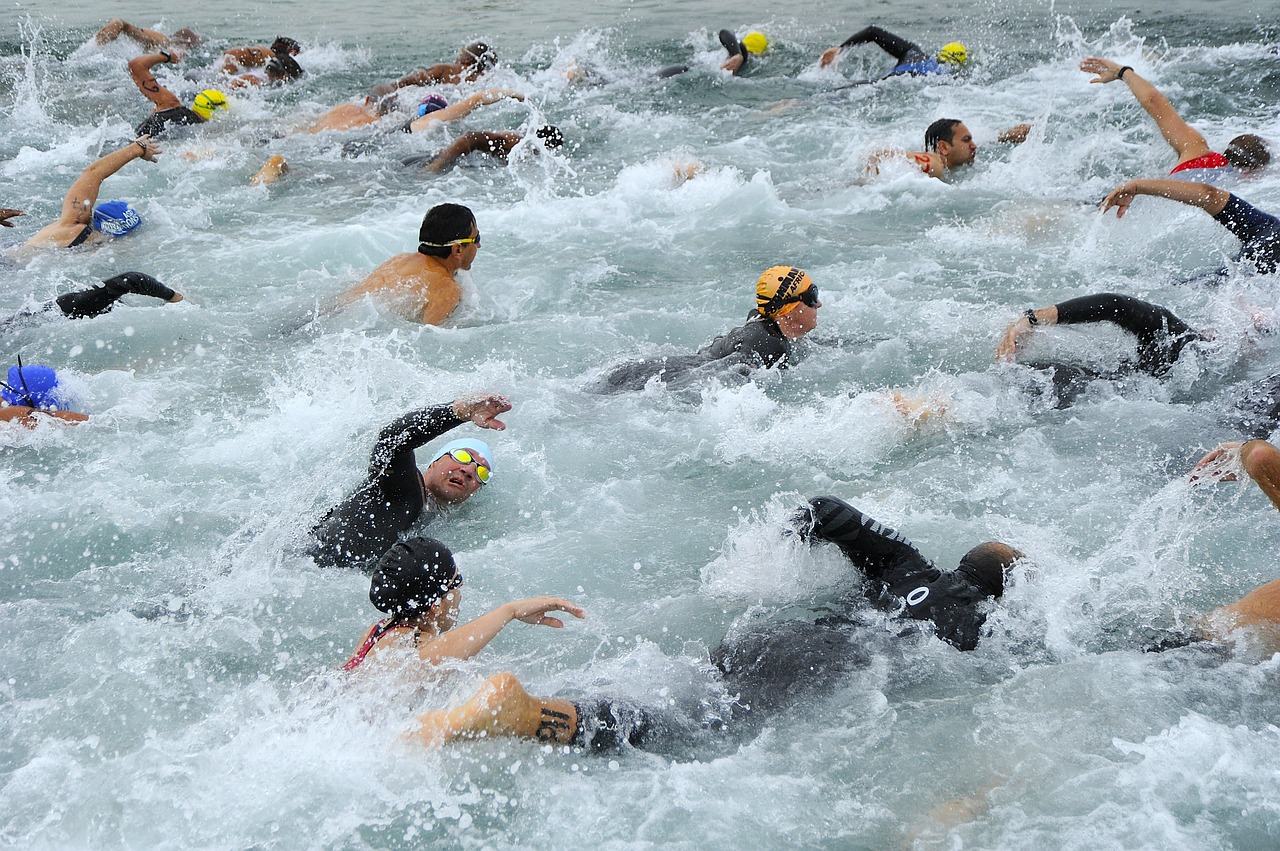
Racing is a little like war. The swim part of an Ironman is definitely like Naval Battle…

Since posting the first part on this topic, I received a lot of comments.

Some, because they came from people I care deeply about, I feel I must address before going ahead with the discussion.

(OK, the comments I’m going to address came from my wife, but she is right, as usual.)

So imagine again, if you will, the third scene from Part 1, but in a slightly less gory way:

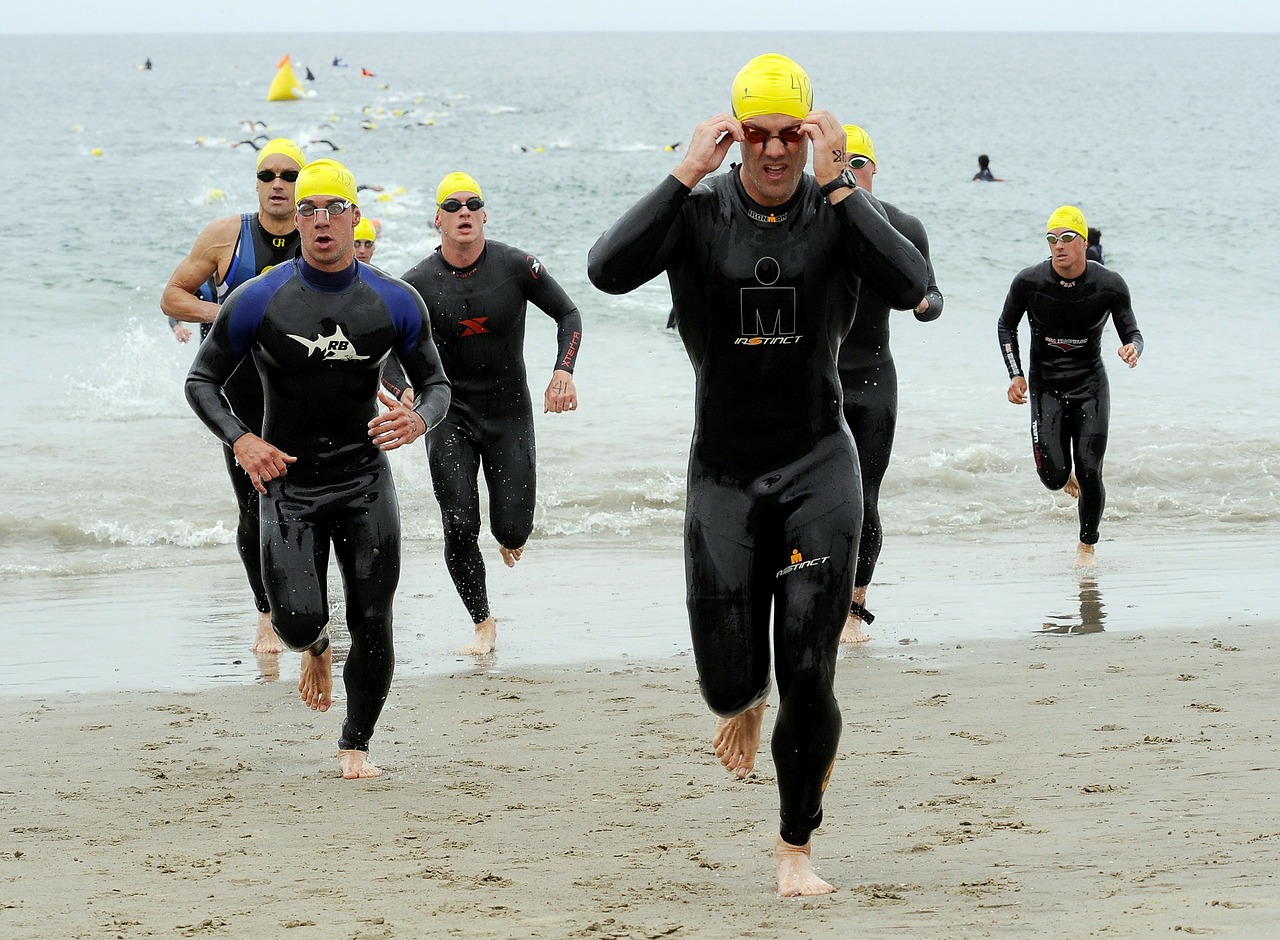
At an ironman distance triathlon, a whole bunch of participants push so hard that for the most part they collapse upon reaching the finish line. Only a few, having not quite given it their all, still manage to remain functional, walking around and re-hydrating, speeding up their recovery through some (very light) stretching and eating.

Then catastrophe hits: A tsunami is announced, and everyone must evacuate immediately!

But guess what? It’s everyone for himself or herself! Only those who are still functional can escape and survive. Those who collapsed at the end, those who abused their bodies too much during the race, are swept away by the wave, never to be found again.

Only those who survive can show up the next day to claim their spots during the roll-down for the World Championship…

Still perhaps not the most realistic scenario, but now we’re getting to the point I’m trying to make.

Racing to the point of collapse, of total exertion, of no longer having the resources to continue acting for yourself after the finish, is a bad idea. For many reasons.

First, it causes serious damage to your body. This is what some are really talking about when they point out that running marathons or doing triathlon causes the equivalent of 20 years of physiological damage. It is not the training regularly, which we all pretty much agree is in fact good for your health, that is causing the damage: it is the abuse of racing “all out”. (And sometimes of training too hard all the time.)

And even though a fit runner or triathlete will recover, some of the effects of the racing linger. Accumulate over time. So your body ages by 20 years in a few hours, then over days it becomes younger again, but never by quite the same amount. That is why elite racers never last very long in those sports, with a few exceptions. Going all out takes its toll on your body.

Second, it means you need a lot more time to recover after a race. Some might say that is fair, since after all you performed a “great feat”, obtained a personal best, etc. Something to be proud of, to be sure. But that recovery time means you cannot go about your normal activities for a while. It means you lack fitness, in the biological sense.

And during that time your body is more prone to infections. Again, while we all pretty much agree that regular exercise helps the immune system, being exhausted in fact depresses immune functions. For a while. It is commonly known among triathletes that you are most likely to get sick right after your “A” races, when you’ve pushed the hardest of the season.

And those are just the two main, physiological reasons. Racing all out, it could also be argued, frequently makes jerks out of people. But that is perhaps a different topic, best left for some other post…

So what is the alternative?

It is what I call racing like a Defender.

A Defender knows that more may be demanded of him (or her) later, so training and racing are intense but never all out, never to exhaustion.

Just like their namesakes of Antiquity and Medieval times, Defenders aims to protect what is precious to them. In the past it would have been the lives of their families; in racing, it is their own health. So the pretend fighting that racing in a way represents is done in such a way as to promote fitness, not take it away.

Conversely, someone who goes all out all the time can be thought of as an Aggressor, or an Invader. These are often fanatical in their drive to win, to conquer. And fanaticism is pretty much the opposite of having a well-balanced view of the world. It is not a peaceful, healthy way of living.

In the final analysis, and this is my racing philosophy, when you cross that finish line you can consider that you have beaten all of those who collapsed, needed medical attention, or are generally not able to function normally after a race. If you can still fight, figuratively speaking, when you are done, then you have prevailed over those who cannot (still figuratively; I do not condone any kind of violence, during or after competitions).

Even if the official rankings don’t reflect this philosophy, you can take pride in your achievement.

Think like a Defender, and consider what you could still have done after the race. Consider how you could still have outrun the tsunami (with proper warning, of course).

Racing is not about how well you rank compared to others. It is a motivational device, to keep you focused.

What really matters is your health.
Defender, Health, Fitness, Racing

Could you still run away if your life depended on it?

Photos by Pixabay.

The best moment of the day to exercise

Movement, Daily, Morning

Seize the day!

We all should be moving all the time, be true Everyday Athletes. But let’s face it, most of us have jobs that tie us down to a desk for large chunks of the day.

So the question can be raised: When, on any given day, should we exercise in order to fit it all in?

The answer, of course, is: first thing in the morning.

There you go, question answered. Shortest blog post ever!

Ok, maybe not.

Leaving aside the facile answer (which, for many reasons, remains probably the right answer for many), let’s have a look at the pros and cons of various moments of the day.

Assume for the sake of this discussion, that you are doing “some” exercise only. It could be the basic program of No-brainer Fitness: E, or some other light to moderate training regimen…

The Morning: Seize the Day!

The main positive aspects of exercising first thing in the morning is that you can make sure that it gets done. Especially if it is a short routine that only takes a few minutes, there’s no time like the present to get it done!

You are also mentally most energetic at this time of day; your stores of willpower and decision-making energy are full from a good night’s rest, so there is less chance you will give up in the middle of your routine.

However, be careful of eating a little something (unless you are purposefully training “on empty”) because you might not feel enough physical energy.

The main drawbacks to exercising in the morning come from family life and logistics in general. If you have kids, it is often hard to get everything prepared and the kids ready and fit some exercise in the morning. Also, having to get everything or everyone else ready then head over to a gym or pool, and then get ready yourself for work, is a major hassle.

It may be difficult to get the kind of class or training session you seek at a time and location that is practical for you in the morning. So perhaps mornings are not best for you.

However, for short exercise routines that don’t need to be done at a gym or pool, and especially with a good partner to share the load, the morning time remains ideal for exercise.

Also, a lot of the morning pressure can be lifted by getting up earlier, for instance well before the kids, and doing your exercise then. This can become your personal time. But make sure to get to bed earlier as well (getting to bed too late is a major problem in modern life, about which it is high time I write something on this blog…).

Lunch Time or Mid-Day: Re-energize!

The main positive aspect of exercising in the middle of the day is that it provides a very good break from work, and can even replenish your energy levels for the rest of the day.

It is certainly always a good change of pace, if you can swing it.

Unfortunately, most people’s lunch time is often too short to be of much use, especially considering the need to go somewhere, get changed, exercise, get changed again, go back, and still find time to eat something.

If you can just zip out for a run or a brisk walk, that’s great. And there might be some short fitness classes offered near your work. Much of anything else is sure to be a logistical challenge.

Our modern schedules are bad. We really should be able to take the time we need during the day to stay fit. Our productivity would soar! But until that’s the case, exercising in the middle of the day won’t be ideal.

Evening: Make or Break Time!

Everybody’s favourite time of day; freed from work, time for ourselves… and family/household obligations.

The evening provides far more flexibility for exercising, and there are plenty of activities to choose from. It would seem ideal at first, but there are major drawbacks.

By this point, even if you’ve psyched yourself all day, you are at your most tired mentally. And at the greatest risk of simply skipping the workout.

Also, there are equally many things to juggle at night: cooking, homework, dishes, catching up on your partner’s day, etc. Making time for exercise is even more an issue in the evening as it may seem to be in the morning. And without clear deadlines (school or daycare time, being at work, etc.) the temptation to take it easy so as to stress less often leads to overruns and something having to drop. Care to guess what is most likely to get dropped?

If you are still keen and decide to exercise “later”, say as last thing in the evening, then you face the worst possible scenario: needing another meal, and not being able to fall asleep for quite some time. Indeed, the boost to your hormonal levels and wakefulness due to exercise, and the need to refuel, will push your bedtime to the point of making getting up the next day a Herculean task.

Some light routine, a bit of strength work and relaxing stretches, or making sure your training is before dinner time, can work just fine.

So there you have it, more fully.

When’s the best moment to exercise? Whenever it works best for you.

But if you are thinking about starting a new routine, consider making it a morning one, and making sure you get that sense of accomplishment first thing in the morning, to give a positive outlook on your entire day…

(And this turned out to be one of my longest posts. But it could have been the shortest.)

Photo by Pixabay.

What is “fitness”? (Part 3)

If you’ve read parts 1 and 2, your patience will now be rewarded.

(If you haven’t read the previous posts, well, too bad, but before judging this one, perhaps you should read the others.)

In the first two posts of this series, I covered some definitions of fitness that I feel should be rejected as inadequate for today’s reality.

We remain animals, but the measures of fitness that come from biology are probably not the best we can use given all that we’ve done to ease our lives, mostly by changing our immediate environment and the conditions of our lives.

Training too hard, which I feel is in compensation for feeling like something is wrong with our current lifestyle, is fraught with perils. It may work for a small portion of the population, but not for the majority. Also, all too often it focuses on the visual aspect of our bodies, which in itself is a bad idea. Those forms of obsessions are damaging to our health.

So my key point, the conclusion I’m proposing, is that we need a new definition of fitness. One that makes sense today, and for everyone. Let me give it to you without further ado:

Fitness = Sustainable Activity

Think of it this way: Fitness should be about our ability to go about our regular activities without undue difficulties. It should be about being able to handle the variable demands placed on us by life. It should also be about being able to do so for a good long time. You know, as in living a healthy, active life, well into Old Age.

In essence, we need to do enough physical activity, train ourselves through movement, to enable our bodies to be healthy without negative consequences. If our occasional exercise regimen causes us to have problems functioning through the rest of our daily activities, we are not really being fit: We’re being extreme once again.

It is a fine balance, but one that is well worth seeking. And one that requires constant vigilance, not just the occasional bout of intense training and/or dieting as compensatory measures for too much time spent watching TV and eating nachos…

It has been repeatedly demonstrated that physical activity is the key to health, both physical and mental. This is a topic we will explore at length in No-brainer Fitness. For now, please accept it as a factual premise.

Incidentally, the sustainable level of activity that is fitness is highly individual. Some can, and will, do more than others. You like running marathons, and are doing so in such a way as to remain healthy, then by all means, go ahead! In fact, and I’ll come back to that in other posts, you’d be surprised at what each and everyone of us is capable of.

Some, therefore, will be very active; others, less so, yet much more than they currently are. Some will lose a lot of weight, over time, while others may lose less. What matters most is to seek one’s own balance, without falling into the trap of obsession and extremes.

In fact, the only obsession that makes sense, is that of seeking balance.

How do we get there? How do we build this fitness we’ve just defined? That will be the subject of my next post, and probably many more after that, outside of this series, which is now at an end…

What is “fitness”? (Part 2)

In part 1, I talked about two definitions of fitness that are based on biology. I argued that they are no longer valid, or at least not entirely satisfactory, in this day and age.

The basic premise for that conclusion is that our environment is radically different from what our bodies have evolved to handle. For a large portion of the population, that’s fact.

In part 2, I’d like to focus on the following: we all have a kind of intuition that something about our lifestyle is wrong. I referred to that as a kind of understanding that we are all unfit, in the biological sense, for this modern environment we’ve created. And that makes us less than optimally healthy.

With this starting point in mind, I’d like to offer that we have seen the rise of another definition of fitness:

Fitness = Training Hard

Indeed, the response of a portion of the population to the malaise of being unfit has been one of intense activity, as illustrated by the popularity of endurance events like marathons and triathlons, extreme body workouts like cross-fit, P90X, and so on.

For many, what I would qualify of knee-jerk reaction to not being fit has become a quasi-religious fanaticism to working out hard. (Accompanied, incidentally, by a lot of driving around to get to the gym, and sitting on our behinds the rest of the time.)

All too often, it is focused on the visible aspect of fitness: lean, muscular bodies. Attractiveness has become part of the equation, but along a specific kind of esthetics that brings about its own slew of problems. This suggests:

Fitness = Looking Good

Oh, and on the diet side, there’s just as much intensity in the response, and yet the fundamentals of our modern food supply are not being addressed. But that will be the subject of another post…

When training becomes training hard and intensity becomes obsession, the door is wide open to injury. Anecdotally, even to death. We are far from thriving in our environment when we provoke our own injuries and precipitate radically negative consequences.

Accompanied by slogans like “no pain, no gain”, focusing on weight loss as a measure of success, and giving rise to an industry dedicated to coaxing you into their tailor-made fitness crazes, it should be clear those definitions, while accepted by many, fall short. Why? Because they are too extreme, and focus on external characteristics, not deep capabilities, of our bodies.

My contention is as follows: we need to make ourselves fit our new environment in a smart and adaptive way, not through extremes of over-compensation. And we need to focus on what matters most, ultimately, for our overall health, not what we look like.

That’s why I suggest to adopt a new definition that includes fitting in the environment we’ve made for ourselves, being able to reproduce (yes, even that still matters, in small quantities), and if at all possible, thriving in today’s reality. A new definition that is intimately linked to health, in the sense of being able to function at optimal levels for a good long time.

And that will be the subject of part 3…