Let’s do the Paleo Thing (yeah!)

(The above title needs to be sung to the tune of “Let’s do the Time Warp” from the Rocky Horror Picture Show.)
Paleo, Diet, Movement

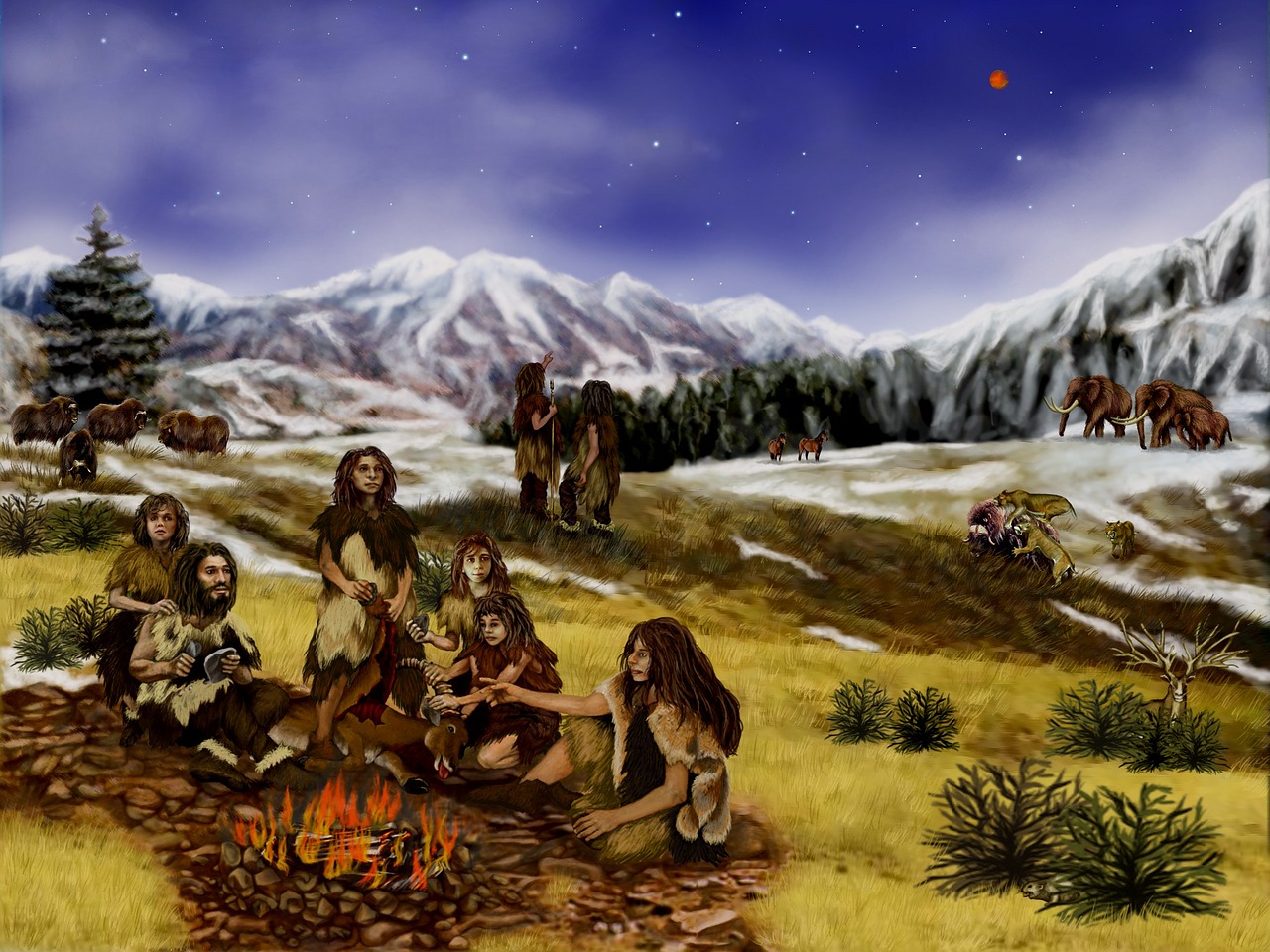
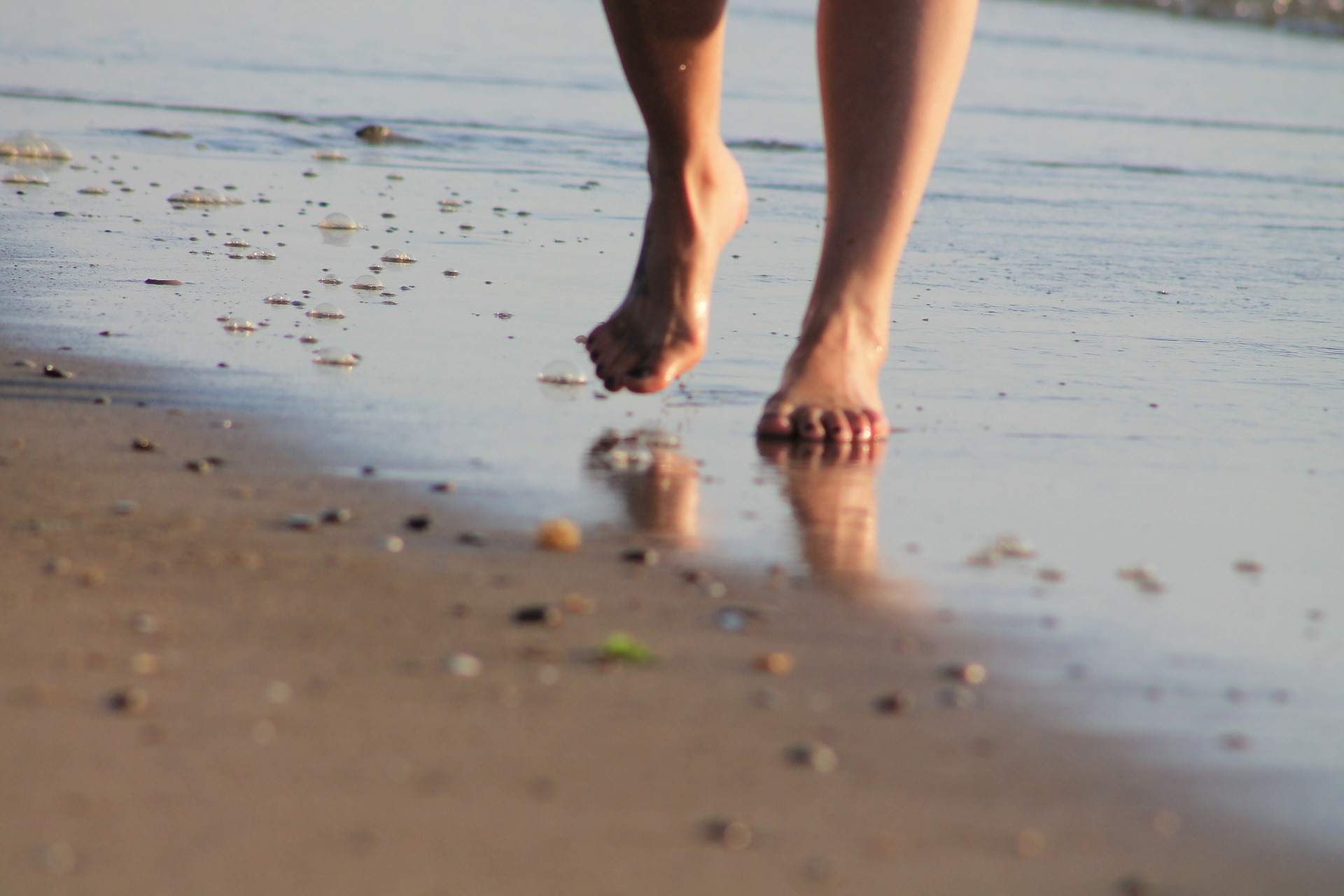
Here’s a picture of something “Paleo.” But is it reality?

This post is not what you think it is.

Why?

Because the Paleo Thing, is not what you think it is.

Bear with me. It will all become clear.

The Paleo Diet is dead…

If you are even remotely interested in health and fitness, you have heard of the Paleo Diet by now.

Most likely than not, what you think you know about it, or what you have been told, is false.

How can I make such a bold statement? Very simply:

1) For starters, we don’t know for sure what our ancestors ate on a daily basis.

What we have is a picture, incomplete at that, of their overall dietary intake. We get this from the analysis of archeological sites dating back many thousands of years, and of human remains when they are available (and often much more recent if they are complete enough to provide information).

To a lesser extent, we get some data from the current diets of so-called “primitive” people that somehow manage to exist in this day and age. So we have bits and pieces, hints scattered all over the place. And we “reconstruct” the most likely scenarios based on that.

But the complete, precise picture will elude us until we have time travel capabilities. (As a physicist, I feel pretty confident about making the equally bold statement that we never will.)

2) More importantly for this discussion, there is hardly any food nowadays that are still exactly the way they were when our ancestors of the Paleolithic were around.

Over thousands of years of selecting, breeding, and, yes, engineering plants and animals, you can be certain that what you eat nowadays is related, but not the same, as what our ancestors ate.

And if you go out of your way to select foods that have not been changed in some way, you are back to the first point I made: chances are very slim that those food items were actually eaten by our ancestors. You can be pretty sure that our ancestors, smart as they were, picked the foods they preferred when they started domesticating things. They would not have spent what little energy and time they had available on the things they did not enjoy eating.

So what you eat nowadays, no matter what anyone tries to sell you, is not what our ancestors ate. It is not, therefore, “Paleo.”

This idea of “eating a Paleo diet” must die once and for all. (Yeah, I know, good luck with that.)

…long live the Paleo Lifestyle

Now, given there is no such thing as a “Paleo Diet”, what is the big fuss about?

There is another reason why adherent to the “Paleo Diet” get it wrong: They pretty much get stuck on the notion that diet is the key to healthy living.

But our ancestors of the Paleolithic had something else going for them that makes all the difference:

They moved more than we do. A lot more.

Just eating well, whatever you call the diet, is not enough if you are entirely sedentary.

On the other hand, moving a lot, even if your diet is less than perfect, makes a huge difference in your health and fitness to survive in this world.

That’s why instead of a “Paleo Diet,” we had better embrace a “Paleo Lifestyle.” A lifestyle that puts emphasis on what contributes most to our health: movement.

So I’m arguing we should embrace the “Paleo Lifestyle” by exercising and moving all the time.

That’s a lot more reasonable that pretending to be eating what our ancestors were eating while taking our cars to the corner store to buy some meat…

But, what about diet? you ask

Good question.

The “thing” in the “Paleo Thing” of the title is that when I talk about lifestyle, I do mean making choices about diet that make sense as well.

Without being “Paleo,” the diet part is actually quite simple, and something our ancestors were indeed doing: eat real foods, mostly from plants, and as close as possible to the way they are found in nature.

To put it another way: seek foods that are not processed, or that have been processed as little as possible.

By the way, that does not mean raw food. Our ancestors had discovered fire for cooking well before agriculture. It also does not mean vegetarian or vegan, though there are excellent ethical and philosophical reasons to embrace such diets.

But keep in mind that we are still physiologically very much like our ancestors. Incidentally, they were opportunistic omnivores, and ate just about what they could find as they moved about and over the seasons. That included roots, fruits, animals, plants, and even insects. At least, that’s the part of the picture that scientists are pretty sure about.

Therefore, the “Paleo Lifestyle” I’m suggesting consists of moving a lot more, on a daily basis, and eating unprocessed foods. (Though I’m still not touching insects.)

I realize that even that, given our current society, is like turning back the clock on a lot of modern comforts and energy-saving technology. It is not easy.

But does it make any more sense than pretending to be eating what our ancestors ate?

At least we know for sure how our ancestors moved: they used their feet!
Movement, Exercise, Paleo, Daily

Embrace the Paleo Lifestyle: use your feet more!

Pictures from Pixabay.
The best moment of the day to exercise

Movement, Daily, Morning

Seize the day!

We all should be moving all the time, be true Everyday Athletes. But let’s face it, most of us have jobs that tie us down to a desk for large chunks of the day.

So the question can be raised: When, on any given day, should we exercise in order to fit it all in?

The answer, of course, is: first thing in the morning.

There you go, question answered. Shortest blog post ever!

Ok, maybe not.

Leaving aside the facile answer (which, for many reasons, remains probably the right answer for many), let’s have a look at the pros and cons of various moments of the day.

Assume for the sake of this discussion, that you are doing “some” exercise only. It could be the basic program of No-brainer Fitness: E, or some other light to moderate training regimen…

The Morning: Seize the Day!

The main positive aspects of exercising first thing in the morning is that you can make sure that it gets done. Especially if it is a short routine that only takes a few minutes, there’s no time like the present to get it done!

You are also mentally most energetic at this time of day; your stores of willpower and decision-making energy are full from a good night’s rest, so there is less chance you will give up in the middle of your routine.

However, be careful of eating a little something (unless you are purposefully training “on empty”) because you might not feel enough physical energy.

The main drawbacks to exercising in the morning come from family life and logistics in general. If you have kids, it is often hard to get everything prepared and the kids ready and fit some exercise in the morning. Also, having to get everything or everyone else ready then head over to a gym or pool, and then get ready yourself for work, is a major hassle.

It may be difficult to get the kind of class or training session you seek at a time and location that is practical for you in the morning. So perhaps mornings are not best for you.

However, for short exercise routines that don’t need to be done at a gym or pool, and especially with a good partner to share the load, the morning time remains ideal for exercise.

Also, a lot of the morning pressure can be lifted by getting up earlier, for instance well before the kids, and doing your exercise then. This can become your personal time. But make sure to get to bed earlier as well (getting to bed too late is a major problem in modern life, about which it is high time I write something on this blog…).

Lunch Time or Mid-Day: Re-energize!

The main positive aspect of exercising in the middle of the day is that it provides a very good break from work, and can even replenish your energy levels for the rest of the day.

It is certainly always a good change of pace, if you can swing it.

Unfortunately, most people’s lunch time is often too short to be of much use, especially considering the need to go somewhere, get changed, exercise, get changed again, go back, and still find time to eat something.

If you can just zip out for a run or a brisk walk, that’s great. And there might be some short fitness classes offered near your work. Much of anything else is sure to be a logistical challenge.

Our modern schedules are bad. We really should be able to take the time we need during the day to stay fit. Our productivity would soar! But until that’s the case, exercising in the middle of the day won’t be ideal.

Evening: Make or Break Time!

Everybody’s favourite time of day; freed from work, time for ourselves… and family/household obligations.

The evening provides far more flexibility for exercising, and there are plenty of activities to choose from. It would seem ideal at first, but there are major drawbacks.

By this point, even if you’ve psyched yourself all day, you are at your most tired mentally. And at the greatest risk of simply skipping the workout.

Also, there are equally many things to juggle at night: cooking, homework, dishes, catching up on your partner’s day, etc. Making time for exercise is even more an issue in the evening as it may seem to be in the morning. And without clear deadlines (school or daycare time, being at work, etc.) the temptation to take it easy so as to stress less often leads to overruns and something having to drop. Care to guess what is most likely to get dropped?

If you are still keen and decide to exercise “later”, say as last thing in the evening, then you face the worst possible scenario: needing another meal, and not being able to fall asleep for quite some time. Indeed, the boost to your hormonal levels and wakefulness due to exercise, and the need to refuel, will push your bedtime to the point of making getting up the next day a Herculean task.

Some light routine, a bit of strength work and relaxing stretches, or making sure your training is before dinner time, can work just fine.

So there you have it, more fully.

When’s the best moment to exercise? Whenever it works best for you.

But if you are thinking about starting a new routine, consider making it a morning one, and making sure you get that sense of accomplishment first thing in the morning, to give a positive outlook on your entire day…

(And this turned out to be one of my longest posts. But it could have been the shortest.)

Photo by Pixabay.

A Primer on No-brainer Fitness: E

Movement, Daily

Time to get moving!

In case you were wondering about it, or are generally interested in moving more, this is a kind of “Origin Story” for No-brainer Fitness: E (a.k.a. Everyday).

As the E page indicates, No-brainer Fitness: E is a kind of service to help you put more movement, more exercise, and better food (and less NOT FOOD) into your daily life.

It is not like signing up for a gym membership, a fitness cult, er, I mean class, or turning up at exercise bootcamps multiple times per week. It is a highly individual commitment to doing the simplest thing (though not necessarily the easiest) of moving more, by making it a habit.

As such, it is something all of us can benefit from, no matter what your current level of activity might be.

Some perspective

What is the idea behind this daily service?

It came through the realization that, while I enjoy racing triathlons and marathons, true fitness is something that should happen on a daily basis.

Towards the end of an Ironman(TM) race a few years back, I realized the silliness of what we (some 2,700 of us that day in Lake Placid) were doing.

More to the point, I realized how, while a great deal of fun and very demanding, our accomplishment of completing a long course triathlon would have seemed much less to our great-grandparents. Particularly those used to 12+ hour days of tilling fields, cutting down trees, harvesting, and performing a wide range of physical activities on a daily basis.

Going back even further, our hunter-gatherer ancestors had to keep moving to find their food, run to hunt (not to mention avoid being eaten themselves), and generally carried everything they owned on them without the benefit of cars (or modern backpacks, for that matter).

This is not to put on a pedestal that way of living of days gone by. It is simply a realization that nowadays we take great pride in being able to do certain things that, while challenging, would not have seemed so outlandish to our ancestors. (Except perhaps in the gear needed, and choice of venues.)

Let’s face it, modern life is a lot more pleasant. But in becoming “modern”, we’ve lost a key aspect of our animal nature: quasi-constant movement. We’ve also lost perspective on what it takes for us to be healthy: quasi-constant movement, and real food.

Back to now

In an effort to regain some of that perspective, there is a growing movement to be more active, and it leads a lot of people to endurance sports and “fitness training”. And to a large extent, to obsession about getting fit.

But it is often with the wrong focus: to look a certain way, to perform at a certain level, to lose weight…

What we should be focusing on is movement on a daily basis. What we should obsess about is doing some on a daily basis, never staying put for too long at a stretch. What we should remind ourselves is that skipping one workout is not the end of the world, as long as we keep on moving regularly.

The rest will follow, in time.

That’s why Everyday No-brainer Fitness is a service designed to provide advice and reminders to keep moving on a daily basis.

It is what brings it all together: the exercise, the diet, the lifestyle. The E stands for “everyday”, but it could just as well stand for “everything”.  And now it also stands for “explained”.

All it takes is a desire to get started, and a friendly helper to guide you along…

I’m not saying it is easy, but it is simple. It is definitely a no-brainer. And the beauty of it is that you can get some help to get you started, and keep you going.

So that’s it.

If this sounds interesting, if you are ready to sign-up or need some more information, turn to No-brainer Fitness: E, and fill the form at the bottom.


Photo from Pixabay.

Another Simple Idea

Movement, Meetings, Everyday

Need to meet? Step right out of your office…

I recently came across a very interesting segment of Quirks & Quarks, the science radio show of the Canadian Broadcasting Corporation.

It was about sitting for long periods of time, and how bad it is for our health. (The segment is from the March 22nd, 2014, show.)

Basically, if you spend lots of time sitting, you are putting the wrong kind of load on your bones, and causing a major slowdown of your metabolism. Even if you exercise regularly, which is better than being a total couch potato, sitting for long periods of time is detrimental to your health.

The only way to compensate is to move regularly. As in every few minutes.

So it reminded me of a tip for moving more that I had been meaning to write about. So here it is.

You’ve probably heard it before, but like most of us you’ve not done it yet. Now’s the time to try it. Take it as a challenge for the coming week.

It’s quite simple: Have a walking meeting.

It doesn’t matter if it is a business meeting, or a personal conversation; instead of sitting in an office, or a conference room, or at a restaurant, or on your couch at home, get up and go for a walk.

This is obviously easier to manage with one-on-one meetings, but it works really well. It adds a dynamic aspect to the discussion.

More importantly, it gets you, and your meeting partner, moving, instead of sitting.

Just don’t spring it on the person at the last minute. It is better to plan for it a little.

If you are a runner, and you know the person you are to meet with runs, you could even make it a running meeting. But that brings about possible complications that are better left for another post.

Walk first, run later…

Try it. Once. This week.

Then make it a new habit…

Photo from Pixabay.

The Principles Underlying Everything

Not everyone needs a deep philosophy in order to strive for better fitness, and ultimately health, yet this just might help some of you. For me, it is fundamental, and helps guide my actions on a daily basis, and the advice of No-brainer Fitness.

So allow me to state what I consider to be fundamental aspects of being human we must come to grips with in order to be optimally healthy. I call those “Principles” for what follows…

Brains, Animal, Evolution

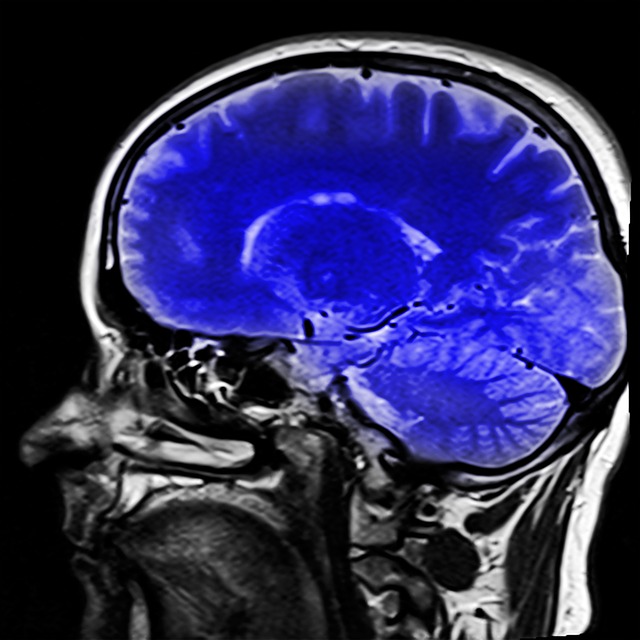
Our big brain, result of our evolution, cause of our problems and source of the solutions…

First Principle: We are animals. Animals with big brains, to be sure, but animals nevertheless.

Second Principle: Evolution is real. We have been, and continue to be, subject to evolution. That’s how we’ve inherited our animal bodies, and big brains.

Third Principle: We can be masters of our impulses. That’s where the big brains comes into play, in a variety of ways.

Fourth Principle: Sometimes we need help. There’s no shame in that; it’s called being human. Also something our big brains should be useful for.

So let’s have a bit of an explanation, for now, of those Principles (you can be sure that I will come back to these topics in future posts):

First Principle: Our bodies are part of nature, not something outside of it, different from it, or “above” somehow. We have faculties that set us apart somewhat in terms of what we are capable of, but they do not give us any special rights or dominion. If anything, with great power comes a fiduciary mandate to use it well (a.k.a. “great responsibility”).

Take for evidence how our closeness with our pets. This is in large part because we recognize in them aspects of ourselves. Many other species on Earth exhibit aspects of what we call human characteristics. Another piece of evidence: studies show that we recover faster from illness and surgery when afforded a view of nature…

Second Principle: our bodies are what they are because they have been shaped by the blind forces of genetics and nature. This has shaped what our bodies are able to do, what they need to thrive, but also how our minds work. Through hundreds of thousands of years we have become equipped with the means to be the dominant species on the planet, and to do away with much that was limiting in our natural environment.

In our current environment, this leads to two main types of problems: a loss of health due to over-consumption of previously scarce ressources (the modern diet), and widespread (and at times engineered) opportunities to distract ourselves from what would be well adapted behavior (lack of movement). A big brain that comes at least partially programmed to “take it easy” and eat as much as possible of things that are pleasant can be a terrible burden.

Third Principle: Given the first and second principles, it is very tempting to just give up, to admit defeat and say “that’s how things are, so it is not MY fault. BUT: as animals who have evolved to possess quite impressive intelligence, we actually have what it takes to deal with the situation.

A big chunk of it consists in using that intelligence, and an understanding of what drives us and what we need, to effectively fight the instincts and impulses that tend to cause us to not move enough and eat too much of the wrong things. It is possible; many of us are already doing it. We are all capable of doing it.

Fourth Principle: But let’s be fair: it is not easy. I’ll be the first to admit it (you can be second): sometimes I need help to get me up and moving, or to resist that brownie for dessert (or instead of a proper breakfast, for that matter).  There is no shame in being helped, and it is only right to be the help at times as well.

That help can take many forms, including laws to reduce certain negative influences or promote positive ones. But that is often counter-productive because of the fight against powerful, established interests, and, more importantly, the natural tendency of all of us to resist change that is imposed on us.

Acting one on one to change our habits and help each other is an essential, albeit longer-term, part of the battle. Vote with your forks, shoes, and wallets, everyday, and we will all be the change we need…

We have the brains, let’s make the most of them!

Brains

Let’s use ’em!

Photos from Pixabay.