More alike than not… except in the details

Sports, Exercise, Performance, Athletes

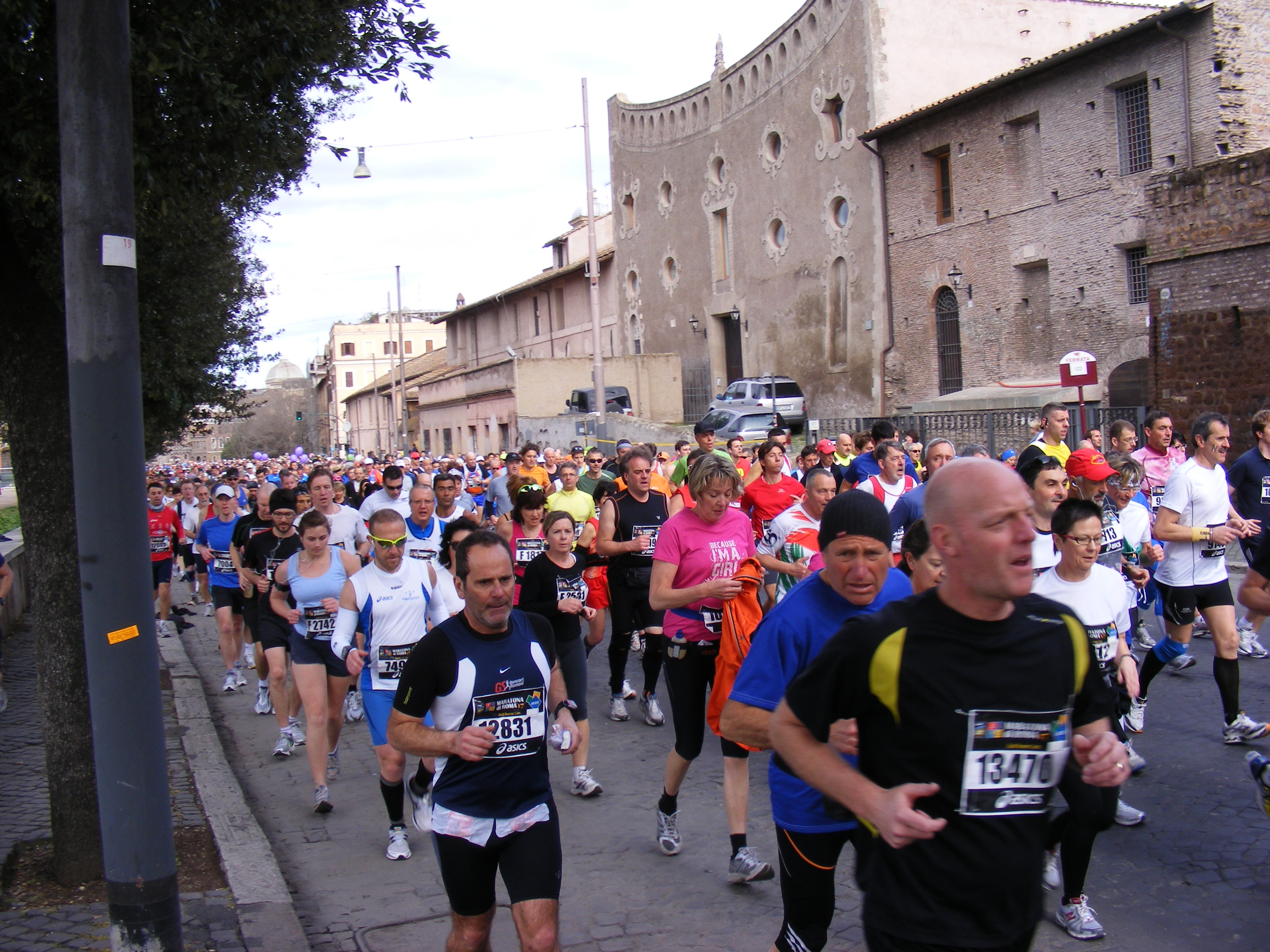
A diversity of shapes and speeds at the Rome marathon a few years ago. All athletes, in a way.

Time for a story. (Isn’t it always?)

Once upon a time, in pretty much all lands on this planet called Earth, the thinking of sports federations and elite coaches was that an Olympic athlete had to be of average height and build, with lean bone and muscle mass providing a streamlined body type.

For all Olympic sports.

Such athletes were selected and tested early, then subjected to years of grueling training. Only a very small portion of even such “ideal” athletes rose to the top of each sport and were deemed good enough to represent their respective countries against the rest of the world. (The story does not say what happened to those who did not rise to the top, but rumour has it that they started hating sports, and took up knitting instead.)

This had come about because there was a clear picture of the “ideal” human shape that had endured to some extent since the time of the original Olympic games in Greece. But with more clothing. No doubt the statues of antiquity, and later re-born in the Renaissance, had helped solidify such an image of the perfect athlete.

Allied to that image was the notion, very much born of religious thought, that only through a lot of hard work and pain could the most gains be made in training. Fierce competition, even among teammates, was seen as the way to build stronger individuals.

Thus many countries went about, and generations of kids, teenagers, and young adults went about their training. Only a very small portion of all those who started in such programs ever made it, and they won medals and set world records.

But this story is not about world records and Olympic medals. It is about how athletes were selected and prepared to compete.

It all changed, of course, when atypical athletes started winning medals and breaking world records. This came about because many countries simply did not have athletes with the expected, “ideal” body type. They were not expected to win, yet there they were, running faster, jumping higher, lifting heavier than the rest.

Suddenly, coaches caught on to what biologists must have realized much earlier: That there might be something about the specific genetic make-up of an individual that might make them better athletes at SOME sport in particular.

Nowadays, we fully understand that notion, and athletes are not expected to look the same across all sports. That explains why we see a lot of Kenyans and Ethiopians win marathons, and tiny little guys and gals ride race horses. Volleyball players are tall and somewhat lanky; ping-pong players somewhat short but extremely quick.

You get the picture. We each have specific genetic variations that make us more or less good at some activities or sports. Some are very visible, others not.

As the eminent (running coach) Jack Daniels pointed out in a seminar I attended a few years ago, you would not expect Shaquille O’neal and Mary Lou Retton to perform at an elite level at each-other’s respective sports. (The reference to those athletes provides an idea of the age of Jack Daniels, and of the attendees, not of the date of the seminar.)

Big differences are expected, for instance, between a basketball player and a gold medal winning gymnast. (Just to be clear, for those of a different age…) Mary Lou could not possibly dunk a ball, and Shaquille might very well break the asymmetric bars. Hence athletes are largely selected based on their body types nowadays.

Tragically, what hasn’t changed (yet) is the notion that training has to be uniformly hard and painful for everyone. That is why we see PE programs in schools that are still based on (unfriendly) competition and pitting everyone against each other to be the best, or to meet some specific standards of fitness arbitrarily defined by someone.

That’s in large part been identified as the prime culprit for turning the vast majority of people away from doing sports on a regular basis. If all that seems to matter is winning, and there can only be one winner, that means there are a lot of losers. And nobody likes being a loser.

So it starts by hating PE, then it becomes hating sports. Except for those you can watch while drinking beer, and even then, it is watching games, not playing.
Exercise, Movement, Daily

Watching is definitely not the same as doing.

At the same time, the understanding that we are all different has been taken much too far: Nowadays, a lot of folks think that they are simply not athletic, not meant to do sports. There are winners, who are jocks, who are meant to do sports, and then there’s the rest of us who should not do sports. Who cannot do sports.

Given the premises of differences between individuals and of personally hating sports, it is understandable that many reached the (erroneous) conclusion that they are not meant to move.

But the reasoning is incorrect, and one of the premises is false.

The facts, based on biology, are all pointing in the direction of our bodies being meant to move. Needing to move. Regularly.

Hating sports and exercise is a learned behaviour; it can be unlearned, replaced by something better.

We are all different, but even in our visible (and invisible differences), we are more alike than not.

The story time being over, I’ll conclude this post by pointing out the ways in which we are alike, and those in which we differ. And I’ll come back some other time to the fascinating topic of how to learn to like exercise.

Ways in which we are all alike: Basic morphology and physiology
Cells, Physiology

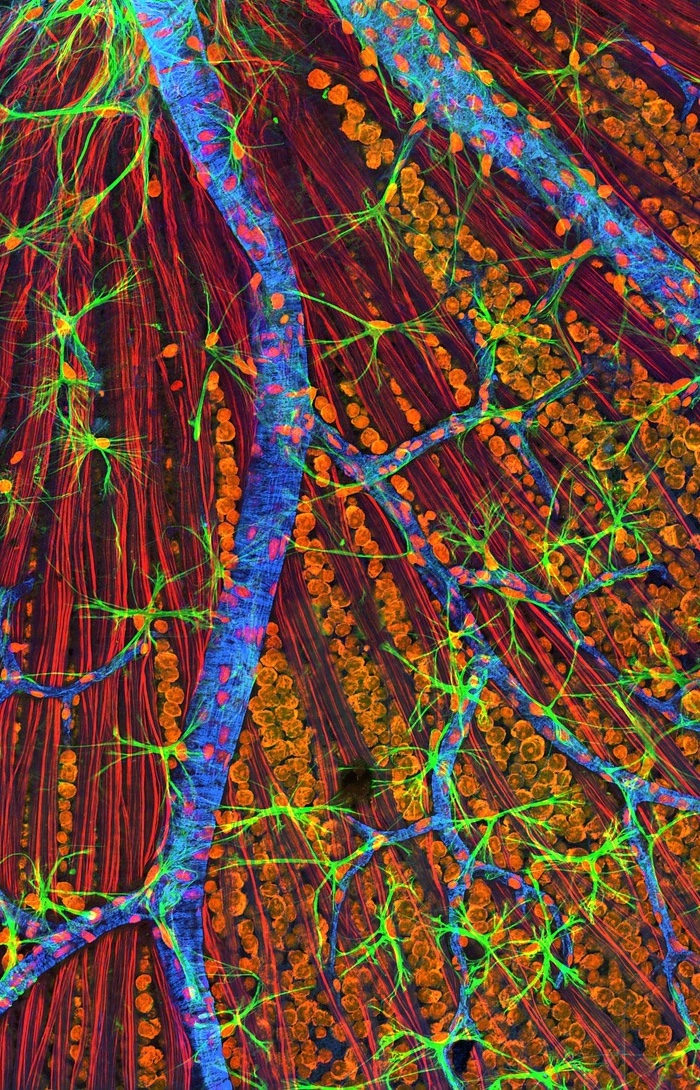
The marvelous machinery of life.

  1. We all have the same number of limbs, fingers, heads, internal organs (types and numbers), etc., and they all are built according to the same plan. (Yes, I know, there are accidents of biology, but the basic plan before those accidents is the same.)
  2. We all have muscles connected to bones in order to makes us move; those muscles all work according to the same principles, and allow sensibly the same movements to be performed by everyone.
  3. We use carbohydrates, lipids, and to a lesser extent proteins, to generate the energy that allows our cells to function. Including muscle cells, which are used to move our bodies. More specifically, there are fast and slow ways of generating that energy, and although they vary in relative terms, they are all present in all of us.
  4. We all obtain such nutrients from eating; our digestive system, comprised as it is of our own guts and the microbiome therein, functions fundamentally the same way in all of us. Besides nutrients, we need water and oxygen (not too much) for our metabolism to operate.
  5. We need to move; for our bodies to be healthy, we need to move. The stress imposed on our bones, muscles, and internal organs by intense activity is what keeps bones strong, muscles large(-ish), and organs performing their normal functions. Including digestion and waste disposal.
  6. All of our bodies respond to exercise (or to a lack thereof). If you exercise regularly, the body changes to adapt to the exercise, and the organs and energy systems hum along. If you don’t exercise, the body “relaxes” and things start to breakdown, fat reserves accumulate, digestion is slower and we get constipated, etc.

That’s just how our bodies work. We are all very much alike.

Ways in which we differ: The details of performance

Because of the details of how each of us is shaped (tall or short, thick-boned or thinner, etc.) and how cells function physiologically, there are aspects of performance in which we differ. Specifically:
Sports, Physical Activities, Training

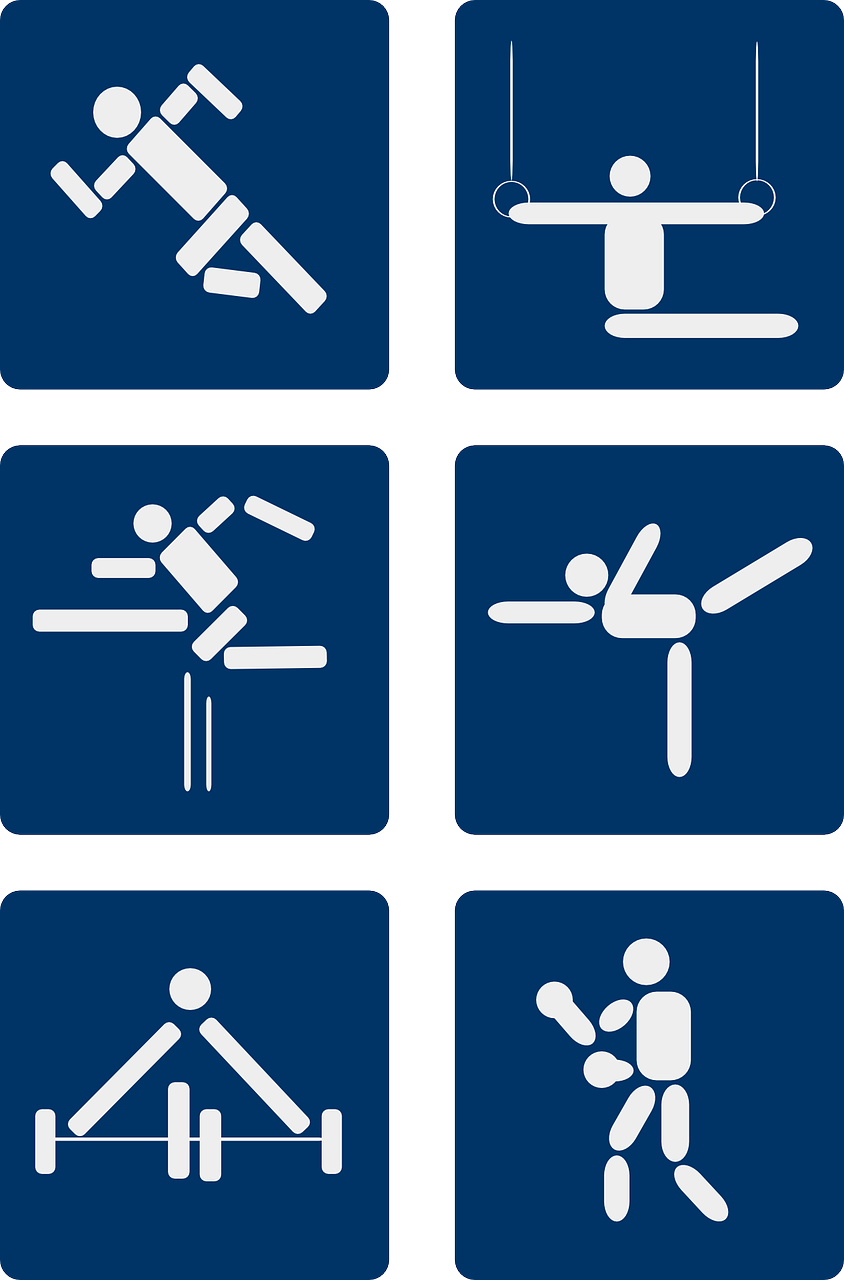
So many sports, so many choices…

  1. How much endurance we have (mostly due to differences in energy systems at the cellular level, though that’s trainable to a great extent, perhaps the most of all aspects of performance)
  2. How fast we can be (also highly trainable, but limits imposed by physiology exist in each of us, also at the cellular level in muscles)
    How strong our muscles can be (small differences there)
  3. How big our muscles can become (bigger differences there)
  4. How flexible we can be (muscles, ligaments, but also joint movement; we can’t all be circus performers!)
  5. How coordinated we can be (agility, efficiency, also technically trainable to a great extent)
  6. How a wide range of our senses perform (eyesight, hearing, smell, etc.) and how efficiently our brains put all of that together

Taken together, and in the right combinations, the accumulation of small differences is what, along with adequate training, makes top performing athletes.

So, while it remains true that there can only be one winner in each discipline, and that at the top level (Olympics, for instance), only a small portion of the population is equipped to truly compete, we all have the potential to take enjoyment in some physical activity. And we may even do pretty well, locally or within the cohort of people our own age.

What matters most, however, is that we are all alike in fundamental ways. We all need to move, a lot, to keep our one and only body functioning optimally for a long time.

It’s up to us to figure-out what makes us enjoy it the most.
Exercise, Endurance, Physiology

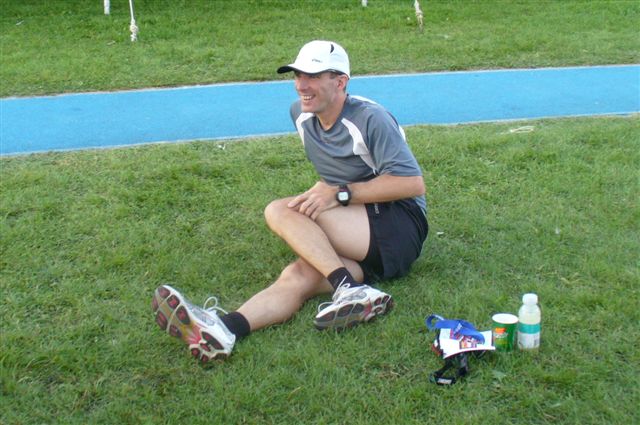
The author, laughing at a well-deserved muscle cramp, after having completed an iron-distance triathlon.

For an interesting discussion of physiological differences in triathletes, see the recently published book Triathlon Science by Joe Friel and Jim Vance.

Pictures from Pixabay and the author.
The message is simple (but it is worth repeating)

Movement, Diet, NOT FOOD, Everyday

A new beginning, of sort, so time to get moving again.

To get the ball rolling, not because of the new year but because of the launch of the No-brainer Fitness Facebook page (yes, I finally did that; one thing off my list, hooray!), I thought I’d re-visit the message of No-brainer Fitness.

Although it is the time of year for lists of resolutions and things to do, don’t be mistaken: This is NOT a list of resolutions.

It is much simpler than that. It is what should always be on your mind, every year, every day, every moment. To the point that it becomes automatic or, as I put it, a “no-brainer.”

About that name

By the way, for those of you curious about it, that is the point of the name “No-brainer Fitness.”

It is what Zen is all about. Far from being a mystical philosophy or esoteric design principle, Zen is about practicing something consciously so much and so systematically that thereafter you simply do whatever it is you have practiced without having to think about it anymore.

Anything you put your mind to long enough, practice hard enough, becomes second nature. Something in which your brain no longer needs to take an active part. Thus, a “no-brainer”.

The other meaning, that of something which makes perfect sense, and does not need to be thought through much, or at all, is also valid. Moving more is such a thing.

So let’s get back to it

One thing you need to know about No-brainer Fitness is that, although I get side-tracked at times, and try to infuse the posts with my own type of humour, I always get back on track.

Therefore, what you need to know about No-brainer Fitness, is that it stands for one single, very simple prescription, and two secondary recommendations:

1) Move more

Movement is the key to fitness and health. It has been shown time and time again, be it in terms of the effect of exercise on body functions, brain activity, and as was recently reported, our ability to age well and remain healthy and active for a long time.

Some the prescription is to move more, move all the time, move everyday. Not necessarily training for a specific sport, which is great and I encourage, but at least get into the habit of NOT being sedentary and using energy-saving devices like cars and elevators all the time.

2) Don’t diet

So you’ve gained some weight over the years (who hasn’t?). Your sedentary lifestyle and sitting job are causing your mid section to expand faster than the rest of the universe? What’s the solution?

Go on a diet, of course!

WRONG!!!

The problem is, in a large proportion (pun intended), that you do not move enough. So the solution cannot be to change what you eat. At least, that is true in the same proportion as the cause of the problem.

So the first recommendation is to NOT go on a special diet, NOT focus on what you eat, and NOT obsess over your weight. And I’m not alone in saying it. (That, by the way, is a link to an excellent and very refreshing blog post by a dietician.)

Rather, get moving more, and slowly learn to listen to your body. Because, guess what, if you listen, it will tell you what it needs, and over time you’ll get to eat better, without counting calories or obsessing about food. (Obsession of any kind, even obsession about training and exercise, it NOT healthy.)

For more specific food advice, I defer to those who know more than I do on the subject. I prefer to stick to a simple (no-brainer) approach: Eat food, not too much, mostly from plants.

3) Cut back on NOT FOOD

Which of course does not preclude me from making further suggestions about what NOT to eat.

You see, the “Eat food, not too much, mostly from plants” statement above is not originally from me. It seems simplistic, but for full effect you have to consider what “food” actually is. And for that, you need to remember that we are, fundamentally, animals.

Animals eat plants and other animals. At least, that’s what omnivores like us do. They don’t eat inorganic matter, stuff that does not grow on plants or that don’t move of their own volition.

The way I like to put it, “food” is anything that comes directly from plants, or that has been transformed mechanically and/or chemically from plants by other living creatures. Another way of putting it: food is biological matter that has been minimally transformed by means other than other animals’ biological processes.

Yes, I know, it can get messy and scientific-y. So often I use a shorter definition: If you can’t find it in nature in the form you eat it, then it’s probably overly processed, and you should pass.

For instance, things like coffee, doughnuts, soft drinks, and booze, are what I consider NOT FOOD. (For more on that, feel free to read a couple of my past posts.) When’s the last time you came across a free-flowing river of coffee? Or a tree in which Coca-Cola bottles grow? Or dug up a plant and found perfectly shaped and wrapped Hershey Kisses in its roots?

You get the point.

Cut back on those NOT FOOD items is my second recommendation; you’ll not only remove unnecessary calories (and in some cases drugs) from your body, but you’ll make room for the real taste of food, and the refreshing feeling of water going down. And that’s why you should do it.

That’s it

The rest, as they say, is details. (That’s also, as they also say, where the Devil lives, but that’s another story.)

If you insist on seeing this as a list of resolutions for the new year, then consider that you don’t need a list. You need only one item:

Get moving more!

You body will do the rest; just pay attention to what it tells you in the process.

I’ve now taught you everything you need to know. But feel free to keep an eye on this blog, and like the brand spanking new Facebook page… (Please?)

Picture from Pixabay.

Injuries – A causation guide (of sort)

Injury, Movement, Training, Exercise, Triathlon

Move, move a lot, but make sure you don’t end up injured this year.

To start off the new calendar year, I thought I’d touch lightly on a very serious topic.

So this post will have a very serious component, and a more humorous one. (You’ll have to guess which is which. I’ll make it easy.)

Anyone talking about training, exercise, and racing of any king, has to talk about injuries. I’m a triathlete, and a triathlon coach, so of course I know about the topic, and I cover it with the athletes I coach.

When talking about this topic, we have to first share an understanding that injuries can, and do, occur. That comes with the territory of training. There’s no denying it. (Anyone who does, is selling you something, and most likely lying.)

Indeed, injuries (or pain perceived as injury by a newbie to exercise) is the primary cause for quitting an exercise regimen or training program. It seems a reasonable thing to conclude: If movement is what caused someone to get injured, then stopping to move is the solution. (That seems to be the reasoning of many General Practitioners of the medical profession, to the frustration of many coaches, including me.)

But not moving is, overall, worse for your health than moving.

As a matter of fact, the best way to prevent injuries is to move more, not less, but to do so in a reasonable way. By reasonable I mean by using the correct techniques, and doing only as much as is necessary to stress your body into getting into better shape (once it has sufficiently recovered).

The Main Culprit

Let’s face it, athletes are often their own worst enemy: overuse (over-training) is the primary cause of injury in athletes. And that’s why you should have a coach, and, equally importantly, why you should listen to him or her!

Preventing injuries that can occur through intense training (and over-training) is obviously priority #1 of any coach. And that is achieved through well-balanced programs that include strength training and sufficient rest.

And constant reminders to athletes to take their rest days.

Once injured, the best approach is not to stop all activity, but rather to take some rest (complete rest at first, then some other activities can be recommended by a competent physiotherapist or even by the coach). Interestingly, that’s frequently how people get started into doing triathlon; through having to do other sports than the one in which the injury occurred.

A single-sport approach to training increases the risk of getting hurt, so triathletes have a slight advantage in injury prevention.

However, triathlon also has a bunch of other types of injuries you can fall prey to, so you have to keep them in mind, and be careful. If, in running, injuries typically come to feet, ankles, knees and hips from bad training (bad form, too many impacts, running too fast, too often, too long), in triathlon the same thing can happen, but to more parts of the body (shoulders, back, etc.). So you need to work on more parts of the body to fix an injured triathlete.

And in some cases you also need a mechanic…

The Other Causes

So, to balance this post, here are the main causes of injuries for triathletes, from the least likely to the most common, and tongue a little in cheek:

10) Drowning. Very, very, very unlikely.  Recovery is usually impossible. Near-drowning is another matter and can lead to the encounter of interesting people, but is not recommended as a potential dating strategy due to its risky nature.

9) Getting beaten during the swim (kicks, fists, etc.). It can hurt a lot, and even cause mild injuries, but usually one recovers pretty quickly, and completes the race. The injury can last for a while, from bruises to muscle cramps, and can have some long-term effects (fear of swimming in a crowd, which is just a little less scary than being naked in a crowd).

8) Getting hit by a car when running. Results can be very dire, so be very careful, because recovery can take a long time. Unlikely to happen, but it does.

7) Getting hit by a car when riding. Results can be very dire, so be very careful, because recovery can take a long time. Unlikely to happen, but it does.

6) Missing a turn while riding. Particularly when the road is slippery, but the main cause is usually going too fast on a road that is not well known. So “pilot error” is a factor. Consequences range from scrapes and bruises to broken bones. Recovery (and returning confidence) vary accordingly.

5) Getting hit by a cyclist when running. Hitting a runner or a cyclist while riding. Recovery depends on how fast and how heavy the hit… and any subsequent altercation between the runner and cyclist.

4) Colliding with another swimmer in the pool. Either through carelessness on your part, or because the other swimmer is a nincompoop. Again, recovery depends on how hard the hit and the ensuing argument, but is usually fairly short.

3) Swallowing lots of water while swimming; can lead to serious gastrointestinal (GI) problems, especially if the water is salted or chlorinated. Recovery usually comes shortly after vomiting.

2) Over-training (a.k.a. abusing your own body); doing too much, too fast, too long, in all three sports.  Rest, and a consultation with your coach (or a psychologist) typically helps… We’re talking fasciatis, tendinitis, stress fractures, etc., and things that typically happen to runners’ legs, but in our case can also happen to shoulders (swimming) and the back (cycling). Some cases require extensive leave from the sport, so never underestimate the risk of wanting to do more, or obsessing about racing.

1) Falling on your side, from your bike, while trying to un-clip your shoe at a stop sign or light. You can get bruised (hip and arm) or even break something (wrist, arm, collar bone). But most of the time the damage is limited to the ego, and recovery can be very fast if you just laugh it off. But this is by far the most common cause of injury for a triathlete, so un-clip soon, and often.

As you can see, the main causes are mostly accidents.  You have to remain tuned onto your body, but also and particularly aware of your surroundings at all times, during races and training sessions.

And that’s a lesson that valid all the time. The more mindful you are, the more attuned to your body and surrounding, the safer you will be. And the more healthy you’ll be.

Have a great year of moving a lot!

Fitness, Injury, Triathlon, Movement, Rest

Just because it is still early in 2015. Have a great year of fitness!

Pictures from Pixabay.

You had better stand up to read this

Sitting, Chair, Daily, Movement

Sitting too long is BAD for you.

Are you sitting comfortably?

Then you want to stand up before reading this.

Standing now? Good.

Now we can begin.

It won’t take long because the topic is essentially simple: Except for a “lucky few” who still have jobs demanding that they spend a lot of time moving about, we tend to spend far too much time sitting.

Far too much of the work we do appears to require us to be sitting. At least, the work environments for a wide range of modern careers involve sitting at a desk.

The rest of the time, we are sitting in our cars, at tables having food, or on couches watching others move (typically on a screen) but staying put ourselves.

Although it is not a topic that’s been much in the news (yet), research findings point very accusing fingers to chairs as being a problem. Why?

1) The act of sitting does nothing for our metabolism. It is so convenient that our bodies essentially perceive the position as almost total rest. Even for people who have a good training routine, spending a lot of time sitting (presumably at work in their case) undoes the benefits of regular, intense exertion.

2) Perhaps more pernicious is the fact that the sitting position, in which we end up spending a lot of time, is exactly the wrong position for our muscles and bones to be in. Weight-bearing structures in our legs adjust to the sitting position because that’s what our bodies do; in doing that, they lose their ability to handle the standing position, including walking and running bouts.

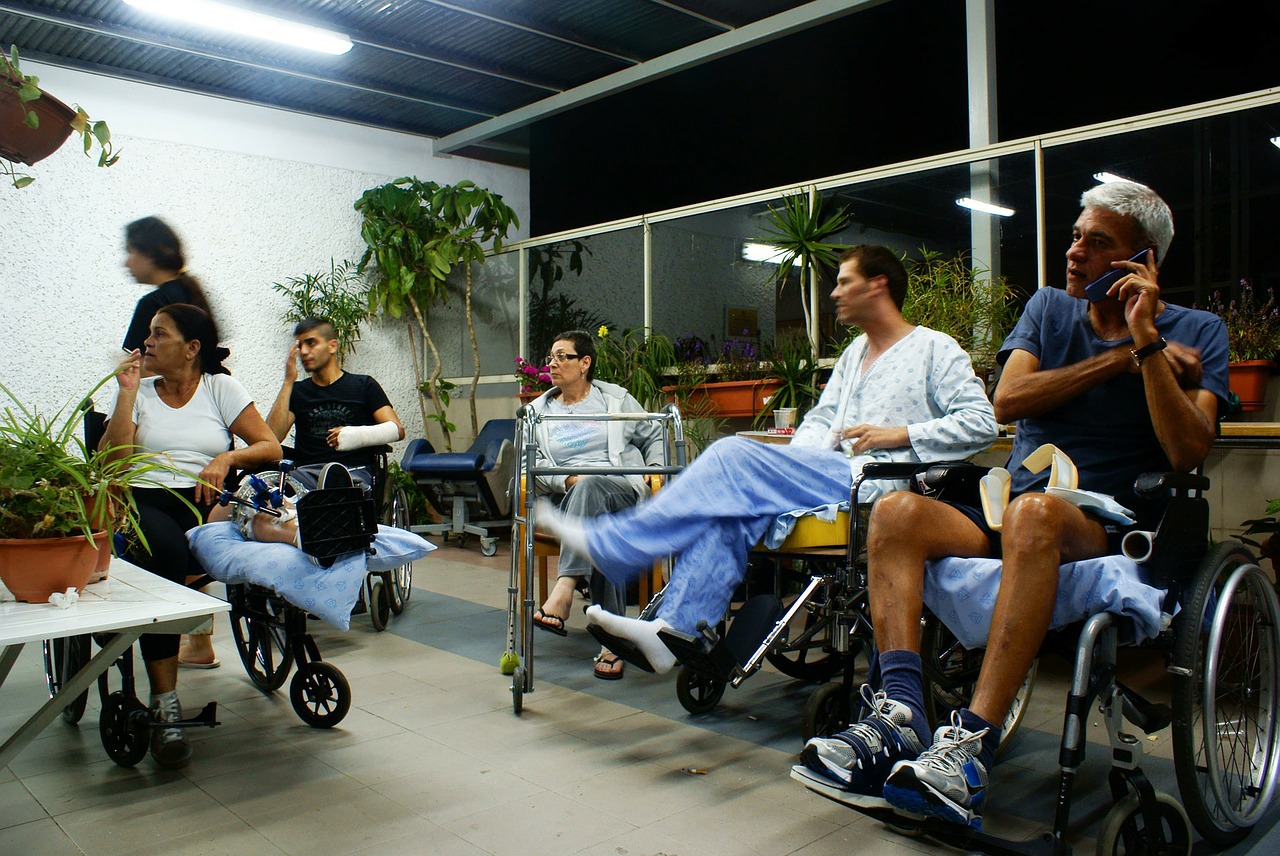
The second effect is also responsible for a gradual loss of capabilities in the elderly or injured: folks who start having problems moving about and obtain assistance from wheelchairs and electric scooters rapidly come to require them all the time. Their bones and muscles become weaker, so they use the chairs more, and enter a vicious cycle.

What are we to do?

For starters, do what you are (or should be) doing right now: Stand while you do other things like read, talk on the phone, think, etc. In fact, any other position than sitting is better.

Second best, but a good habit to take: While it is difficult to do some types of work while standing, you must program regular “stand up moments” into your work routine. (Whether you use those moments to go tell jokes to your colleagues, or just stand by the water cooler for the latest gossip, is entirely up to you.)

Never sit for more than an hour at a time. Take frequent standing breaks. Try to do more of your work while standing. The benefits go beyond fitness and health: moving about while talking or simply thinking about a situation is also reported as providing more dynamic conversation and better ideas.

Not quite ready to take my word for it?

Then keep on standing a while longer, and read this article in Scientific American.

I waited until the end to provide the link, in the hope of keeping you on your toes, or at least on your feet, a little longer… You can thank me later.

Picture from Pixabay.

What’s NBF all about – a refresher

Fitness, Exercise, Sport, Triathlon

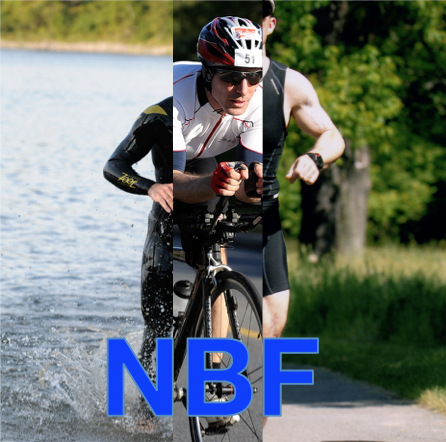
What’s NBF all about? More than this picture, that’s for sure…

To celebrate the 40th post of No-brainer Fitness, I thought it worthwhile to offer a brief recap.

Basically, in case you are still wondering, or if you are fairly new to No-brainer Fitness, here’s what it’s all about, in the form of an interview, but definitely in No-brainer Fitness style:

What does NBF stand for?

NBF is my acronym for No-brainer Fitness.

Ok, smart ass, but what is it all about, really?

No-brainer Fitness is about getting fit so as to be, and remain, as healthy as possible, for as long as possible.

Why the “No-brainer” part?

Because it is my contention that, in order to get and remain fit, you don’t need to do anything very complicated. Also, the benefits of being fit are so good and numerous, that you should not have to think twice about it.

Don’t you have some secret agenda?

You mean other than helping others reap the benefits of fitness?

Yes.

No.

C’mon, admit it! You are trying to create a cult to fitness, or at least get rich from this, aren’t you?

Well, it would be nice to make a living helping others, but I still do it for free.

So, no cult?

No cult. Quite the contrary, I promise.

Ok, prove it: How does one get fit?

You need to move more. A lot more. On a daily basis. Not just 30 minutes of intense exercise every other day, and then sitting on your chair or sofa the rest of the time. Instead of seeking ways to save your energy, you need to get into the habit of using more energy. Walking more, taking stairs instead of escalators or elevators, doing some light strength exercises, not sitting so much at work, picking up a fun sport again, etc.

That sounds like hard work: I’m getting tired just reading about it. How does one get there?

A big part of it is changing your mindset so that you no longer think about moving as hard, but as something that your body craves, much like you crave food. Our bodies really do crave movement, and as you get moving, you start to feel it more keenly.

Talking about craving, what about eating super foods and taking supplements that will make me fit and healthy and help me lose weight? Isn’t that a lot easier?

There is no such thing as “super foods”, and if you eat well, you don’t need supplements. Losing weight comes naturally from moving more and eating a good diet, not from dieting. But the key is moving more. First and foremost, that’s what you have to focus on. Anyone who says otherwise is trying to sell you something (like supplements).

Unlike you?

Unlike me.

But if we wanted to buy something from you, we could. Right?

Well, if you are interested in picking up running or triathlon as a sport, because those are great ways of getting and remaining fit, I could help with that, too. And for that, yes, I do get paid, because it demands much more attention to make sure it is done right, and you reach your personal objectives.

What else do you provide? Surely it can’t be that simple…

It is. Really. But I try to make it enjoyable to do the right thing, and I provide advice to help steer through the wild west of products and tips out there. Because being fit is both simple and fun.

Hmmm… What else?

Well, it doesn’t hurt to stay away from things that are clearly bad for you, what I call NOT FOOD. But the key, I insist, is in moving a lot more.

Ok, I think that’s enough for now. I almost believe you.

Feel free to ask me other questions. Or read some of my 39 previous posts; you are sure to find more about what NBF stands for, and how to be more fit.

Move on!

Health, Fitness, Exercise

Working on some visuals for No-brainer Fitness… Feedback welcome.