Things we don’t like to hear

We don't want to hear

We don’t want to hear

It has been a while.

Perhaps you thought I had gone away.

But that’s not the case; it is simply a matter of having recently started a new job, running a trial program of No-brainer Fitness: E, and getting caught in doing research for a post on dieting.

All of that busyness got me thinking about some of the things we don’t like to hear. So I decided to write this short post before finishing the more serious one.

In part preparation for the dieting post, and in part as a reaction to having to face the fact that there are simply not enough hours in any given day, here are some of the things we don’t like to hear. But must come to accept if we are to succeed in being fit and healthy for the long-term.

There are no such things as Super Foods

Most claims on Web sites are about a single item, more often than not a vegetable, sometimes a fruit, and on occasions red wine. It changes depending on the site you browse to on any given day. The fact is that any one food will not make you healthy. And in large enough quantity, any one thing is toxic. Yes, even kale.

The flip side: I once saw a list of so-called “super foods” that consisted of 63 or so items. That’s longer than my typical grocery list, despite the fact that I get kudos from the health-conscious store clerks where I usually buy groceries.

If you have to buy and eat so many different food, then clearly no single food is that super.

As is generally the case, with a balanced and diversified diet of mostly plants, you don’t need anything to be super. The overall diet is what is super. Because it is real food.

Food supplements simply don’t work

In the sense that they will not make you healthy. Especially those that claim to do precisely just that.

In situations where someone is truly lacking some essential vitamins or minerals, or to ensure that you have plenty (as for pregnant women), there may be benefits in taking some, if only to have complete peace of mind.

But claims of miracle dietary supplements to make you lose weight or cure you of whatever you are lead to believe (typically from the same ads) you suffer from, are hogwash.
But at some point, we have to grow up

But at some point, we have to grow up

It requires (some) effort on your part

This could also be called “there are no free lunches.” (Or, at least, no healthy free lunches.)

Basically, to be fit, you have to put in some sweat capital. Fitness does not come from a pill; you can’t get fit by hooking yourself up to a machine and letting it do the work for you. You have to do the work.

The trick is to find the kind of working out that is pleasant for you, and the purpose to commit and maintain good habits. But you have to move, lots, and regularly.

Coffee, wine, chocolate, and a few other things we like are NOT FOOD

Sorry. That’s just the way it is. Enjoy in moderation.

Dieting doesn’t make you lose weight in the long run

That’s the intro to my next post. You have to take my word for it. For now. But the evidence is pretty damning…

*****

Since first writing this post, a few interesting (and timely) tidbits came my way, so I’m adding links to other readings you might consider after being done here:

Diet Lures and Diet Lies is an interesting piece along the lines of the above discussion of super foods and supplements.

Why I don’t do CrossFit is all about the importance of not training too hard. Better yet, if you read the text carefully, you’ll notice mention of how Olympians train, and that is what I am driving at with the notion of being an everyday athlete…

Photos by Pixabay
Defenders – Part 2

Ironman, Health, Fitness, Defender, Racing

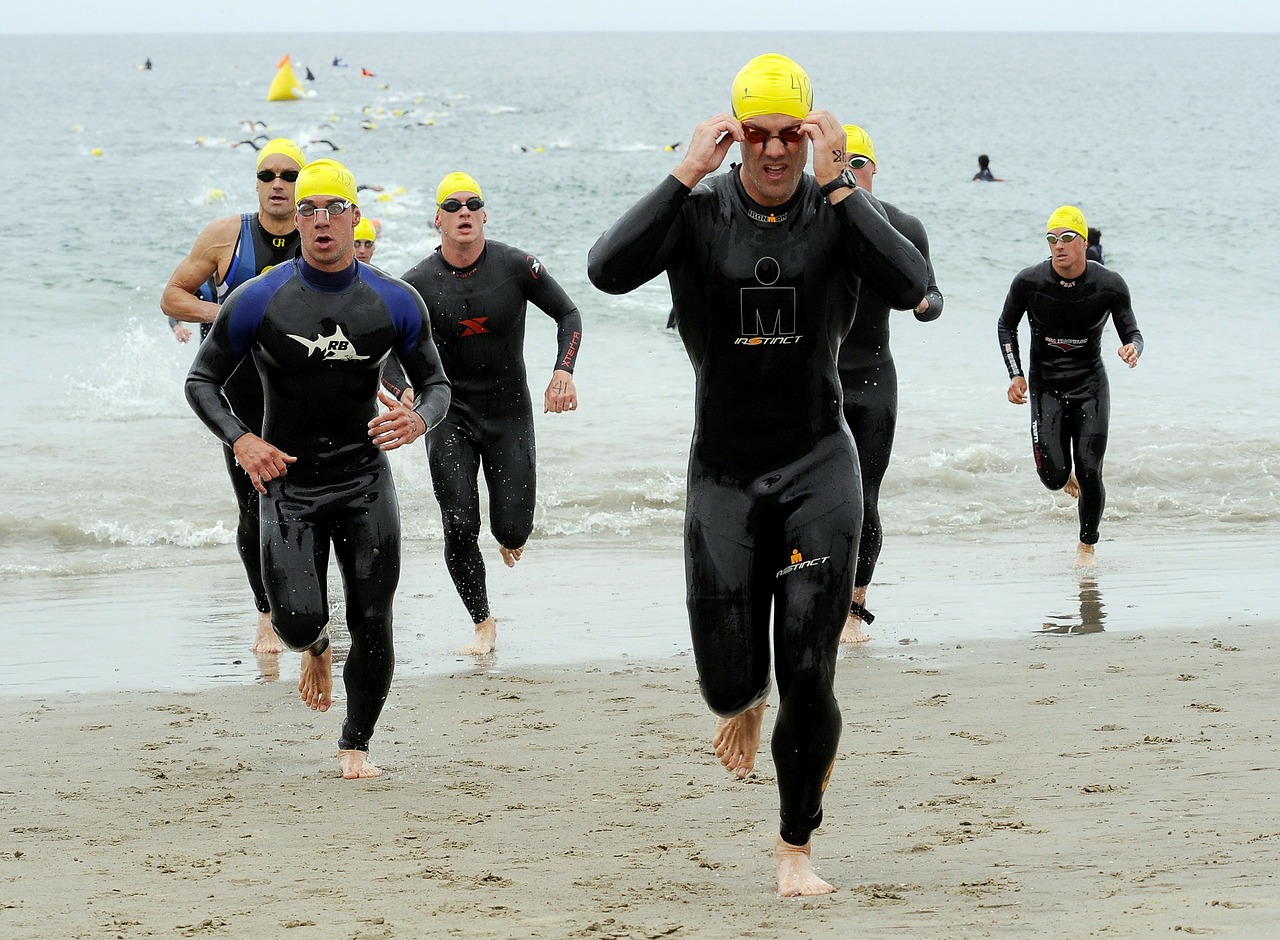
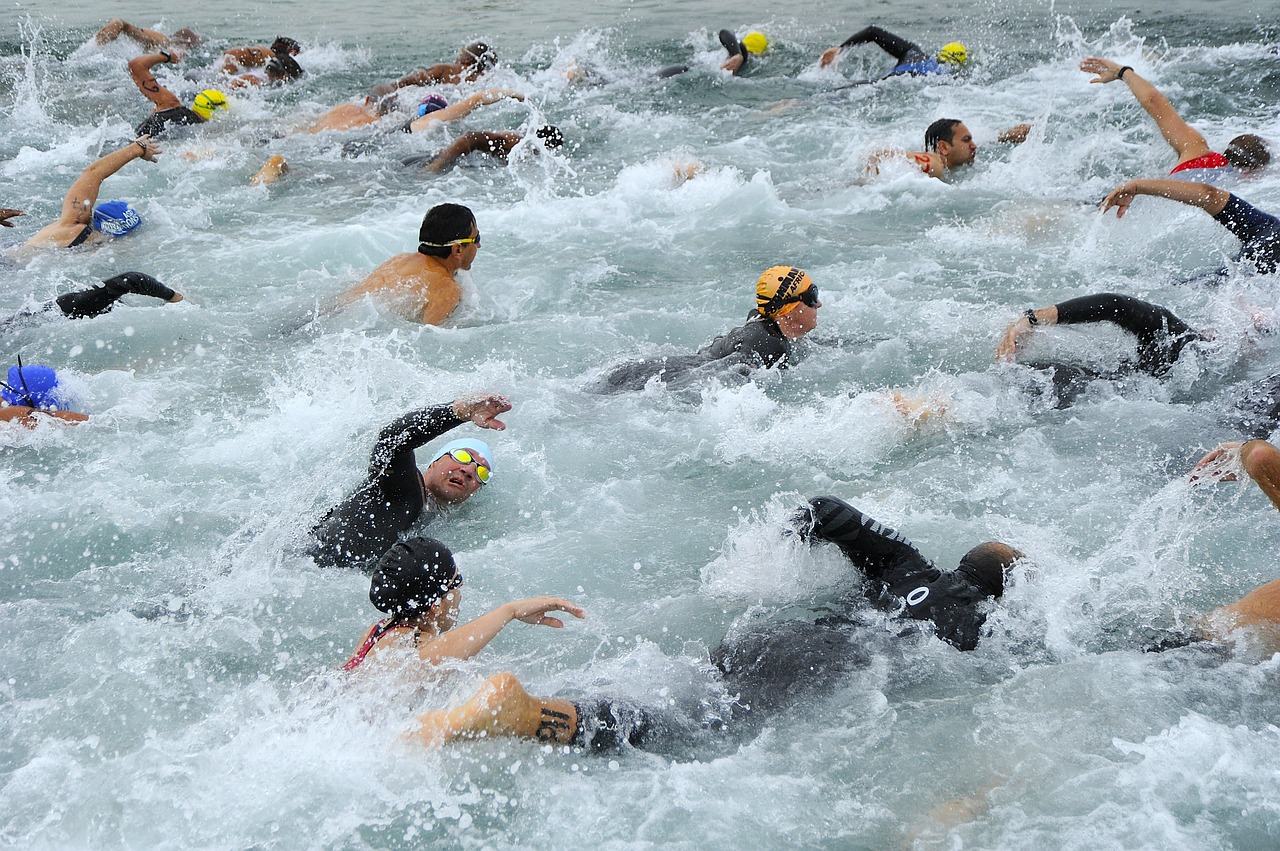
Racing is a little like war. The swim part of an Ironman is definitely like Naval Battle…

Since posting the first part on this topic, I received a lot of comments.

Some, because they came from people I care deeply about, I feel I must address before going ahead with the discussion.

(OK, the comments I’m going to address came from my wife, but she is right, as usual.)

So imagine again, if you will, the third scene from Part 1, but in a slightly less gory way:

At an ironman distance triathlon, a whole bunch of participants push so hard that for the most part they collapse upon reaching the finish line. Only a few, having not quite given it their all, still manage to remain functional, walking around and re-hydrating, speeding up their recovery through some (very light) stretching and eating.

Then catastrophe hits: A tsunami is announced, and everyone must evacuate immediately!

But guess what? It’s everyone for himself or herself! Only those who are still functional can escape and survive. Those who collapsed at the end, those who abused their bodies too much during the race, are swept away by the wave, never to be found again.

Only those who survive can show up the next day to claim their spots during the roll-down for the World Championship…

Still perhaps not the most realistic scenario, but now we’re getting to the point I’m trying to make.

Racing to the point of collapse, of total exertion, of no longer having the resources to continue acting for yourself after the finish, is a bad idea. For many reasons.

First, it causes serious damage to your body. This is what some are really talking about when they point out that running marathons or doing triathlon causes the equivalent of 20 years of physiological damage. It is not the training regularly, which we all pretty much agree is in fact good for your health, that is causing the damage: it is the abuse of racing “all out”. (And sometimes of training too hard all the time.)

And even though a fit runner or triathlete will recover, some of the effects of the racing linger. Accumulate over time. So your body ages by 20 years in a few hours, then over days it becomes younger again, but never by quite the same amount. That is why elite racers never last very long in those sports, with a few exceptions. Going all out takes its toll on your body.

Second, it means you need a lot more time to recover after a race. Some might say that is fair, since after all you performed a “great feat”, obtained a personal best, etc. Something to be proud of, to be sure. But that recovery time means you cannot go about your normal activities for a while. It means you lack fitness, in the biological sense.

And during that time your body is more prone to infections. Again, while we all pretty much agree that regular exercise helps the immune system, being exhausted in fact depresses immune functions. For a while. It is commonly known among triathletes that you are most likely to get sick right after your “A” races, when you’ve pushed the hardest of the season.

And those are just the two main, physiological reasons. Racing all out, it could also be argued, frequently makes jerks out of people. But that is perhaps a different topic, best left for some other post…

So what is the alternative?

It is what I call racing like a Defender.

A Defender knows that more may be demanded of him (or her) later, so training and racing are intense but never all out, never to exhaustion.

Just like their namesakes of Antiquity and Medieval times, Defenders aims to protect what is precious to them. In the past it would have been the lives of their families; in racing, it is their own health. So the pretend fighting that racing in a way represents is done in such a way as to promote fitness, not take it away.

Conversely, someone who goes all out all the time can be thought of as an Aggressor, or an Invader. These are often fanatical in their drive to win, to conquer. And fanaticism is pretty much the opposite of having a well-balanced view of the world. It is not a peaceful, healthy way of living.

In the final analysis, and this is my racing philosophy, when you cross that finish line you can consider that you have beaten all of those who collapsed, needed medical attention, or are generally not able to function normally after a race. If you can still fight, figuratively speaking, when you are done, then you have prevailed over those who cannot (still figuratively; I do not condone any kind of violence, during or after competitions).

Even if the official rankings don’t reflect this philosophy, you can take pride in your achievement.

Think like a Defender, and consider what you could still have done after the race. Consider how you could still have outrun the tsunami (with proper warning, of course).

Racing is not about how well you rank compared to others. It is a motivational device, to keep you focused.

What really matters is your health.

Defender, Health, Fitness, Racing

Could you still run away if your life depended on it?

Photos by Pixabay.

NOT FOOD: A User’s Guide

NOT FOOD

That’s a nice gesture… or is it?

If you’ve read some of my previous posts, you’ve seen me use the expression “NOT FOOD.”

Today I’ve decided to expound a bit upon that notion which, as far as I’m aware, I’m the only one to use. (There might be good reasons for that, like it not being a good expression, but bear with me for at least this post. Thank you.)

To begin, you might be wondering what are NOT FOOD.

Simply put, it is any “thing” that we drink or eat but that, technically speaking, is not providing nutritional value. When we have a decent diet, eat what our bodies really need, such items don’t figure in the list. We could live our entire lives without NOT FOOD, and be none the worse.

Moreover, if you were to look for them in nature, these items could not be found, certainly not the way we consume them. Therefore they are typically highly processed forms of things that may be natural, but that you could not obtain without that processing.

I extend that definition to also point out that NOT FOOD are often items that, when consumed, have no biogenic quality. They are neither necessary for, nor positive contributors to, the functioning of our bodies. In fact, quite often they are, or may be, dangerous. Particularly in large quantities.

Finally, a hint that something may be NOT FOOD can be found in the advertizing of such items: If some people go out of their way to point out what’s good about an item, chances are it is a stretch.

Here are the main examples:

  • Pop, whether normal or diet, or whatever. Sodas don’t grow in nature, and we are not hummingbirds or insects able to live on sugary liquids.
  • Chewing Gum. I should not even need to talk about this. Totally useless. And so elegant to watch…
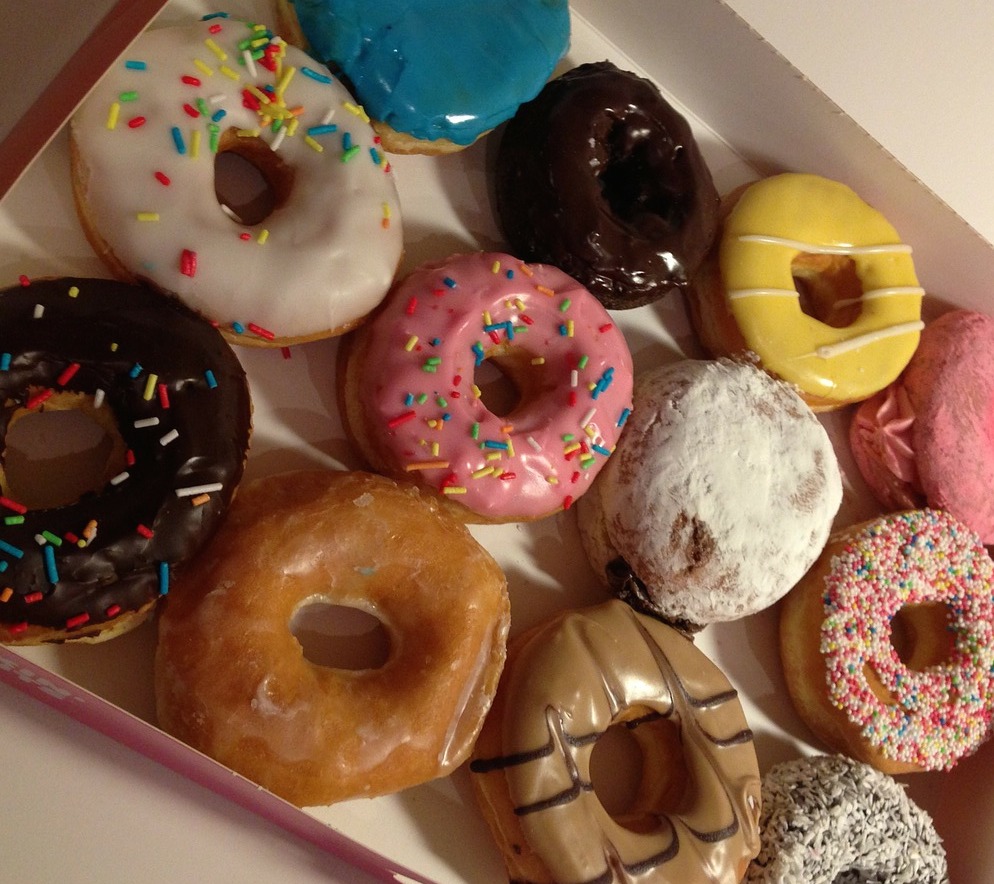
  • Candy, sweets in so many forms. Mostly sugar, practically addictive. To my chagrin, this includes chocolate…
  • Alcoholic beverages; see the comment about dangerous in the definition. Alcohol is a poison; consider the wine lobby’s effort to convince us that trace micronutrients in red wine are good for us. ‘nuf said.
  • Drugs of all sorts that are put in our bodies, not necessarily through the mouth. Seriously, do I need to spell this one out?
  • Coffee, tea, hot chocolates, etc. Sadly, these are also either drugs, or processed forms of items we could not consume without the processing. Although an important part of our daily habits, we do not need these items to live.
  • Supplements of all sorts, especially those that come with extraordinary claims attached. To believe their publicity, none of us would be here because our ancestors certainly never had such things in their diet, and therefore how did they ever survive?

Makes sense? Now, what can we do with NOT FOOD?

Well, one thing that comes to mind is “Arts & Crafts.” Let’s face it, if the stuff is not needed inside our bodies, why not make pretty decorations with them? Lampshades, collages, etc.

Ok, seriously now. Other than the simple fact that they don’t contribute to our dietary needs, and that they can even be bad for our health, we should not eat or otherwise put into our bodies any NOT FOOD items.

But we like coffee, and chocolate, and tea, and the occasional sweet. Not to mention celebratory libations from time to time. I know: I’m right there with you.

So what are we to do?

First, become aware that those items are NOT FOOD, with all that it implies.

Second, if you make the decision to consume NOT FOOD items, do so in a conscious manner, not as an automatic behavior.

Third, never, EVER, think that NOT FOOD items can replace proper diet, or are part of it. If you consume some NOT FOOD, consider the additional burden you thus place on your body, and that proper nutrition is still needed.

Therefore, do so in moderation, and consider that it is an exception, not behavior as usual. Except for the stuff that’s truly, completely useless, like chewing gum. That’s just ugly.

Now, where did I put that chocolate bar?

NOT FOOD

Arts & Crafts, the only logical use for NOT FOOD…

Photos from Pixabay.

Slow, smooth, steady… healthy!

Slow is smooth...

Slow is smooth…

There is a saying in swimming: Slow is smooth, smooth is fast.

Simply put, you are better off having a slow, technically sound rhythm, which makes for smooth motion in water, rather than rushing through your movements (and splashing about a lot more, which is NOT smooth), because ultimately smooth movement through water will make you go fast.

This saying applies to life in general. Better to act in a “slow” (read: planned, thoughtful, methodical, mindful) way, which will cause you to do whatever you do smoothly, and ultimately to complete projects and tasks faster than if you rush through and must correct mistakes and re-do the work over and over again.

And, of course, it applies to fitness and health as well. (Otherwise, I would not be writing this post.) Though, to bring the point home, I might re-phrase it thus:

Fitness is daily, daily is healthy.

Basically, putting yourself through grueling workouts 3 or 4 times (or more?!) per week, thereby risking injury and burning-out, can be counter-productive. Especially if the rest of the time you minimize your activities, sitting on your chair at work, on your couch at home, and in your car in-between.

Don’t get me wrong: working out hard can be a lot of fun. And it can serve the purpose of preparing your body for big events like running a 10k, doing a triathlon, etc., which are extra-ordinary demands to put on your body. And working out hard can be a great feel-good moment in your week. But if it is unsustainable, it becomes like yo-yo dieting, and that’s not healthy for your body.

The key to fitness that leads to long-term health, ultimately, is to have good, steady habits on a daily basis. It is everyday fitness that will protect you from having to re-start a training program over and over again because each time you do it becomes overwhelming, or you end up hurting yourself.

So be slow, be smooth, be steady in your activities. Be an everyday athlete. And increase your odds of being healthy for a good, long time.

...smooth is fast.

…smooth is fast.


Photos from Pixabay.

What is “fitness”? (Part 1)

That’s perhaps not a question you’ve asked yourself, but like so many things we take for granted, it is worth taking a step back and thinking about.

That’s why my first post is dedicated to this simple question. As will be the second, because there’s too much to explore for a single post.

First this first part, a bit of travel back in time is on the menu.

In the somewhat strict biological sense, fitness is the ability to exist, survive, and reproduce, in a given ecological niche. (I’m paraphrasing, of course, since I’m not a biologist.) In essence, the individual “fits” with the conditions and environment that prevail at that time. So:

Fitness = Adapted to one’s environment

More often than not, biological fitness is measured by the transfer of genes from one generation to the next. This “success” at reproduction is what leads to the notion of survival of the fittest. It does not mean the individual has beaten up all competitors (that may happen as well, but not as often as popularly believed); it is a simple indication that the individual has given rise to a sizable portion of the next generation. Thus:

Fitness = Reproductive Success

We’ve come some way from our origins as struggling animals. We’ve distanced ourselves from the hardships of the environment through clothes, fire, housing, agriculture, machines of all kinds, etc. Some might argue we’ve completely detached ourselves from the grips of evolution. They’d be wrong, of course; we’ve only changed our environment, modified it much faster than we’ve modified ourselves through natural (or otherwise) selection.

In that respect, our reproductive success is amazing, but our bodies may no longer fit the environments in which they now live. This leads to lots of health problems. Those among us who are overweight are only the most visible aspect, a symptom really, of this. (Careful: overweight does not necessarily mean unfit. The correlation with many health issues, however, is undeniable.)

I would go as far as to say that our current way of life makes us all unfit to a great extent. We have facilitated our lives to the point of taking cars everywhere instead of walking, taking escalators and elevators instead of stairs (yes, I’m aware there were no stairs in the African Savannah, but bear with me), eating our fill pretty much every single day (for a large portion of the population, pun intended), etc.

Our bodies are not prepared for that, and it will take time for evolution to compensate. But I don’t think we should let evolution take its course in this case. It would simply take too long, and too many would suffer needlessly in the process.

That’s why those definitions are not entirely satisfactory anymore. The first one still has value, as we’ll see later, but it demands that we consider a bit more what our environment has become.

As to the second definition, I think we should reject it altogether. We have developed technologies that compensate for nature in guaranteeing reproductive success. At any rate, overpopulation and the footprint of humanity on our only planet are already problems that demand a lot of attention. Let’s not focus on adding more of us as a measure of success.

So we must look elsewhere for a current, useful, definition of fitness.

That’s what I’ll continue doing in the second post on this topic.