Let’s do the Paleo Thing (yeah!)

(The above title needs to be sung to the tune of “Let’s do the Time Warp” from the Rocky Horror Picture Show.)
Paleo, Diet, Movement

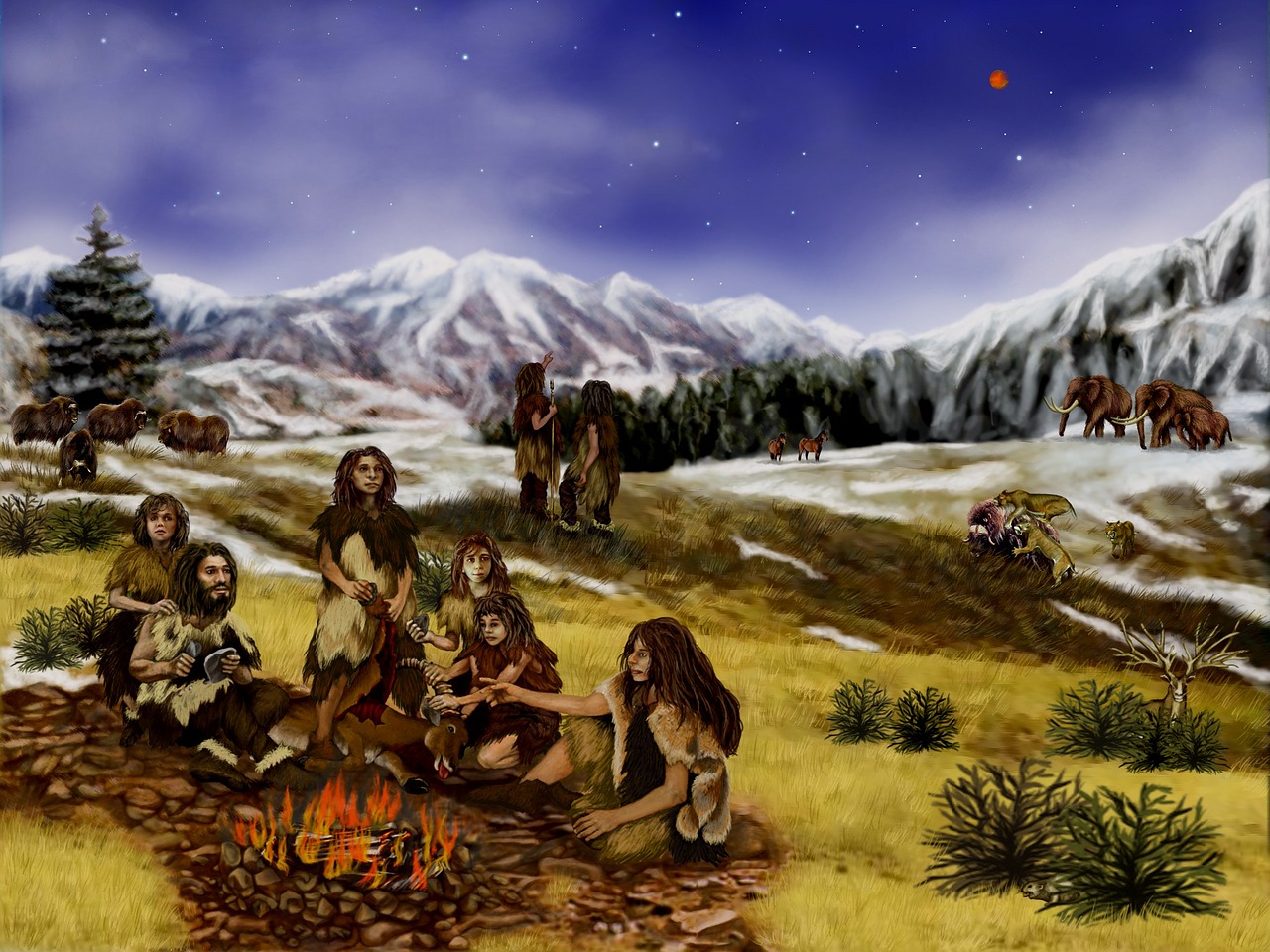
Here’s a picture of something “Paleo.” But is it reality?

This post is not what you think it is.

Why?

Because the Paleo Thing, is not what you think it is.

Bear with me. It will all become clear.

The Paleo Diet is dead…

If you are even remotely interested in health and fitness, you have heard of the Paleo Diet by now.

Most likely than not, what you think you know about it, or what you have been told, is false.

How can I make such a bold statement? Very simply:

1) For starters, we don’t know for sure what our ancestors ate on a daily basis.

What we have is a picture, incomplete at that, of their overall dietary intake. We get this from the analysis of archeological sites dating back many thousands of years, and of human remains when they are available (and often much more recent if they are complete enough to provide information).

To a lesser extent, we get some data from the current diets of so-called “primitive” people that somehow manage to exist in this day and age. So we have bits and pieces, hints scattered all over the place. And we “reconstruct” the most likely scenarios based on that.

But the complete, precise picture will elude us until we have time travel capabilities. (As a physicist, I feel pretty confident about making the equally bold statement that we never will.)

2) More importantly for this discussion, there is hardly any food nowadays that are still exactly the way they were when our ancestors of the Paleolithic were around.

Over thousands of years of selecting, breeding, and, yes, engineering plants and animals, you can be certain that what you eat nowadays is related, but not the same, as what our ancestors ate.

And if you go out of your way to select foods that have not been changed in some way, you are back to the first point I made: chances are very slim that those food items were actually eaten by our ancestors. You can be pretty sure that our ancestors, smart as they were, picked the foods they preferred when they started domesticating things. They would not have spent what little energy and time they had available on the things they did not enjoy eating.

So what you eat nowadays, no matter what anyone tries to sell you, is not what our ancestors ate. It is not, therefore, “Paleo.”

This idea of “eating a Paleo diet” must die once and for all. (Yeah, I know, good luck with that.)

…long live the Paleo Lifestyle

Now, given there is no such thing as a “Paleo Diet”, what is the big fuss about?

There is another reason why adherent to the “Paleo Diet” get it wrong: They pretty much get stuck on the notion that diet is the key to healthy living.

But our ancestors of the Paleolithic had something else going for them that makes all the difference:

They moved more than we do. A lot more.

Just eating well, whatever you call the diet, is not enough if you are entirely sedentary.

On the other hand, moving a lot, even if your diet is less than perfect, makes a huge difference in your health and fitness to survive in this world.

That’s why instead of a “Paleo Diet,” we had better embrace a “Paleo Lifestyle.” A lifestyle that puts emphasis on what contributes most to our health: movement.

So I’m arguing we should embrace the “Paleo Lifestyle” by exercising and moving all the time.

That’s a lot more reasonable that pretending to be eating what our ancestors were eating while taking our cars to the corner store to buy some meat…

But, what about diet? you ask

Good question.

The “thing” in the “Paleo Thing” of the title is that when I talk about lifestyle, I do mean making choices about diet that make sense as well.

Without being “Paleo,” the diet part is actually quite simple, and something our ancestors were indeed doing: eat real foods, mostly from plants, and as close as possible to the way they are found in nature.

To put it another way: seek foods that are not processed, or that have been processed as little as possible.

By the way, that does not mean raw food. Our ancestors had discovered fire for cooking well before agriculture. It also does not mean vegetarian or vegan, though there are excellent ethical and philosophical reasons to embrace such diets.

But keep in mind that we are still physiologically very much like our ancestors. Incidentally, they were opportunistic omnivores, and ate just about what they could find as they moved about and over the seasons. That included roots, fruits, animals, plants, and even insects. At least, that’s the part of the picture that scientists are pretty sure about.

Therefore, the “Paleo Lifestyle” I’m suggesting consists of moving a lot more, on a daily basis, and eating unprocessed foods. (Though I’m still not touching insects.)

I realize that even that, given our current society, is like turning back the clock on a lot of modern comforts and energy-saving technology. It is not easy.

But does it make any more sense than pretending to be eating what our ancestors ate?

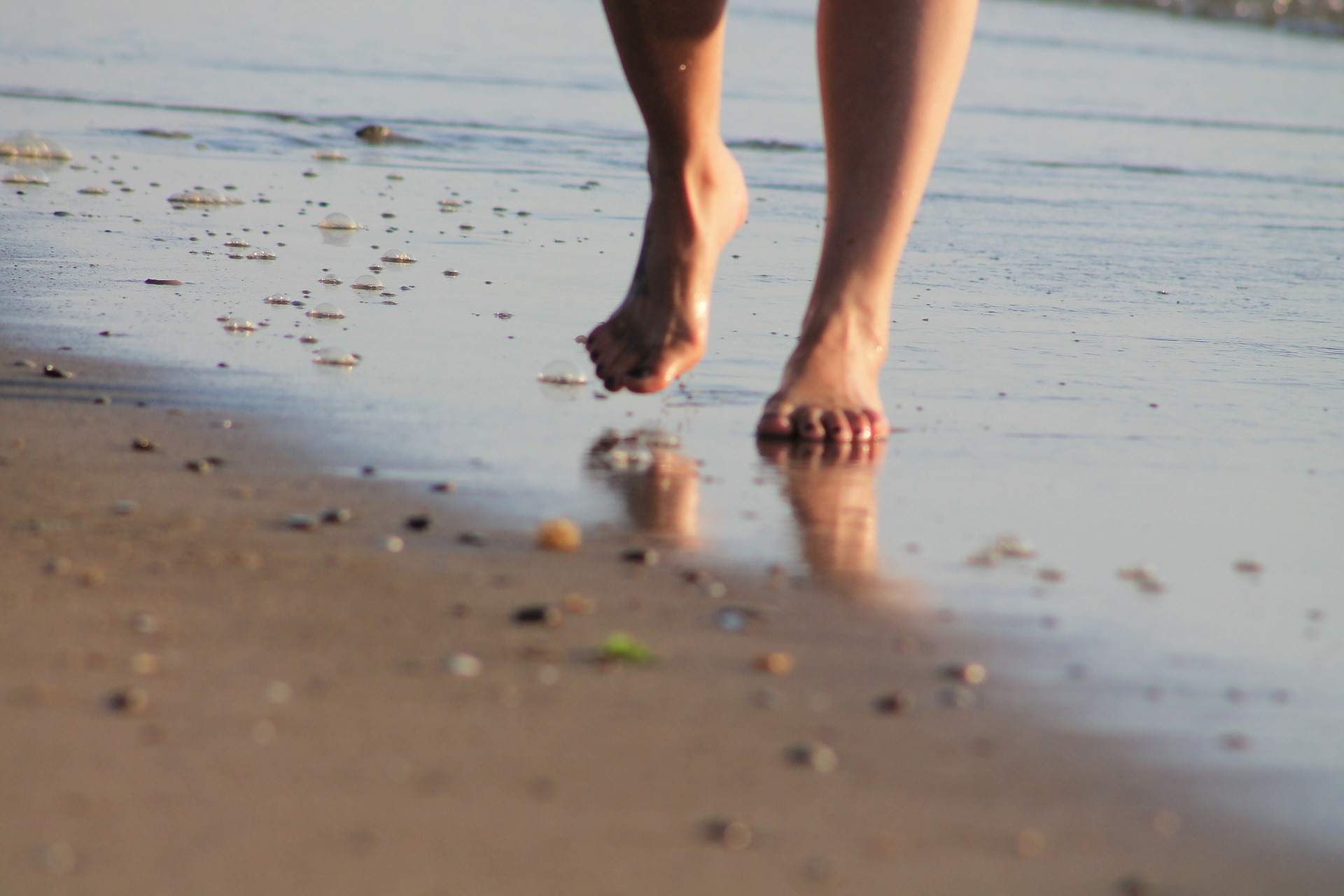
At least we know for sure how our ancestors moved: they used their feet!
Movement, Exercise, Paleo, Daily

Embrace the Paleo Lifestyle: use your feet more!

Pictures from Pixabay.
Things we don’t like to hear

We don't want to hear

We don’t want to hear

It has been a while.

Perhaps you thought I had gone away.

But that’s not the case; it is simply a matter of having recently started a new job, running a trial program of No-brainer Fitness: E, and getting caught in doing research for a post on dieting.

All of that busyness got me thinking about some of the things we don’t like to hear. So I decided to write this short post before finishing the more serious one.

In part preparation for the dieting post, and in part as a reaction to having to face the fact that there are simply not enough hours in any given day, here are some of the things we don’t like to hear. But must come to accept if we are to succeed in being fit and healthy for the long-term.

There are no such things as Super Foods

Most claims on Web sites are about a single item, more often than not a vegetable, sometimes a fruit, and on occasions red wine. It changes depending on the site you browse to on any given day. The fact is that any one food will not make you healthy. And in large enough quantity, any one thing is toxic. Yes, even kale.

The flip side: I once saw a list of so-called “super foods” that consisted of 63 or so items. That’s longer than my typical grocery list, despite the fact that I get kudos from the health-conscious store clerks where I usually buy groceries.

If you have to buy and eat so many different food, then clearly no single food is that super.

As is generally the case, with a balanced and diversified diet of mostly plants, you don’t need anything to be super. The overall diet is what is super. Because it is real food.

Food supplements simply don’t work

In the sense that they will not make you healthy. Especially those that claim to do precisely just that.

In situations where someone is truly lacking some essential vitamins or minerals, or to ensure that you have plenty (as for pregnant women), there may be benefits in taking some, if only to have complete peace of mind.

But claims of miracle dietary supplements to make you lose weight or cure you of whatever you are lead to believe (typically from the same ads) you suffer from, are hogwash.

But at some point, we have to grow up

But at some point, we have to grow up

It requires (some) effort on your part

This could also be called “there are no free lunches.” (Or, at least, no healthy free lunches.)

Basically, to be fit, you have to put in some sweat capital. Fitness does not come from a pill; you can’t get fit by hooking yourself up to a machine and letting it do the work for you. You have to do the work.

The trick is to find the kind of working out that is pleasant for you, and the purpose to commit and maintain good habits. But you have to move, lots, and regularly.

Coffee, wine, chocolate, and a few other things we like are NOT FOOD

Sorry. That’s just the way it is. Enjoy in moderation.

Dieting doesn’t make you lose weight in the long run

That’s the intro to my next post. You have to take my word for it. For now. But the evidence is pretty damning…

*****

Since first writing this post, a few interesting (and timely) tidbits came my way, so I’m adding links to other readings you might consider after being done here:

Diet Lures and Diet Lies is an interesting piece along the lines of the above discussion of super foods and supplements.

Why I don’t do CrossFit is all about the importance of not training too hard. Better yet, if you read the text carefully, you’ll notice mention of how Olympians train, and that is what I am driving at with the notion of being an everyday athlete…

Photos by Pixabay

A Primer on No-brainer Fitness: E

Movement, Daily

Time to get moving!

In case you were wondering about it, or are generally interested in moving more, this is a kind of “Origin Story” for No-brainer Fitness: E (a.k.a. Everyday).

As the E page indicates, No-brainer Fitness: E is a kind of service to help you put more movement, more exercise, and better food (and less NOT FOOD) into your daily life.

It is not like signing up for a gym membership, a fitness cult, er, I mean class, or turning up at exercise bootcamps multiple times per week. It is a highly individual commitment to doing the simplest thing (though not necessarily the easiest) of moving more, by making it a habit.

As such, it is something all of us can benefit from, no matter what your current level of activity might be.

Some perspective

What is the idea behind this daily service?

It came through the realization that, while I enjoy racing triathlons and marathons, true fitness is something that should happen on a daily basis.

Towards the end of an Ironman(TM) race a few years back, I realized the silliness of what we (some 2,700 of us that day in Lake Placid) were doing.

More to the point, I realized how, while a great deal of fun and very demanding, our accomplishment of completing a long course triathlon would have seemed much less to our great-grandparents. Particularly those used to 12+ hour days of tilling fields, cutting down trees, harvesting, and performing a wide range of physical activities on a daily basis.

Going back even further, our hunter-gatherer ancestors had to keep moving to find their food, run to hunt (not to mention avoid being eaten themselves), and generally carried everything they owned on them without the benefit of cars (or modern backpacks, for that matter).

This is not to put on a pedestal that way of living of days gone by. It is simply a realization that nowadays we take great pride in being able to do certain things that, while challenging, would not have seemed so outlandish to our ancestors. (Except perhaps in the gear needed, and choice of venues.)

Let’s face it, modern life is a lot more pleasant. But in becoming “modern”, we’ve lost a key aspect of our animal nature: quasi-constant movement. We’ve also lost perspective on what it takes for us to be healthy: quasi-constant movement, and real food.

Back to now

In an effort to regain some of that perspective, there is a growing movement to be more active, and it leads a lot of people to endurance sports and “fitness training”. And to a large extent, to obsession about getting fit.

But it is often with the wrong focus: to look a certain way, to perform at a certain level, to lose weight…

What we should be focusing on is movement on a daily basis. What we should obsess about is doing some on a daily basis, never staying put for too long at a stretch. What we should remind ourselves is that skipping one workout is not the end of the world, as long as we keep on moving regularly.

The rest will follow, in time.

That’s why Everyday No-brainer Fitness is a service designed to provide advice and reminders to keep moving on a daily basis.

It is what brings it all together: the exercise, the diet, the lifestyle. The E stands for “everyday”, but it could just as well stand for “everything”.  And now it also stands for “explained”.

All it takes is a desire to get started, and a friendly helper to guide you along…

I’m not saying it is easy, but it is simple. It is definitely a no-brainer. And the beauty of it is that you can get some help to get you started, and keep you going.

So that’s it.

If this sounds interesting, if you are ready to sign-up or need some more information, turn to No-brainer Fitness: E, and fill the form at the bottom.


Photo from Pixabay.

What about the stuff we eat?

Food

Nice, real food. Not too much of it.

So, what about the stuff we eat, what about our diet in relation to fitness, I can almost hear you ask…

Obviously, diet is an important topic, because it is a key element of being healthy. And I have a page devoted to it on No-brainer Fitness, so it must be important!

Fitness, in a natural environment, would stem from the food ingested and the activities to procure that food… But that’s no longer the case for us. We have in large part decoupled the two, and therein lies the complexity at times. After all, if we were still all eating what we have to hunt, gather, harvest, or scavenge on a daily basis, this would be a very short blog post.

I have so far stayed away from the topic of diet, in the general sense of “what we eat”, for two main reasons:

  1. I am not an expert on nutrition. I know what I like to eat, and I pay attention to what I eat, but I am largely like most people: I still struggle to figure-out what’s “best”, and I still like to indulge from time to time. (Yes, I’m a chocolate fiend, and I love ice cream…)
  2. Although very important to health, nutrition really comes second to exercise. Granted, without food, we can’t live, end of story. However, given some food, our bodies are extremely resilient; we can make do with very little quality of food. Provided we move enough, we can handle a “much less than optimal” diet for a pretty long time.

The single best thing you can do to improve your health prospects is move more. But don’t get me wrong: Of course, it is better if you also pay attention to what you eat. But the reverse, only paying attention to what you eat and moving too little does not have the same long-term effect. That is in large part why weight-loss regimens never work by themselves.

Nutrition is indeed a complex topic, so I prefer to rely on the advice of true experts in this field, and focus on getting more fit through exercise. I invite you to do the same.

Which is not the same as saying I won’t provide advice on the subject. I will, you can count on that. Simple advice. Safe advice. No-brainer advice, you might say. The rest will be up to you.

For instance: One simple change you can make right now, this very instant, to lasting benefits for your health: never, ever, drink sodas (pop, soft drinks, etc.), no matter how tempted on a warm day, no matter if “unsweetened” or “0 calories”. Soft drinks are NOT FOOD, and should be treated as such.

Food is something that comes from nature, as directly as possible. NOT FOOD is something that you could not possibly find in nature, or easily make from stuff you find in nature. (You can bet this topic will come back time and again…)

Down from the soap box, on which I can be found from time to time. Where does that leave us? Ah, yes, experts.

Here is one I have a lot of respect for:  Dr. David Katz. He gives solid, unbiased advice, and spends a lot of his energy fighting the good fight against bad nutrition, and bad nutrition advice. For instance, his What’s wrong with us? post is an excellent review of nutrition and our modern industrial food processing complex. I highly recommend his blog.

When it comes to nutrition and diet, the best advice I can give you is to be careful of the advice you receive. There is no magical ingredient that burns fat, no optimal combination to prevent disease, no silver bullet to a long, healthy life.

There is perhaps only one other bit of advice, not originating from me (it’s from Michael Pollan), that you should consider:

Eat food, not too much, mostly from plants.

Photo from Pixabay.