A bit of advice (about health and fitness advice) for the New Year

New Year, Resolution, Fitness, Health

It’s that time of the year again. Might as well make a good resolution.

New Year, New You, right?

This is the arbitrary time of the year when most of us will make resolutions of one kind or another. Even if we don’t say it out loud.

This is the time of the year that is like manna from Heaven for gyms and fitness clubs.

True, it is often the best of times to sign up, and you can get all sorts of great deals. But it is also the worst of times to sign up, because in all likelihood it will be a wishful waste of money.

By the way, there are other moments of the year when you can get equal, if not better, deals. Low times for gym attendance, like the summer months. But that’s not the point of this post.

My point, and it is a short one, is to suggest a different kind of resolution for the new year. One that is easy to keep, and doesn’t cost you anything. In fact, it may save you a whole lot of money.

The idea is simple: Apply a systematic filter to the advice you hear or read about fitness and health in 2015.

Let’s face it, we all want to be fit and have health for a long, active life. So we are prone to believe those who tell us we can get it, provided we eat this food, or take that supplement, or join this or adopt that. Especially if it means almost not effort on our part.

When it comes to health, we are gullible. And it pays off for many unscrupulous people. Entire business plans are built on that kind of gullibility.

To help you fight that, I’m proposing a kind of checklist that you should use to evaluate the advice you are being given. It is not meant to replace your instinctual willingness to believe, but rather as a sobering second thought. You’ll still need to do the rest of the considering on your own.

So, here are the verifications to make before accepting advice on health and fitness (and, truth be told, anything, really):

1) Is the person providing the advice profiting financially from the advice?

2) In particular, is that profiting financially revolving around the sale of products such as supplements or special items, as opposed to straight out guidance and support?

3) Does the advice include claims that are extraordinary?

4) Is the advice claimed to be something very few people know, or that some conspiracy would normally preclude from being widely known?

Most health-related advice on the web and in magazines these days get a check mark on all four. Steer clear!

Claims of requiring no effort, of guaranteed results, and such, qualify as extraordinary, by the way. For things like that, you need proof, and not just some “before and after” photos which are so easy to fake.

Getting two or more check marks, especially towards the bottom of the list, must trigger an alarm bell in your head. Yes, there are some evil folks on this planet, but there is no great conspiracy of the medical establishment against effective remedies. Otherwise my wife is still waiting for her membership card.

Getting only the first one checked may not be so bad, since there are legitimate service providers (like personal coaches) that are well-meaning. But beware especially of those that cause you to check #2 as well.

Remember that fitness comes from being more active, first and foremost, not from buying products. That’s my advice, and it’s a no-brainer.

For this advice, and any other you are bound to hear in 2015, use the checklist above.

Your wallet will thank you.

New Year, Fitness, Health

Time to celebrate!

Pictures from Pixabay.

Discipline: The 5 Practices – Practice 1

Exercise, Discipline, Sleep

Sometimes you need a little discipline. But perhaps not the way you think.

As I wrote  earlier on this blog, discipline is not the way to get going or even keep exercising.

For that, you need a Purpose. Otherwise, you’ll fail, or be very miserable in the process (or make a lot of people around you miserable, which is worse).

Discipline has more to do with strict regimentation of activities. It is a control mechanism, an enforcer of behaviour, not a motivation mechanism. So it is often tiring to use, depleting of energy, and detrimental in the long term.

But discipline is useful in many ways to keep you on target.

When you have a Purpose, at times you need to make sure you are able to stick to an exercising routine. You need to ensure that you do not put obstacles in your own way as you head towards a specific event/objective, or as you work towards better health through fitness.

So discipline enters into it, although perhaps not in the way you might expect.

This series of posts will discuss and illustrate what discipline is all about, and in which aspects of your life it can help you to move towards your goals.

There are essentially 5 ways, or 5 practices, of discipline to consider, in my estimation. Today I’ll cover the first practice; it is one that you may never have thought of as having anything to do with “discipline.” But under my definition it is.

Discipline Practice 1: Sleep

Get enough sleep, every day (night), both in quantity and in quality.

In a society where sleep is vilified, derided as a waste of time, is it any surprise coffee shops are doing so much business?

We live in a time of denials: denial of our deep connection to all living creatures, which causes us to destroy our environment; denial of our own limited knowledge, which causes us to think we can feed ourselves highly processed nutrients and it will be just as good as natural foods; denial of our animal nature, which leads us to believe we can function outside of the natural cycles we have evolved with.

I want to focus on the third of these denials, because it is driving us crazy, and preventing us from being as fit and healthy as we can be. I’m talking about our conviction that we should only sleep a few hours per day.

How often do you hear someone say things like “I only need 5 or 6 hours of sleep per night”? Or make even more extreme claims of that nature? Yet science is pretty clear on the subject: we need 7.5 to 9 hours of sleep per night, on average, to be fully functional.

Sure, you can get by less than that for a night or two in a row, but when you start accumulating a sleep debt, you rapidly get in trouble. Some people, a very few, can get by with less than the average (that’s why it’s an average, but that also means some need more). Those of us not getting enough sleep are asking for (and often getting into) trouble.

Read the Signs

Our society is making it sound like sleep is useless. But just watch the daily habits of those “more than 6 hours of sleep per night is a waste of time” folks. I guarantee you’ll see more than one of the following behaviours:

  • Lot’s of coffee drinking in the morning
  • So-called “energy drinks” during the day
  • Pastries and muffins for breakfast
  • Sweets and high-calories snacks
  • Meals eaten “on the go” for breakfast and lunch
  • Working in the evening
  • Not much exercising; if any, typically short and intense workouts
  • TV watching late at night

It is a “go, go, go!” lifestyle fueled by lots of drugs (caffeine, mostly, I hope) and lots of stimulating food (i.e. sugary, fatty). And with a constant bombardment of false urgency coming from work and the media, and the occasional short burst of intense activity.

When they finally fall asleep, it is only because their bodies are so tired that they manage to overcome the stimulants. Then they wake up groggy and tired, but won’t admit it, and start the cycle all over again.

This is no way to live. It takes a toll on your body, in many ways: lack of energy, weight gain, trouble sleeping (paradoxically, but not unexpectedly).

So, what are we to do about it?

Let’s face it, a healthy lifestyle starts with good sleep.

That’s why the first practice of discipline consists in going to bed; having what some call “good sleep hygiene.”

So the first discipline you need to cultivate is to get to bed at a time that allows you to get enough sleep to fully recover from the hard labours (including exercising) of the day.

What does “get to bed” mean, exactly?

Getting to bed is not a milestone, a point in time: It is a process. It begins earlier in the evening, or even earlier in the day. It includes:

  • Not drinking coffee or tea, the caffeinated versions, in the evening or even the afternoon.
  • Choosing calming activities in the evening; if you need to exercise in the evening, do so earlier in the evening, preferably before dinner.
  • Establishing a routine (brushing teeth, perhaps a shower, some light stretching, etc.) that excludes watching TV or surfing Facebook before going to bed, or worse, while in bed.
  • Doing some light reading with yellow-neutral lighting for a few minutes before falling asleep. (And I do mean reading from one of those old-fashioned things called “books,” not from the screen of a computer or tablet…)

Until it becomes an ingrained routine, a habit, you may need to force yourself. You may need to discipline yourself to sleep better. It may feel strange at first, as if you are letting someone down. But in fact you are putting your health first, and that’s a good thing.

It may feel as if you are not getting as much done, but you’ll soon realize that a lot of what we do is not that urgent. And you’ll learn to prioritize better (because it is amazing how much time we waste in a day).

So, starting now, use Discipline Practice 1. Set a trigger time by which to begin your pre-bed routine, and hit the sack at the time you’ve chosen, no matter what.

You’ll feel better in the morning, and you’ll be more capable of doing all the things you might have postponed the night before…

Sleep, Health, Fitness, Everyday, Exercise, Discipline

Some understand the importance of sleep. And let’s face it: Cats are cute.

Pictures from Pixabay.

Thinking about getting fit in the New Year? Why wait? Start getting fit right now.

Holidays, Exercise, Habits, New Year, Resolutions

Looking forward to all the food and sugar you’ll eat during the holidays?

The holiday season is just around the corner. And then it will be a New Year.

So many of us take the New Year as a signal to start an exercise program it has become a cliché. A tired one at that.

Part of the reason we want to start an exercise program in the new year, of course, is the abusive regimen we put our bodies through during the festive season. Another part of it is the logical attractiveness of a new calendar, with all the associated renewal and new beginning.

But those are illusions, and contribute to the very high rate of failure of those very same resolutions.

Simply put, if you really mean it, there is no point in waiting for January 1st. Why wait? The best time to start a new set of good habits that will lead you to better fitness is today.

As an additional bonus for starting today, having the “excuse” of being on a new tract towards better fitness is an excellent way to limit the damage of over-indulging during the holidays. And it also an excellent conversation topic, and may spread much more joy around by being more reasonable (and limit the spread of mid sections in your entire family).

“But, wait, in order to start now, don’t I need to join a gym, or buy expensive equipment?” I imagine some of you asking.

No. Not really. Not at all, as I’m about to show.

(Though asking for a few useful pieces of equipment as Christmas gifts can also be a very good idea, by the way.)

Here’s the recipe I’ve come up with, based on all my reading and experience, to get you going immediately and have a much more healthy holiday experience and a head start on your fitness for years to come:

1) Start using your body more to move around

You don’t need any special equipment. Just look for opportunities to walk more, take stairs more, not sit as long as you normally do. Every time you move, you score a small victory: make it a game and keep score. As you graduate through the levels of moving around, you might want to reward yourself with a pedometer (to keep a more accurate count) or a FitBit, or just start using your smartphone for much better purposes than reading Facebook updates… After 3-4 weeks on this stage, with new habits in place, move on to the next phase.

2) Start re-building your muscle mass

Yeah, this is the not-as-much-fun part, I must admit, at least at first. But it is oh so important. What is often neglected when talking about reduced metabolism as we age is the fact that we lose muscle mass, and that it is muscle mass that burns the most calories. The best use you can make of a few minutes in the morning is to do some simple exercises like squats, push-ups, sit-ups, etc. Look into the 7-minute Workout and adopt it on a daily basis. Then reward yourself, perhaps with a set of shiny weights or kettle bells, or a very nice dinner out. After this becomes a habit, 3-4 weeks of focused effort, move on to the next phase.

3) Put a sport in your schedule

Play is the best way to spend energy without noticing. And it is fun. If you’ve ever played a sport competitively, or just for fun, when you were younger, pick it up again. If you never did, then become a “big kid” and pick one up. Not competition, just playing. You’ll soon come to realize that it is better to do something than to watch it on TV. Do it with your spouse, with your kids even; a family that plays together, spends quality time together. A brand new badminton racket, or new court shoes, make very nice rewards for being more active. Again, take a good 3-4 weeks to make this a new habit before moving on to the next one, and keep room in your schedule for this from now on.

4) Sign-up for a walking, running, or cycling event

By this point it will be spring time, or very close to it. There are many running shops and fundraising programs that offer training for various local events to be held during the summer; in those events you can walk or run, or bike through various distances. These are great ways to get with a group of people working towards a fitness goal, even as you all work together to help others. And you can do this at your own pace, quite often with coaches that are eager to help you at no charge. The event t-shirt and/or finisher medal make rewards enough for your achievements, though I know a lot of people who conclude such event with a bottle of bubbly… I don’t even need to tell you to do this again each year, or multiple time per year, because once you try it, you’ll adopt it.

You notice a pattern of “effort and reward” emerging? Nowhere am I suggesting you need to spend first, and then exercise: That’s often why people feel particularly bad about failing in their resolutions.

What I’m hinting at is that you can start doing the right thing, right now, with a future reward in mind. When you get to the reward, you can set the next goal. It comes from within yourself, not from feeling bad about having spent money.

Also, note how I’ve not told you to join a gym. You don’t need to. But it could come later, if you feel like it. However, getting fitter right now begins at home and in your daily activities. Again, with minimal expenditure.

One final note about the coming holidays

It is part of the recipe in general, but not a specific step in the program, or it would be “step 0”: Consult the list of NOT FOOD items and make a conscious effort to remove them from your habits.

Do this gradually, not all at once, but do it. Just removing liquid sugars (pops, fruit juices, etc.) makes a HUGE difference. With each step (1-4) outlined above, pick a NOT FOOD item you want to work on reducing and eventually eliminating from your life. Your body will thank you for it by getting fitter faster, and, incidentally, getting leaner in the process.

So, instead of indulging and feeling bad this holiday season, spread the cheers and the word about getting fit. Get a head start on the holidays by starting today.

There’s nothing stopping you from having the best holiday season ever.

Rewards, Habits, Effort, Exercise

A bit of celebrating, when it is as reward for your accomplishments, is always good for you.

Pictures from Pixabay.

What’s NBF all about – a refresher

Fitness, Exercise, Sport, Triathlon

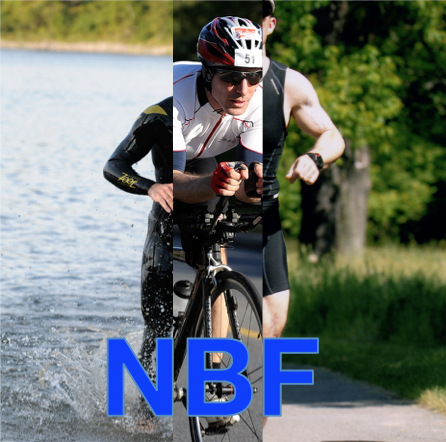
What’s NBF all about? More than this picture, that’s for sure…

To celebrate the 40th post of No-brainer Fitness, I thought it worthwhile to offer a brief recap.

Basically, in case you are still wondering, or if you are fairly new to No-brainer Fitness, here’s what it’s all about, in the form of an interview, but definitely in No-brainer Fitness style:

What does NBF stand for?

NBF is my acronym for No-brainer Fitness.

Ok, smart ass, but what is it all about, really?

No-brainer Fitness is about getting fit so as to be, and remain, as healthy as possible, for as long as possible.

Why the “No-brainer” part?

Because it is my contention that, in order to get and remain fit, you don’t need to do anything very complicated. Also, the benefits of being fit are so good and numerous, that you should not have to think twice about it.

Don’t you have some secret agenda?

You mean other than helping others reap the benefits of fitness?

Yes.

No.

C’mon, admit it! You are trying to create a cult to fitness, or at least get rich from this, aren’t you?

Well, it would be nice to make a living helping others, but I still do it for free.

So, no cult?

No cult. Quite the contrary, I promise.

Ok, prove it: How does one get fit?

You need to move more. A lot more. On a daily basis. Not just 30 minutes of intense exercise every other day, and then sitting on your chair or sofa the rest of the time. Instead of seeking ways to save your energy, you need to get into the habit of using more energy. Walking more, taking stairs instead of escalators or elevators, doing some light strength exercises, not sitting so much at work, picking up a fun sport again, etc.

That sounds like hard work: I’m getting tired just reading about it. How does one get there?

A big part of it is changing your mindset so that you no longer think about moving as hard, but as something that your body craves, much like you crave food. Our bodies really do crave movement, and as you get moving, you start to feel it more keenly.

Talking about craving, what about eating super foods and taking supplements that will make me fit and healthy and help me lose weight? Isn’t that a lot easier?

There is no such thing as “super foods”, and if you eat well, you don’t need supplements. Losing weight comes naturally from moving more and eating a good diet, not from dieting. But the key is moving more. First and foremost, that’s what you have to focus on. Anyone who says otherwise is trying to sell you something (like supplements).

Unlike you?

Unlike me.

But if we wanted to buy something from you, we could. Right?

Well, if you are interested in picking up running or triathlon as a sport, because those are great ways of getting and remaining fit, I could help with that, too. And for that, yes, I do get paid, because it demands much more attention to make sure it is done right, and you reach your personal objectives.

What else do you provide? Surely it can’t be that simple…

It is. Really. But I try to make it enjoyable to do the right thing, and I provide advice to help steer through the wild west of products and tips out there. Because being fit is both simple and fun.

Hmmm… What else?

Well, it doesn’t hurt to stay away from things that are clearly bad for you, what I call NOT FOOD. But the key, I insist, is in moving a lot more.

Ok, I think that’s enough for now. I almost believe you.

Feel free to ask me other questions. Or read some of my 39 previous posts; you are sure to find more about what NBF stands for, and how to be more fit.

Move on!

Health, Fitness, Exercise

Working on some visuals for No-brainer Fitness… Feedback welcome.


Now that’s my kind of conspiracy theory

Fitness, Health, JFK, History

Finally, a JFK conspiracy worth subscribing to…

I recently visited the JFK Presidential Library and Museum in Boston.

I’m no history buff, nor am I particularly into admiring political figures of the past (or present, for that matter). But I must admit that the visit turned out quite fascinating on various levels.

This guy (John F. Kennedy, to be precise) clearly died way too soon. I picked up a few good quotations and a new-found respect for what he tried to do during his brief stint as POTUS.

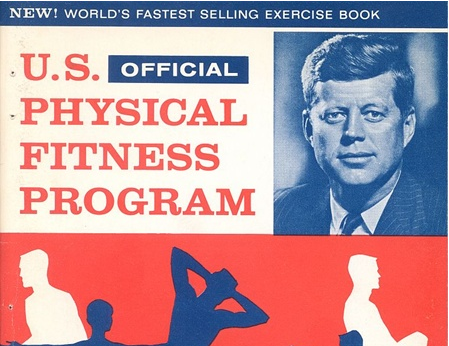
And I got one major surprise in the process, as the picture at the top of this post hints at.

You see, back in the early 1960s, people like JFK were already very concerned about the fitness level of Americans.

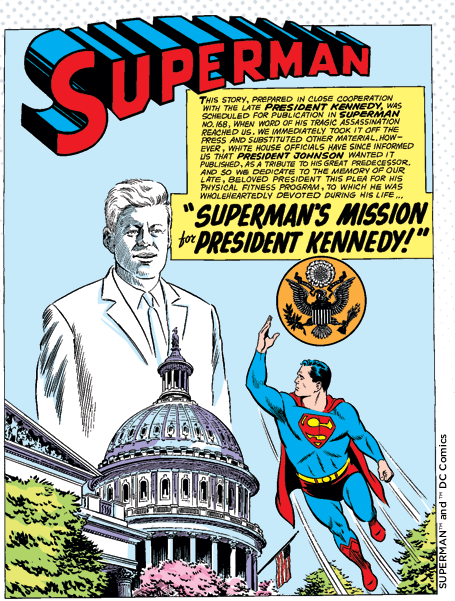
JFK re-launched a council on fitness early on in his presidency, and got a fitness program created and disseminated to schools in the US. Later on, he enlisted the help of the artist who was then drawing the Superman comics and asked him to create a special story in which Superman went on a mission to help kids get into better shape.

You could say that JFK was conspiring with a few other people to improve the fitness of Americans. That’s the kind of conspiracy that’s worth talking about.

Keep in mind that this was back in the early 1960s! Already then, there was unease about the fitness level of people, and of kids in particular…

JFK, Superman, Fitness, Health, Exercise

This is done to promote fitness. Let’s hope I don’t get sued.

Some things change, some things stay the same

Sadly, JFK died before the book was published, but his successor got the comics published, as you can see from the other image.

Did it work? Apparently not; the general population, and kids in particular, have been getting less fit, even though elite athletes have been getting better and records have been broken systematically. You could say a wider chasm has been growing in terms of fitness, even as people have been getting wider…

What’s really interesting, however, other than the fact that this was happening already over 50 years ago, is that very little has changed in terms of what is being recommended as regular physical activity. Except perhaps that infamous rope climbing thing (now we beat the crap out of floors with ropes). Sit-ups, pull-ups, push-ups, running, variations on those themes.

We also have a lot more evidence, scientific at that, about how much to move, and at what intensity. Guess what? We should be moving every day. That’s a no-brainer.

Why has it not worked?

That’s a fair question. Consider the simple fact that we’ve known for a long while how to maintain our bodies; we’ve just fallen short of finding better ways to get people moving when they are not.

Perhaps part of the problem is the lack of understanding of how to best promote fitness among kids. Standardized tests and competitions are not the way to go; measuring personal improvements based on heart rate and deployed effort is much better, as Dr. Ratey illustrates in his excellent book Spark, (and about which I provided a brief review a few days ago).

We tend to focus on providing logical, rational, scientific arguments, trying to convince everyone of the importance of moving. Unfortunately, that does not work. Our relationship to effort is one based on emotion, not rationality. That’s the real problem. Something even Superman couldn’t fix.

What can’t be denied is that the last 50 years have seen a continued rise of suburban lifestyles that almost make cars mandatory even as schools have been cutting their physical education courses and made free play practically illegal in schoolyards. Instead of walking everywhere and playing, sometimes rough, now kids are driven and made to behave all the time when in fact what they need is to learn to use their bodies in a fun way and spend energy.

In any case, let’s not forget that we’ve been struggling with this for a while, so a solution is not likely to be easy. But we’ve known for a while that we need to move more, on a daily basis. That remains the key.

Moving On

By the way, the council on fitness still exists, and every few years a new document is created, new guidelines are provided, and so on. It’s an ongoing battle. The documents are getting thicker, perhaps so they can be used for weight lifting some day. The site is there, though I have yet to find useful advice there.

Instead, we should all join the conspiracy directly and get moving. No thinking, no arguing, no rationalizing. Just moving.

Should you happen to be in the Boston area, I highly recommend a visit of the JFK Presidential Library and Museum. If you go, do as I did (and dragged my mom into doing with me): Walk from the nearest T stop instead of taking the bus. That way you’ll keep to the spirit of John “Fitness” Kennedy…

Images “borrowed” from the JFK Presidential Library and Museum Web site, which is visible to everyone, and that I highly recommend visiting to anyone in the Boston area (so please don’t sue me for having used them).