Discipline: The 5 Practices – Practice 3

Exercise, Health, Discipline, Balance

Balance, a key aspect of health. It starts with how you approach exercise…

This practice is short, and you may see it as an extension of the previous practice, but since it can be applied separately, I chose to treat it this way.

The practice is deceptively simple, and it is possible that only few will relate to it. It may be because it is nowhere near applying to you, in which case that’s great. It may be because you are denying it, in which case I hope this short discussion will at least raise some flags in your mind.

Here it is: Maintain the balance.

As you exercise regularly, perhaps even train in a specific sport like running or triathlon, allow yourself to relax from time to time.

In other words: Don’t be a “stick-in-the-mud” always focused on your training. Allow yourself some leeway, through activities with family and friends or even by doing other sports just for fun.

Too many sports or fitness enthusiasts, particularly if they discover such physical activities later in life, go overboard and spend way too much of their time, energy, and money, pursuing exclusively that activity.

Many call it “having a passion”; however, although I’m no psychologist, from the perspective of a coach it smells a lot more like “being obsessed.” It is as if the new-found activity is a pressure release valve from something else (everything else?) in life. And it ends up taking too much space.

Or the activity is taken so seriously that it prevents the spreading of the joy of moving to others. I’ve seen it: Perfectly good opportunities to share one’s enjoyment of, say, running, with a partner or friend because it is not “optimal training.” What a shame! Partners/family and friends should come first, at least some of the time.

(Shameless plug: I did write about training with a spouse or life partner before. It is worth reading, if you can spare the time…)

Let’s be clear: If you do not move everyday, if you do not exercise regularly, you need to move more. That’s what you need to do to obtain and maintain the balance that you’ve been missing so far.

If you are in that group of folks who move a lot, and then move some more, and spend lots of time and money on your sport/training, you need to take a step back and relax a little.

Because going overboard in anything is unhealthy.

Especially if the focus is on looking a certain way, or performing to a certain level. That is unhealthy in so many ways that it warrants an entire post of its own. So I’ll leave it for now.

Passion is fine, though I would reserve that for sentiments like love, and perhaps an over-arching goal in life. Most of the time, what is described as a passion is in fact a fixation, an obsession.

Consider: If a key part of getting fit is to pay close attention to how our bodies feel, then it stands to reason that we should also pay close attention to how our minds are doing.

Listen to your body, and to your mind; both will tell you how exercise is making them feel. Beware of a mind that constantly turns to training, that finds refuge there from other aspects of life. Remain in control; maintain the balance.

The easiest way to achieve this is to relax, take things less seriously. And keep a clear order of the priorities in your life.

Picture from Pixabay.
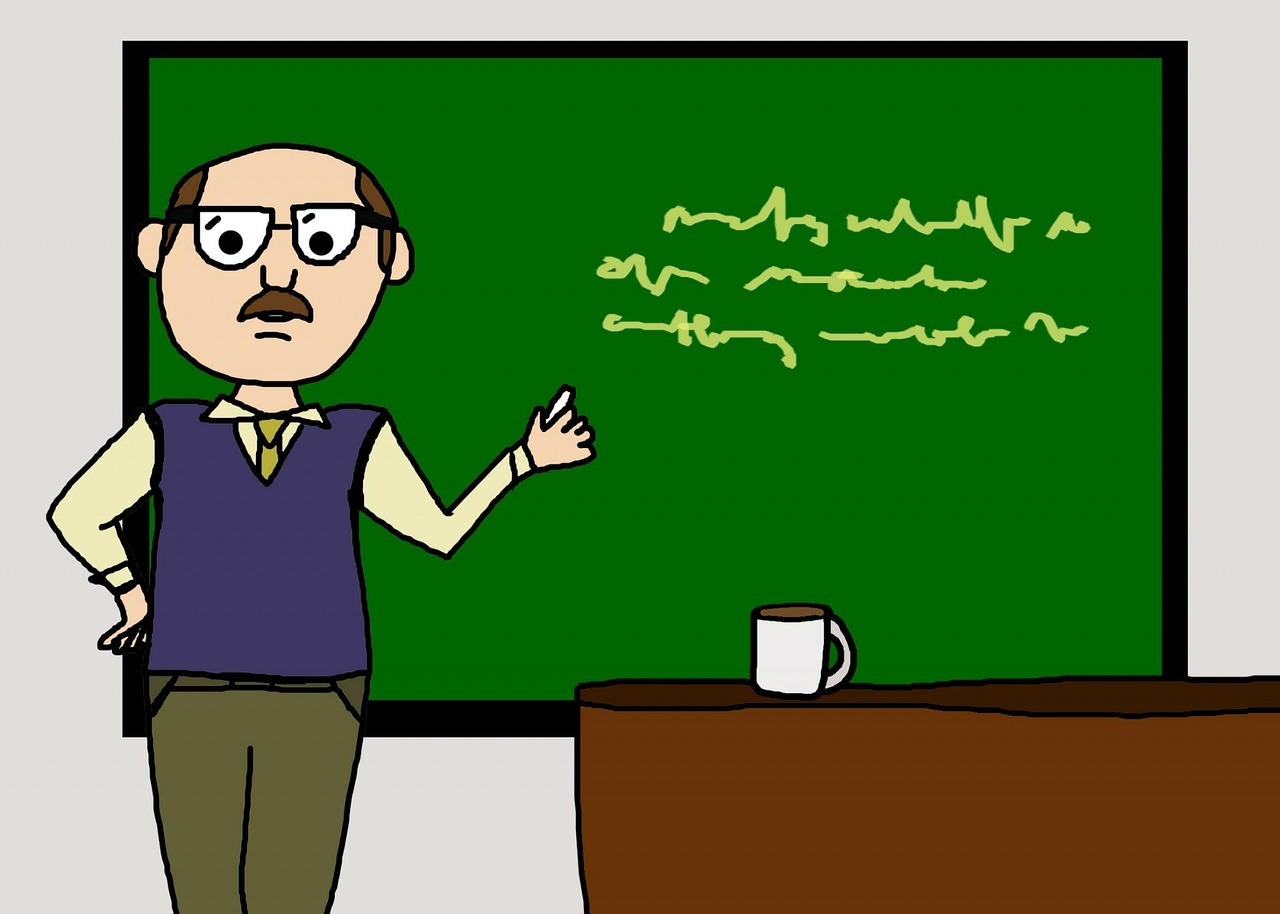
Theoretically speaking…

Exercise Theory, Training, Fitness, Coaching, Sports Science

A little theory has never hurt anyone. Unless you drop a big book on your foot and break something…

Because a bit of theory never hurt anyone, and because about a year ago I promised I would do so, this post is about the principles underlying training methods aimed at increasing physical fitness.

Because that theory is well understood, and very simple, this will be a short post.

Because simply saying “you train hard, and you get better” is not enough, this post won’t be that short.

A bit of biology

No matter how complex, or simple, an organism, biologically we all are the same in that we interact with our environment to find our sustenance and proliferate. (By the way, even a single-celled bacterium’s complexity should not be under-estimated. But that’s another discussion altogether.)

A large proportion of those interactions can be summarized by a simple cause and effect relationship:

Stimulus ——> Response

Even if the initial action was a movement by the biological entity, the resulting stimulus of the environment on the biological entity will cause a response. For instance, you move your hand to seize a cup on the table; at a touch (stimulus), you feel the scalding heat of coffee therein, and withdraw your hand (response).

Another example: You are sitting quietly in a cafeteria when an alarm rings loudly (stimulus); you immediately get up and leave (response).

Now, often, as the examples above show, the response is one of fight or flight or avoidance. Much like if you start exercising vigorously and find it difficult, the response to the discomfort might very well be to cease the exertion. But sometimes the stimulus is a pleasant one, like sweet food (or sweet NOT FOOD), and the response then becomes to eat more of it.

There is always a response to the stimulus.

However, there is an extension to the simple cause and effect relationship when it comes to biological systems (i.e. living beings). This comes about when the stimulus is provided repeatedly:

Stimulus (repeatedly) ——> Response (each time) ——> Adaptation

Basically, when a biological system is subjected to a stimulus often enough, not only does it respond in the short term, but it can also modify itself (its behaviour, its own sub-systems) so as to be able to change the short-term response and even deal with the stimulus.

That, as you may be able to guess, is the basis for the Training Principle.

(Admittedly, human beings have big brains that allow us to speed up adaptation, and even predict stimuli we don’t particularly care for. However, how effective we are at doing that is still subject to debate. Revisiting the example of the fire alarm in the cafeteria, if your response is to stay put because there have often been false alarms, then your adaptation to the stimulus could end up costing you your life. But I digress.)

The Training Principle

Simply stated (in my own words):

Subject the body to a specific physical stressor (stimulus) repeatedly and provide sufficient recovery time from the ensuing fatigue (response) to allow it to become stronger (adapt) in dealing with that specific stressor.

That is how all exercise regimens and training programs function.

The trick, the real job of coaches, is to vary the correct details. Because the body will adapt to the stimulus it is subjected to, and only to that stimulus.

That is why you will not gain much muscle mass by doing endurance training; that is why doing a lot of weight lifting (a.k.a. body building) will do almost nothing for your cardio-vascular capacity; and why doing always short bursts of intense activity may gain you some muscle mass and power, but will not make you burn much fat because that energy system is barely used in that kind of activity (you’d need to do longer, less intense activity for effective fat burning).

Moreover, note the potential pitfall in the principle: The body adapts to the stimulus provided. Which ultimately means that the body will not change beyond a certain adaptation if the stimulus remains the same.

That is why simply jogging 30 minutes per day will only get you so far in improving your fitness. To get even better fitness, you need to vary the stimulus once the body has adapted to it, or a little before that.

Sport scientists often use the acronym FIT to describe how the stimulus can be varied:

  • Frequency: How often one trains or exercises.
  • Intensity: At what intensities.
  • Time: Or duration of each training session.

Some even add a second T (making it FITT) by including Type, because different types of exercises also make a difference. For instance, doing core work, which is strength training, is now recognized as a way to improve running performance. But it was not the case until a few years ago.

I like FITT. That’s what coaches work with. That’s what is fun about coaching: Finding the correct mix of FITT for each person to get them to increase their fitness as fast, and as safely, as possible.

But it all starts with subjecting your body to the right stimulus. Or stimuli. Like getting up and moving.

The nice thing is that one of the ways in which your body will adapt, past the initial response of finding it hard, is to ask for more. You just have to use your big brain to deal with the temporary discomfort, and then you’ll be on your way to better fitness…

In a future post, and hopefully not in a year’s time, I’ll describe the many ways in which the body adapts to exercise. That’s also fascinating, and goes a long way in explaining why better fitness leads to increased odds of being healthy for a long time.

Picture from Pixabay.

Discipline: The 5 Practices – Practice 2

Exercise, Everyday, Discipline, Motivation, Purpose

Get moving, keep on moving, and celebrate your accomplishments. But curb your enthusiasm, or risk seeing it all come crashing down.

As I’ve explained before, discipline is what most folks erroneously think of as the means to stick to an exercise routine (and/or dieting plan). That’s the militaristic, stick-in-the-mud view of what it takes to be fit and healthy.

What you require, in fact, to get fit and remain healthy for a long, long time, is a clear sense of purpose. You should never have to use discipline to keep moving; it must be part of who you are, of how you exist on this Earth.

Purpose goes well beyond motivation, though motivation can do you for a spell. Without a clear purpose, however, even motivation will wane and your exercise habit will go the way of so many other good ideas that just end up sitting on a shelf in your head.

Does that mean discipline is useless? Far from it. But in this series of short posts, I’m trying to explain the ways in which discipline is an essential component of your lifestyle.

Those ways are what I call The 5 Practices. Because there are 5. Only 5. Well, 5 main ones that I could think of when I planned this series. Maybe there are more, but these 5 strike me as the main ones. Oh, just read the post, and let me know if you can think of any more…

So what is Practice 2?

Simply put: Curb your enthusiasm.

It is the discipline of not acting rashly even when we feel capable and eager to do more (i.e. too much), or things that we are not yet ready for.

I could have called it “Stick to the Plan,” but often the problem comes precisely from making plans that are overly ambitious or enthusiastic. Especially if you don’t have a coach.

And even if you have a coach, it is too easy to convince the coach that you are ready for the next bigger thing (or too much work for the coach to constantly talk reason to you, not to mention too risky that you’ll seek another coach if that’s the case).

So the second practice of discipline is something you must impose on yourself. Primarily about your own eagerness.

Let me be very clear, just in case: What gets you to exercise regularly is your purpose, sometimes assisted by the motivation to reach a specific goal. Discipline serves to constrain your enthusiasm so that you stick to the plan, doing no more than what you are supposed to, so as to avoid burning out or getting hurt. Basically, discipline is not what gets you to exercise, or gets you to exercise more: It is what gets you to do exactly what you are supposed to.

How does the need for this practice come about?

The positive effects of exercise on the human body (and mind) are undeniable. Physiologically, we are meant to move a lot, and our animal bodies are at their best when we do. Everyday.

This results, in the long term, in better fitness and better health overall. Provided it is done the right way, without excessive stress leading to injury, this is the way to maximize the odds of living a long and active life.

In the short term, the physiological effects of exercise are also very positive; finishing a tough (but fair) workout results in a kind of euphoria that is regularly compared to a drug high. Or at least a very real sense of accomplishment. That is followed by a pleasant feeling of quiet fatigue often attributed to endorphins.

While beginning an exercise regimen is tough, when the enthusiasm of “getting back in shape” is combined with the excitement of the high and the subsequent relaxing low, the effect is one of wanting to do more, as soon as possible. It is quite addictive.

The process of going from sedentary to getting back in shape, the progress of the very beginning, with all its positive reinforcements, leads many to do way too much, too soon, and end up getting hurt. And stopping altogether.

For some, perhaps because they are younger or they manage to avoid an early injury, the phenomenon takes place after a first race or some other major event: They get hooked, so to speak, and want to do more, go faster, register for lots of races, etc. And then they get hurt. They can end up sidelined for months without being able to do much; in some cases they stop exercising altogether.

Either way, the problem is one of too much enthusiasm leading to not following a sound plan that is tailored to develop long-term fitness. The kind of fitness that leads to health. Fitness to race, to compete, even if it is “only” against oneself, is not fitness optimized for a long, healthy and active life. It is too short-term. And often counter-productive.

What’s someone to do?

So as you embark upon a new fitness program, or as you prepare for a new season of training in your chosen sport, curb your enthusiasm. Have that kind of discipline to tell yourself to not do too much.

Exercise and develop your ability to do more at a safe, reasonable pace. You’ll still get there, wherever “there” is for you. In fact, you may end up there faster, overall, as some have suggested (put that part has not been proven scientifically).

By all means, do more than you currently are. And celebrate your successes as you keep on moving (that’s really important, no matter how small they may appear to you, or insignificant to others). If you are into that sort of thing, do register for more events because that can help keep you focused on your purpose and keep track of your progress. But do so in a reasonable way, and for the right reasons.

Call it maturity, or wisdom. Call it “what the coach ordered” if it helps. It is certainly what our knowledge of exercise science, and my experience as a coach, indicate is best.

Ideally, get a coach to build you a program that is suitable for long-term fitness, and follow the plan. Even if you think you can do more.

The simple truth is that we are not the best judges of what is enough or sufficient when it comes to ourselves. But by being aware of this blind spot and/or asking for help to deal with it, you’ll do much better in the long term.

And that is why we need the second practice of discipline.

Exercise, Everyday, Coaching,

Do more. But don’t do too much. If you want to keep on moving.

Pictures from Pixabay.

The message is simple (but it is worth repeating)

Movement, Diet, NOT FOOD, Everyday

A new beginning, of sort, so time to get moving again.

To get the ball rolling, not because of the new year but because of the launch of the No-brainer Fitness Facebook page (yes, I finally did that; one thing off my list, hooray!), I thought I’d re-visit the message of No-brainer Fitness.

Although it is the time of year for lists of resolutions and things to do, don’t be mistaken: This is NOT a list of resolutions.

It is much simpler than that. It is what should always be on your mind, every year, every day, every moment. To the point that it becomes automatic or, as I put it, a “no-brainer.”

About that name

By the way, for those of you curious about it, that is the point of the name “No-brainer Fitness.”

It is what Zen is all about. Far from being a mystical philosophy or esoteric design principle, Zen is about practicing something consciously so much and so systematically that thereafter you simply do whatever it is you have practiced without having to think about it anymore.

Anything you put your mind to long enough, practice hard enough, becomes second nature. Something in which your brain no longer needs to take an active part. Thus, a “no-brainer”.

The other meaning, that of something which makes perfect sense, and does not need to be thought through much, or at all, is also valid. Moving more is such a thing.

So let’s get back to it

One thing you need to know about No-brainer Fitness is that, although I get side-tracked at times, and try to infuse the posts with my own type of humour, I always get back on track.

Therefore, what you need to know about No-brainer Fitness, is that it stands for one single, very simple prescription, and two secondary recommendations:

1) Move more

Movement is the key to fitness and health. It has been shown time and time again, be it in terms of the effect of exercise on body functions, brain activity, and as was recently reported, our ability to age well and remain healthy and active for a long time.

Some the prescription is to move more, move all the time, move everyday. Not necessarily training for a specific sport, which is great and I encourage, but at least get into the habit of NOT being sedentary and using energy-saving devices like cars and elevators all the time.

2) Don’t diet

So you’ve gained some weight over the years (who hasn’t?). Your sedentary lifestyle and sitting job are causing your mid section to expand faster than the rest of the universe? What’s the solution?

Go on a diet, of course!

WRONG!!!

The problem is, in a large proportion (pun intended), that you do not move enough. So the solution cannot be to change what you eat. At least, that is true in the same proportion as the cause of the problem.

So the first recommendation is to NOT go on a special diet, NOT focus on what you eat, and NOT obsess over your weight. And I’m not alone in saying it. (That, by the way, is a link to an excellent and very refreshing blog post by a dietician.)

Rather, get moving more, and slowly learn to listen to your body. Because, guess what, if you listen, it will tell you what it needs, and over time you’ll get to eat better, without counting calories or obsessing about food. (Obsession of any kind, even obsession about training and exercise, it NOT healthy.)

For more specific food advice, I defer to those who know more than I do on the subject. I prefer to stick to a simple (no-brainer) approach: Eat food, not too much, mostly from plants.

3) Cut back on NOT FOOD

Which of course does not preclude me from making further suggestions about what NOT to eat.

You see, the “Eat food, not too much, mostly from plants” statement above is not originally from me. It seems simplistic, but for full effect you have to consider what “food” actually is. And for that, you need to remember that we are, fundamentally, animals.

Animals eat plants and other animals. At least, that’s what omnivores like us do. They don’t eat inorganic matter, stuff that does not grow on plants or that don’t move of their own volition.

The way I like to put it, “food” is anything that comes directly from plants, or that has been transformed mechanically and/or chemically from plants by other living creatures. Another way of putting it: food is biological matter that has been minimally transformed by means other than other animals’ biological processes.

Yes, I know, it can get messy and scientific-y. So often I use a shorter definition: If you can’t find it in nature in the form you eat it, then it’s probably overly processed, and you should pass.

For instance, things like coffee, doughnuts, soft drinks, and booze, are what I consider NOT FOOD. (For more on that, feel free to read a couple of my past posts.) When’s the last time you came across a free-flowing river of coffee? Or a tree in which Coca-Cola bottles grow? Or dug up a plant and found perfectly shaped and wrapped Hershey Kisses in its roots?

You get the point.

Cut back on those NOT FOOD items is my second recommendation; you’ll not only remove unnecessary calories (and in some cases drugs) from your body, but you’ll make room for the real taste of food, and the refreshing feeling of water going down. And that’s why you should do it.

That’s it

The rest, as they say, is details. (That’s also, as they also say, where the Devil lives, but that’s another story.)

If you insist on seeing this as a list of resolutions for the new year, then consider that you don’t need a list. You need only one item:

Get moving more!

You body will do the rest; just pay attention to what it tells you in the process.

I’ve now taught you everything you need to know. But feel free to keep an eye on this blog, and like the brand spanking new Facebook page… (Please?)

Picture from Pixabay.

Injuries – A causation guide (of sort)

Injury, Movement, Training, Exercise, Triathlon

Move, move a lot, but make sure you don’t end up injured this year.

To start off the new calendar year, I thought I’d touch lightly on a very serious topic.

So this post will have a very serious component, and a more humorous one. (You’ll have to guess which is which. I’ll make it easy.)

Anyone talking about training, exercise, and racing of any king, has to talk about injuries. I’m a triathlete, and a triathlon coach, so of course I know about the topic, and I cover it with the athletes I coach.

When talking about this topic, we have to first share an understanding that injuries can, and do, occur. That comes with the territory of training. There’s no denying it. (Anyone who does, is selling you something, and most likely lying.)

Indeed, injuries (or pain perceived as injury by a newbie to exercise) is the primary cause for quitting an exercise regimen or training program. It seems a reasonable thing to conclude: If movement is what caused someone to get injured, then stopping to move is the solution. (That seems to be the reasoning of many General Practitioners of the medical profession, to the frustration of many coaches, including me.)

But not moving is, overall, worse for your health than moving.

As a matter of fact, the best way to prevent injuries is to move more, not less, but to do so in a reasonable way. By reasonable I mean by using the correct techniques, and doing only as much as is necessary to stress your body into getting into better shape (once it has sufficiently recovered).

The Main Culprit

Let’s face it, athletes are often their own worst enemy: overuse (over-training) is the primary cause of injury in athletes. And that’s why you should have a coach, and, equally importantly, why you should listen to him or her!

Preventing injuries that can occur through intense training (and over-training) is obviously priority #1 of any coach. And that is achieved through well-balanced programs that include strength training and sufficient rest.

And constant reminders to athletes to take their rest days.

Once injured, the best approach is not to stop all activity, but rather to take some rest (complete rest at first, then some other activities can be recommended by a competent physiotherapist or even by the coach). Interestingly, that’s frequently how people get started into doing triathlon; through having to do other sports than the one in which the injury occurred.

A single-sport approach to training increases the risk of getting hurt, so triathletes have a slight advantage in injury prevention.

However, triathlon also has a bunch of other types of injuries you can fall prey to, so you have to keep them in mind, and be careful. If, in running, injuries typically come to feet, ankles, knees and hips from bad training (bad form, too many impacts, running too fast, too often, too long), in triathlon the same thing can happen, but to more parts of the body (shoulders, back, etc.). So you need to work on more parts of the body to fix an injured triathlete.

And in some cases you also need a mechanic…

The Other Causes

So, to balance this post, here are the main causes of injuries for triathletes, from the least likely to the most common, and tongue a little in cheek:

10) Drowning. Very, very, very unlikely.  Recovery is usually impossible. Near-drowning is another matter and can lead to the encounter of interesting people, but is not recommended as a potential dating strategy due to its risky nature.

9) Getting beaten during the swim (kicks, fists, etc.). It can hurt a lot, and even cause mild injuries, but usually one recovers pretty quickly, and completes the race. The injury can last for a while, from bruises to muscle cramps, and can have some long-term effects (fear of swimming in a crowd, which is just a little less scary than being naked in a crowd).

8) Getting hit by a car when running. Results can be very dire, so be very careful, because recovery can take a long time. Unlikely to happen, but it does.

7) Getting hit by a car when riding. Results can be very dire, so be very careful, because recovery can take a long time. Unlikely to happen, but it does.

6) Missing a turn while riding. Particularly when the road is slippery, but the main cause is usually going too fast on a road that is not well known. So “pilot error” is a factor. Consequences range from scrapes and bruises to broken bones. Recovery (and returning confidence) vary accordingly.

5) Getting hit by a cyclist when running. Hitting a runner or a cyclist while riding. Recovery depends on how fast and how heavy the hit… and any subsequent altercation between the runner and cyclist.

4) Colliding with another swimmer in the pool. Either through carelessness on your part, or because the other swimmer is a nincompoop. Again, recovery depends on how hard the hit and the ensuing argument, but is usually fairly short.

3) Swallowing lots of water while swimming; can lead to serious gastrointestinal (GI) problems, especially if the water is salted or chlorinated. Recovery usually comes shortly after vomiting.

2) Over-training (a.k.a. abusing your own body); doing too much, too fast, too long, in all three sports.  Rest, and a consultation with your coach (or a psychologist) typically helps… We’re talking fasciatis, tendinitis, stress fractures, etc., and things that typically happen to runners’ legs, but in our case can also happen to shoulders (swimming) and the back (cycling). Some cases require extensive leave from the sport, so never underestimate the risk of wanting to do more, or obsessing about racing.

1) Falling on your side, from your bike, while trying to un-clip your shoe at a stop sign or light. You can get bruised (hip and arm) or even break something (wrist, arm, collar bone). But most of the time the damage is limited to the ego, and recovery can be very fast if you just laugh it off. But this is by far the most common cause of injury for a triathlete, so un-clip soon, and often.

As you can see, the main causes are mostly accidents.  You have to remain tuned onto your body, but also and particularly aware of your surroundings at all times, during races and training sessions.

And that’s a lesson that valid all the time. The more mindful you are, the more attuned to your body and surrounding, the safer you will be. And the more healthy you’ll be.

Have a great year of moving a lot!

Fitness, Injury, Triathlon, Movement, Rest

Just because it is still early in 2015. Have a great year of fitness!

Pictures from Pixabay.