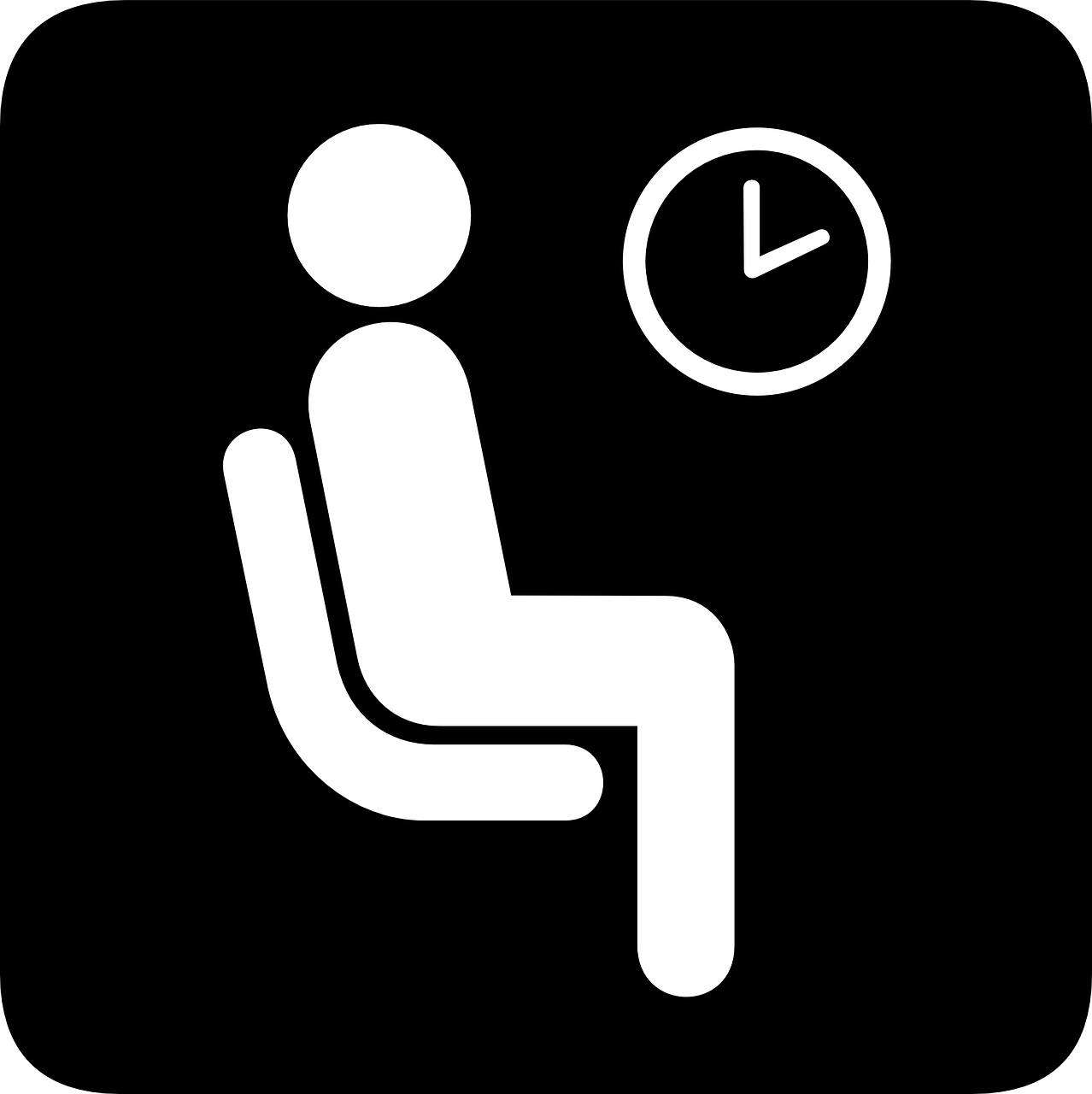
You had better stand up to read this

Sitting, Chair, Daily, Movement

Sitting too long is BAD for you.

Are you sitting comfortably?

Then you want to stand up before reading this.

Standing now? Good.

Now we can begin.

It won’t take long because the topic is essentially simple: Except for a “lucky few” who still have jobs demanding that they spend a lot of time moving about, we tend to spend far too much time sitting.

Far too much of the work we do appears to require us to be sitting. At least, the work environments for a wide range of modern careers involve sitting at a desk.

The rest of the time, we are sitting in our cars, at tables having food, or on couches watching others move (typically on a screen) but staying put ourselves.

Although it is not a topic that’s been much in the news (yet), research findings point very accusing fingers to chairs as being a problem. Why?

1) The act of sitting does nothing for our metabolism. It is so convenient that our bodies essentially perceive the position as almost total rest. Even for people who have a good training routine, spending a lot of time sitting (presumably at work in their case) undoes the benefits of regular, intense exertion.

2) Perhaps more pernicious is the fact that the sitting position, in which we end up spending a lot of time, is exactly the wrong position for our muscles and bones to be in. Weight-bearing structures in our legs adjust to the sitting position because that’s what our bodies do; in doing that, they lose their ability to handle the standing position, including walking and running bouts.

The second effect is also responsible for a gradual loss of capabilities in the elderly or injured: folks who start having problems moving about and obtain assistance from wheelchairs and electric scooters rapidly come to require them all the time. Their bones and muscles become weaker, so they use the chairs more, and enter a vicious cycle.

What are we to do?

For starters, do what you are (or should be) doing right now: Stand while you do other things like read, talk on the phone, think, etc. In fact, any other position than sitting is better.

Second best, but a good habit to take: While it is difficult to do some types of work while standing, you must program regular “stand up moments” into your work routine. (Whether you use those moments to go tell jokes to your colleagues, or just stand by the water cooler for the latest gossip, is entirely up to you.)

Never sit for more than an hour at a time. Take frequent standing breaks. Try to do more of your work while standing. The benefits go beyond fitness and health: moving about while talking or simply thinking about a situation is also reported as providing more dynamic conversation and better ideas.

Not quite ready to take my word for it?

Then keep on standing a while longer, and read this article in Scientific American.

I waited until the end to provide the link, in the hope of keeping you on your toes, or at least on your feet, a little longer… You can thank me later.

Picture from Pixabay.
What’s NBF all about – a refresher

Fitness, Exercise, Sport, Triathlon

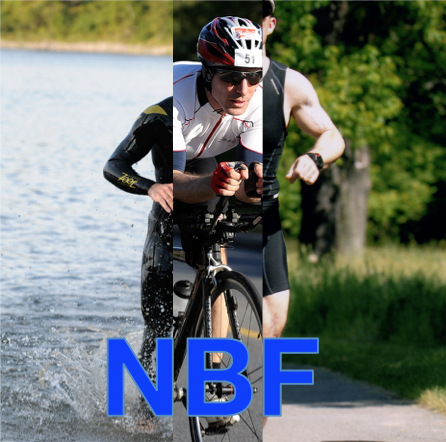
What’s NBF all about? More than this picture, that’s for sure…

To celebrate the 40th post of No-brainer Fitness, I thought it worthwhile to offer a brief recap.

Basically, in case you are still wondering, or if you are fairly new to No-brainer Fitness, here’s what it’s all about, in the form of an interview, but definitely in No-brainer Fitness style:

What does NBF stand for?

NBF is my acronym for No-brainer Fitness.

Ok, smart ass, but what is it all about, really?

No-brainer Fitness is about getting fit so as to be, and remain, as healthy as possible, for as long as possible.

Why the “No-brainer” part?

Because it is my contention that, in order to get and remain fit, you don’t need to do anything very complicated. Also, the benefits of being fit are so good and numerous, that you should not have to think twice about it.

Don’t you have some secret agenda?

You mean other than helping others reap the benefits of fitness?

Yes.

No.

C’mon, admit it! You are trying to create a cult to fitness, or at least get rich from this, aren’t you?

Well, it would be nice to make a living helping others, but I still do it for free.

So, no cult?

No cult. Quite the contrary, I promise.

Ok, prove it: How does one get fit?

You need to move more. A lot more. On a daily basis. Not just 30 minutes of intense exercise every other day, and then sitting on your chair or sofa the rest of the time. Instead of seeking ways to save your energy, you need to get into the habit of using more energy. Walking more, taking stairs instead of escalators or elevators, doing some light strength exercises, not sitting so much at work, picking up a fun sport again, etc.

That sounds like hard work: I’m getting tired just reading about it. How does one get there?

A big part of it is changing your mindset so that you no longer think about moving as hard, but as something that your body craves, much like you crave food. Our bodies really do crave movement, and as you get moving, you start to feel it more keenly.

Talking about craving, what about eating super foods and taking supplements that will make me fit and healthy and help me lose weight? Isn’t that a lot easier?

There is no such thing as “super foods”, and if you eat well, you don’t need supplements. Losing weight comes naturally from moving more and eating a good diet, not from dieting. But the key is moving more. First and foremost, that’s what you have to focus on. Anyone who says otherwise is trying to sell you something (like supplements).

Unlike you?

Unlike me.

But if we wanted to buy something from you, we could. Right?

Well, if you are interested in picking up running or triathlon as a sport, because those are great ways of getting and remaining fit, I could help with that, too. And for that, yes, I do get paid, because it demands much more attention to make sure it is done right, and you reach your personal objectives.

What else do you provide? Surely it can’t be that simple…

It is. Really. But I try to make it enjoyable to do the right thing, and I provide advice to help steer through the wild west of products and tips out there. Because being fit is both simple and fun.

Hmmm… What else?

Well, it doesn’t hurt to stay away from things that are clearly bad for you, what I call NOT FOOD. But the key, I insist, is in moving a lot more.

Ok, I think that’s enough for now. I almost believe you.

Feel free to ask me other questions. Or read some of my 39 previous posts; you are sure to find more about what NBF stands for, and how to be more fit.

Move on!

Health, Fitness, Exercise

Working on some visuals for No-brainer Fitness… Feedback welcome.


Now that’s my kind of conspiracy theory

Fitness, Health, JFK, History

Finally, a JFK conspiracy worth subscribing to…

I recently visited the JFK Presidential Library and Museum in Boston.

I’m no history buff, nor am I particularly into admiring political figures of the past (or present, for that matter). But I must admit that the visit turned out quite fascinating on various levels.

This guy (John F. Kennedy, to be precise) clearly died way too soon. I picked up a few good quotations and a new-found respect for what he tried to do during his brief stint as POTUS.

And I got one major surprise in the process, as the picture at the top of this post hints at.

You see, back in the early 1960s, people like JFK were already very concerned about the fitness level of Americans.

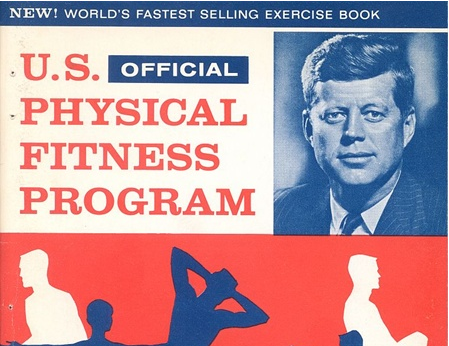
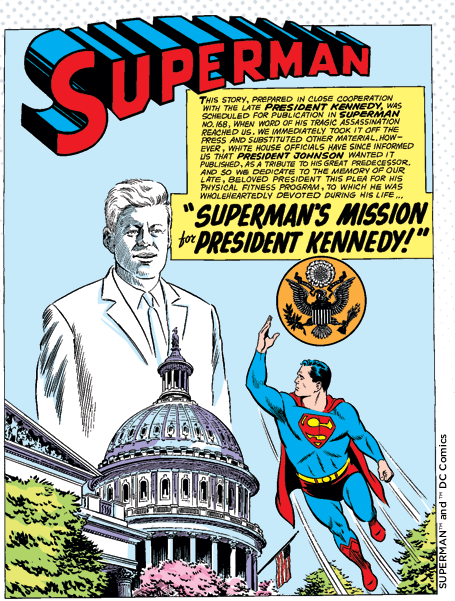
JFK re-launched a council on fitness early on in his presidency, and got a fitness program created and disseminated to schools in the US. Later on, he enlisted the help of the artist who was then drawing the Superman comics and asked him to create a special story in which Superman went on a mission to help kids get into better shape.

You could say that JFK was conspiring with a few other people to improve the fitness of Americans. That’s the kind of conspiracy that’s worth talking about.

Keep in mind that this was back in the early 1960s! Already then, there was unease about the fitness level of people, and of kids in particular…

JFK, Superman, Fitness, Health, Exercise

This is done to promote fitness. Let’s hope I don’t get sued.

Some things change, some things stay the same

Sadly, JFK died before the book was published, but his successor got the comics published, as you can see from the other image.

Did it work? Apparently not; the general population, and kids in particular, have been getting less fit, even though elite athletes have been getting better and records have been broken systematically. You could say a wider chasm has been growing in terms of fitness, even as people have been getting wider…

What’s really interesting, however, other than the fact that this was happening already over 50 years ago, is that very little has changed in terms of what is being recommended as regular physical activity. Except perhaps that infamous rope climbing thing (now we beat the crap out of floors with ropes). Sit-ups, pull-ups, push-ups, running, variations on those themes.

We also have a lot more evidence, scientific at that, about how much to move, and at what intensity. Guess what? We should be moving every day. That’s a no-brainer.

Why has it not worked?

That’s a fair question. Consider the simple fact that we’ve known for a long while how to maintain our bodies; we’ve just fallen short of finding better ways to get people moving when they are not.

Perhaps part of the problem is the lack of understanding of how to best promote fitness among kids. Standardized tests and competitions are not the way to go; measuring personal improvements based on heart rate and deployed effort is much better, as Dr. Ratey illustrates in his excellent book Spark, (and about which I provided a brief review a few days ago).

We tend to focus on providing logical, rational, scientific arguments, trying to convince everyone of the importance of moving. Unfortunately, that does not work. Our relationship to effort is one based on emotion, not rationality. That’s the real problem. Something even Superman couldn’t fix.

What can’t be denied is that the last 50 years have seen a continued rise of suburban lifestyles that almost make cars mandatory even as schools have been cutting their physical education courses and made free play practically illegal in schoolyards. Instead of walking everywhere and playing, sometimes rough, now kids are driven and made to behave all the time when in fact what they need is to learn to use their bodies in a fun way and spend energy.

In any case, let’s not forget that we’ve been struggling with this for a while, so a solution is not likely to be easy. But we’ve known for a while that we need to move more, on a daily basis. That remains the key.

Moving On

By the way, the council on fitness still exists, and every few years a new document is created, new guidelines are provided, and so on. It’s an ongoing battle. The documents are getting thicker, perhaps so they can be used for weight lifting some day. The site is there, though I have yet to find useful advice there.

Instead, we should all join the conspiracy directly and get moving. No thinking, no arguing, no rationalizing. Just moving.

Should you happen to be in the Boston area, I highly recommend a visit of the JFK Presidential Library and Museum. If you go, do as I did (and dragged my mom into doing with me): Walk from the nearest T stop instead of taking the bus. That way you’ll keep to the spirit of John “Fitness” Kennedy…

Images “borrowed” from the JFK Presidential Library and Museum Web site, which is visible to everyone, and that I highly recommend visiting to anyone in the Boston area (so please don’t sue me for having used them).


Things we don’t like to hear

We don't want to hear

We don’t want to hear

It has been a while.

Perhaps you thought I had gone away.

But that’s not the case; it is simply a matter of having recently started a new job, running a trial program of No-brainer Fitness: E, and getting caught in doing research for a post on dieting.

All of that busyness got me thinking about some of the things we don’t like to hear. So I decided to write this short post before finishing the more serious one.

In part preparation for the dieting post, and in part as a reaction to having to face the fact that there are simply not enough hours in any given day, here are some of the things we don’t like to hear. But must come to accept if we are to succeed in being fit and healthy for the long-term.

There are no such things as Super Foods

Most claims on Web sites are about a single item, more often than not a vegetable, sometimes a fruit, and on occasions red wine. It changes depending on the site you browse to on any given day. The fact is that any one food will not make you healthy. And in large enough quantity, any one thing is toxic. Yes, even kale.

The flip side: I once saw a list of so-called “super foods” that consisted of 63 or so items. That’s longer than my typical grocery list, despite the fact that I get kudos from the health-conscious store clerks where I usually buy groceries.

If you have to buy and eat so many different food, then clearly no single food is that super.

As is generally the case, with a balanced and diversified diet of mostly plants, you don’t need anything to be super. The overall diet is what is super. Because it is real food.

Food supplements simply don’t work

In the sense that they will not make you healthy. Especially those that claim to do precisely just that.

In situations where someone is truly lacking some essential vitamins or minerals, or to ensure that you have plenty (as for pregnant women), there may be benefits in taking some, if only to have complete peace of mind.

But claims of miracle dietary supplements to make you lose weight or cure you of whatever you are lead to believe (typically from the same ads) you suffer from, are hogwash.

But at some point, we have to grow up

But at some point, we have to grow up

It requires (some) effort on your part

This could also be called “there are no free lunches.” (Or, at least, no healthy free lunches.)

Basically, to be fit, you have to put in some sweat capital. Fitness does not come from a pill; you can’t get fit by hooking yourself up to a machine and letting it do the work for you. You have to do the work.

The trick is to find the kind of working out that is pleasant for you, and the purpose to commit and maintain good habits. But you have to move, lots, and regularly.

Coffee, wine, chocolate, and a few other things we like are NOT FOOD

Sorry. That’s just the way it is. Enjoy in moderation.

Dieting doesn’t make you lose weight in the long run

That’s the intro to my next post. You have to take my word for it. For now. But the evidence is pretty damning…

*****

Since first writing this post, a few interesting (and timely) tidbits came my way, so I’m adding links to other readings you might consider after being done here:

Diet Lures and Diet Lies is an interesting piece along the lines of the above discussion of super foods and supplements.

Why I don’t do CrossFit is all about the importance of not training too hard. Better yet, if you read the text carefully, you’ll notice mention of how Olympians train, and that is what I am driving at with the notion of being an everyday athlete…

Photos by Pixabay

A Primer on No-brainer Fitness: E

Movement, Daily

Time to get moving!

In case you were wondering about it, or are generally interested in moving more, this is a kind of “Origin Story” for No-brainer Fitness: E (a.k.a. Everyday).

As the E page indicates, No-brainer Fitness: E is a kind of service to help you put more movement, more exercise, and better food (and less NOT FOOD) into your daily life.

It is not like signing up for a gym membership, a fitness cult, er, I mean class, or turning up at exercise bootcamps multiple times per week. It is a highly individual commitment to doing the simplest thing (though not necessarily the easiest) of moving more, by making it a habit.

As such, it is something all of us can benefit from, no matter what your current level of activity might be.

Some perspective

What is the idea behind this daily service?

It came through the realization that, while I enjoy racing triathlons and marathons, true fitness is something that should happen on a daily basis.

Towards the end of an Ironman(TM) race a few years back, I realized the silliness of what we (some 2,700 of us that day in Lake Placid) were doing.

More to the point, I realized how, while a great deal of fun and very demanding, our accomplishment of completing a long course triathlon would have seemed much less to our great-grandparents. Particularly those used to 12+ hour days of tilling fields, cutting down trees, harvesting, and performing a wide range of physical activities on a daily basis.

Going back even further, our hunter-gatherer ancestors had to keep moving to find their food, run to hunt (not to mention avoid being eaten themselves), and generally carried everything they owned on them without the benefit of cars (or modern backpacks, for that matter).

This is not to put on a pedestal that way of living of days gone by. It is simply a realization that nowadays we take great pride in being able to do certain things that, while challenging, would not have seemed so outlandish to our ancestors. (Except perhaps in the gear needed, and choice of venues.)

Let’s face it, modern life is a lot more pleasant. But in becoming “modern”, we’ve lost a key aspect of our animal nature: quasi-constant movement. We’ve also lost perspective on what it takes for us to be healthy: quasi-constant movement, and real food.

Back to now

In an effort to regain some of that perspective, there is a growing movement to be more active, and it leads a lot of people to endurance sports and “fitness training”. And to a large extent, to obsession about getting fit.

But it is often with the wrong focus: to look a certain way, to perform at a certain level, to lose weight…

What we should be focusing on is movement on a daily basis. What we should obsess about is doing some on a daily basis, never staying put for too long at a stretch. What we should remind ourselves is that skipping one workout is not the end of the world, as long as we keep on moving regularly.

The rest will follow, in time.

That’s why Everyday No-brainer Fitness is a service designed to provide advice and reminders to keep moving on a daily basis.

It is what brings it all together: the exercise, the diet, the lifestyle. The E stands for “everyday”, but it could just as well stand for “everything”.  And now it also stands for “explained”.

All it takes is a desire to get started, and a friendly helper to guide you along…

I’m not saying it is easy, but it is simple. It is definitely a no-brainer. And the beauty of it is that you can get some help to get you started, and keep you going.

So that’s it.

If this sounds interesting, if you are ready to sign-up or need some more information, turn to No-brainer Fitness: E, and fill the form at the bottom.


Photo from Pixabay.