Discipline: The 5 Practices – Practice 5

Exercise, Discipline, Everyday, Training, Sports

Find ways to find it fun to exercise. At times, it won’t be easy.

Find your fun!

There: That’s it. That’s the fifth Practice of Discipline. Nothing more to add.

Ok, maybe a few things to add.

Find your fun is an essential practice of discipline because, contrary to most people’s view about discipline, you should not drag yourself through unpleasant activities day after day after day…

That old view of discipline must go out the window.

But you must make an effort, at times, to find the fun in what you are doing. Especially when you are doing it everyday.

What does that mean, practically speaking?

Ways to find your fun

I’m a big fan of traveling and visiting places I don’t know, even in my own city. I always find that pleasant, be it on a bike or while doing a long run. Even if it is in my own city, I enjoy taking detours that I have not taken before. That, for me, is fun.

To some, it could be always doing a very nice loop (walking, running, rollerblading, biking, etc.) in a beautiful park, or in a particularly nice residential area. Perhaps to notice doing it faster each time, but that should not be necessary.

To others it might be exercising on a stationary device (bike, treadmill, elliptical) while watching a favourite show, or a “guilty pleasure show you would not be caught watching otherwise, or listening to a podcast series on an interesting topic.

Perhaps it is to pick up again a sport you used to like doing when you were younger. Think back to then: How about badminton, tennis, basketball, water-polo? Sure, it might require finding a group to have fun with, but they exist, you just have to look for them.

It could also simply be a thought while you walk/run/cycle/swim: “I’ll be in better shape for the next time I… (insert activity for which you want to be more fit).” That’s OK as well, though it is better to find your fun in the situation you are in while exercising, not just in some future version of you.

The best fun, in my experience, comes from appreciating how your body feels as you exercise, and observing the environment around you. Especially in the environment, you can find ever changing and renewed fun everyday.

I also enjoy talking to people while I run. Especially long runs, or marathons. This is my fun, not necessarily the fun of those I talk to. You have to be careful about how you find your fun, because the fun invariably ends where someone else’s NOT FUN begins…

The best fun is solitary fun

The point is, no matter what it is, you need to find some.

Many resort to finding a training buddy, or joining some sort of team or “fitness” class. Nothing wrong with that. However, a word (or two) of caution:

When you become dependent on a partner, or on a group, for your fun, you risk stopping whatever activity it is that you’ve undertaken. For instance, if your partner does not show up. Or if the class comes to an end.

I cannot emphasize enough the importance of finding fun within yourself. More to the point: within your own attitude towards the exercise and the world around you.

Fun for two

Fun with a partner is, as indicated earlier, acceptable.

More than that: It is an excellent way of having great fun. The closer the partner (spouse, close friend, etc.), the better the fun, and the more likely the fun will be reciprocal, and repeatable.

Be it chatting while walking/running/stationary something, or playing doubles tennis/badminton/etc., sharing a fitness-increasing activity can enhance it.

However, as noted earlier, you should not rely on an exercise partner: What if your doubles partner does not show up? What if the exercise itself causes tension with your significant other.

Better be careful, and make sure you can find fun by yourself.

Group fun

Group fun is also acceptable. It can be an excellent way of finding fun in the beginning.

But careful if you come to rely of the stimulus offered by a group (and/or a cheerleader-coach) for your fun: That’s a pretty much certain sign that your fun is teetering on the edge of not being enough to sustain your activity level.

As we all know, too much stimulation leads to a saturation, and an inability to find the fun in more mundane situations (like fun for two, or fun on your own).

To be sure, get started and use whatever means to find the fun at first, but make sure to branch off and find the fun on your own as soon as possible.

The key thing is to move a lot more.

Your body will enjoy that.

It’s up to you to bring your mind around to enjoying it as well. And that’s where discipline comes in…

Image from Pixabay.

More alike than not… except in the details

Sports, Exercise, Performance, Athletes

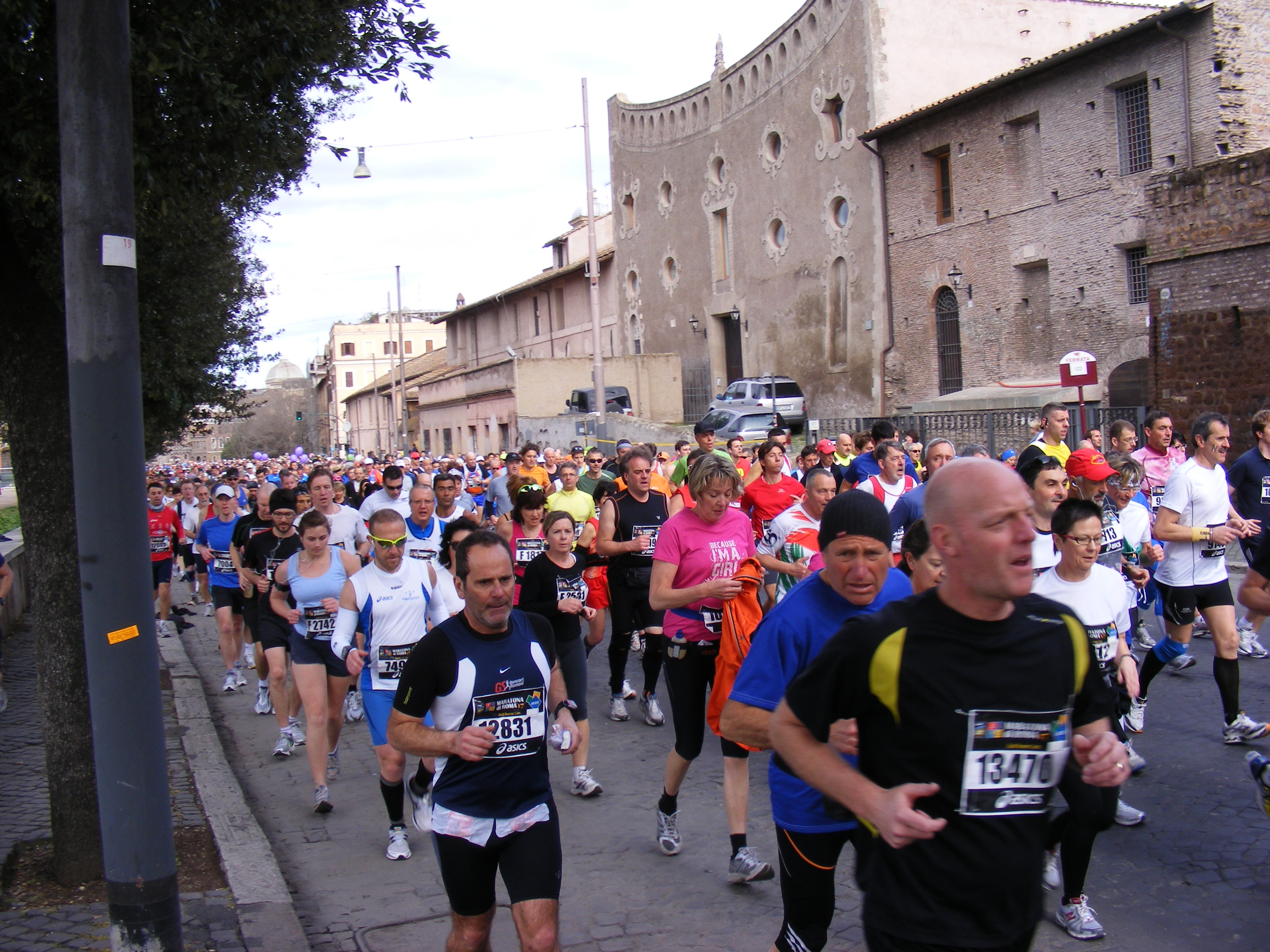
A diversity of shapes and speeds at the Rome marathon a few years ago. All athletes, in a way.

Time for a story. (Isn’t it always?)

Once upon a time, in pretty much all lands on this planet called Earth, the thinking of sports federations and elite coaches was that an Olympic athlete had to be of average height and build, with lean bone and muscle mass providing a streamlined body type.

For all Olympic sports.

Such athletes were selected and tested early, then subjected to years of grueling training. Only a very small portion of even such “ideal” athletes rose to the top of each sport and were deemed good enough to represent their respective countries against the rest of the world. (The story does not say what happened to those who did not rise to the top, but rumour has it that they started hating sports, and took up knitting instead.)

This had come about because there was a clear picture of the “ideal” human shape that had endured to some extent since the time of the original Olympic games in Greece. But with more clothing. No doubt the statues of antiquity, and later re-born in the Renaissance, had helped solidify such an image of the perfect athlete.

Allied to that image was the notion, very much born of religious thought, that only through a lot of hard work and pain could the most gains be made in training. Fierce competition, even among teammates, was seen as the way to build stronger individuals.

Thus many countries went about, and generations of kids, teenagers, and young adults went about their training. Only a very small portion of all those who started in such programs ever made it, and they won medals and set world records.

But this story is not about world records and Olympic medals. It is about how athletes were selected and prepared to compete.

It all changed, of course, when atypical athletes started winning medals and breaking world records. This came about because many countries simply did not have athletes with the expected, “ideal” body type. They were not expected to win, yet there they were, running faster, jumping higher, lifting heavier than the rest.

Suddenly, coaches caught on to what biologists must have realized much earlier: That there might be something about the specific genetic make-up of an individual that might make them better athletes at SOME sport in particular.

Nowadays, we fully understand that notion, and athletes are not expected to look the same across all sports. That explains why we see a lot of Kenyans and Ethiopians win marathons, and tiny little guys and gals ride race horses. Volleyball players are tall and somewhat lanky; ping-pong players somewhat short but extremely quick.

You get the picture. We each have specific genetic variations that make us more or less good at some activities or sports. Some are very visible, others not.

As the eminent (running coach) Jack Daniels pointed out in a seminar I attended a few years ago, you would not expect Shaquille O’neal and Mary Lou Retton to perform at an elite level at each-other’s respective sports. (The reference to those athletes provides an idea of the age of Jack Daniels, and of the attendees, not of the date of the seminar.)

Big differences are expected, for instance, between a basketball player and a gold medal winning gymnast. (Just to be clear, for those of a different age…) Mary Lou could not possibly dunk a ball, and Shaquille might very well break the asymmetric bars. Hence athletes are largely selected based on their body types nowadays.

Tragically, what hasn’t changed (yet) is the notion that training has to be uniformly hard and painful for everyone. That is why we see PE programs in schools that are still based on (unfriendly) competition and pitting everyone against each other to be the best, or to meet some specific standards of fitness arbitrarily defined by someone.

That’s in large part been identified as the prime culprit for turning the vast majority of people away from doing sports on a regular basis. If all that seems to matter is winning, and there can only be one winner, that means there are a lot of losers. And nobody likes being a loser.

So it starts by hating PE, then it becomes hating sports. Except for those you can watch while drinking beer, and even then, it is watching games, not playing.

Exercise, Movement, Daily

Watching is definitely not the same as doing.

At the same time, the understanding that we are all different has been taken much too far: Nowadays, a lot of folks think that they are simply not athletic, not meant to do sports. There are winners, who are jocks, who are meant to do sports, and then there’s the rest of us who should not do sports. Who cannot do sports.

Given the premises of differences between individuals and of personally hating sports, it is understandable that many reached the (erroneous) conclusion that they are not meant to move.

But the reasoning is incorrect, and one of the premises is false.

The facts, based on biology, are all pointing in the direction of our bodies being meant to move. Needing to move. Regularly.

Hating sports and exercise is a learned behaviour; it can be unlearned, replaced by something better.

We are all different, but even in our visible (and invisible differences), we are more alike than not.

The story time being over, I’ll conclude this post by pointing out the ways in which we are alike, and those in which we differ. And I’ll come back some other time to the fascinating topic of how to learn to like exercise.

Ways in which we are all alike: Basic morphology and physiology

Cells, Physiology

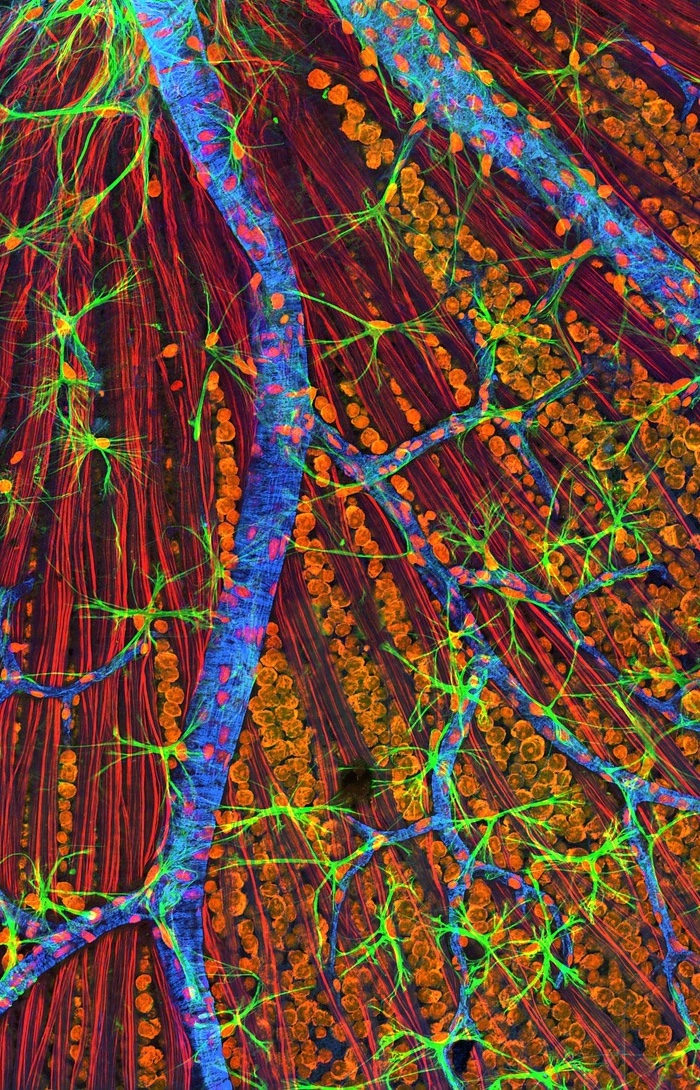
The marvelous machinery of life.

  1. We all have the same number of limbs, fingers, heads, internal organs (types and numbers), etc., and they all are built according to the same plan. (Yes, I know, there are accidents of biology, but the basic plan before those accidents is the same.)
  2. We all have muscles connected to bones in order to makes us move; those muscles all work according to the same principles, and allow sensibly the same movements to be performed by everyone.
  3. We use carbohydrates, lipids, and to a lesser extent proteins, to generate the energy that allows our cells to function. Including muscle cells, which are used to move our bodies. More specifically, there are fast and slow ways of generating that energy, and although they vary in relative terms, they are all present in all of us.
  4. We all obtain such nutrients from eating; our digestive system, comprised as it is of our own guts and the microbiome therein, functions fundamentally the same way in all of us. Besides nutrients, we need water and oxygen (not too much) for our metabolism to operate.
  5. We need to move; for our bodies to be healthy, we need to move. The stress imposed on our bones, muscles, and internal organs by intense activity is what keeps bones strong, muscles large(-ish), and organs performing their normal functions. Including digestion and waste disposal.
  6. All of our bodies respond to exercise (or to a lack thereof). If you exercise regularly, the body changes to adapt to the exercise, and the organs and energy systems hum along. If you don’t exercise, the body “relaxes” and things start to breakdown, fat reserves accumulate, digestion is slower and we get constipated, etc.

That’s just how our bodies work. We are all very much alike.

Ways in which we differ: The details of performance

Because of the details of how each of us is shaped (tall or short, thick-boned or thinner, etc.) and how cells function physiologically, there are aspects of performance in which we differ. Specifically:
Sports, Physical Activities, Training

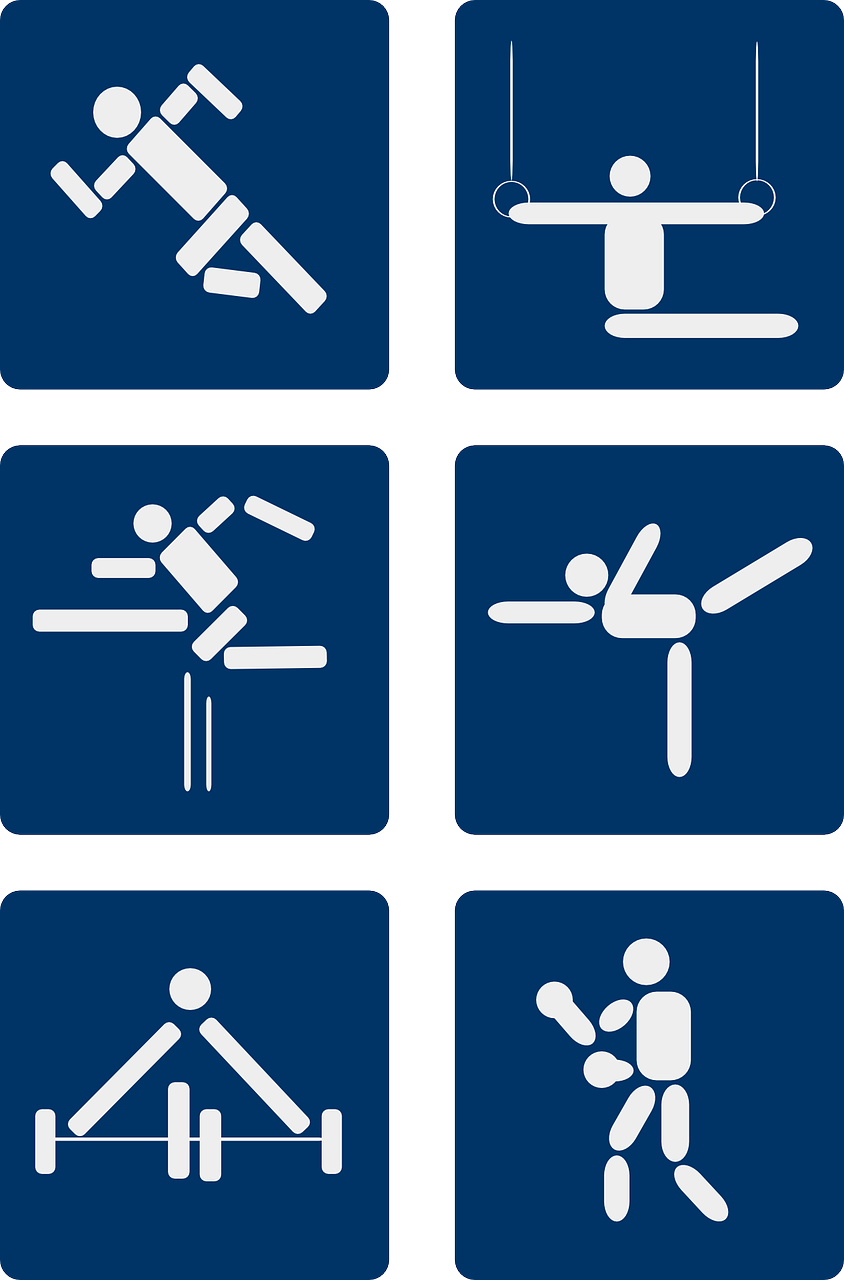
So many sports, so many choices…

  1. How much endurance we have (mostly due to differences in energy systems at the cellular level, though that’s trainable to a great extent, perhaps the most of all aspects of performance)
  2. How fast we can be (also highly trainable, but limits imposed by physiology exist in each of us, also at the cellular level in muscles)
    How strong our muscles can be (small differences there)
  3. How big our muscles can become (bigger differences there)
  4. How flexible we can be (muscles, ligaments, but also joint movement; we can’t all be circus performers!)
  5. How coordinated we can be (agility, efficiency, also technically trainable to a great extent)
  6. How a wide range of our senses perform (eyesight, hearing, smell, etc.) and how efficiently our brains put all of that together

Taken together, and in the right combinations, the accumulation of small differences is what, along with adequate training, makes top performing athletes.

So, while it remains true that there can only be one winner in each discipline, and that at the top level (Olympics, for instance), only a small portion of the population is equipped to truly compete, we all have the potential to take enjoyment in some physical activity. And we may even do pretty well, locally or within the cohort of people our own age.

What matters most, however, is that we are all alike in fundamental ways. We all need to move, a lot, to keep our one and only body functioning optimally for a long time.

It’s up to us to figure-out what makes us enjoy it the most.
Exercise, Endurance, Physiology

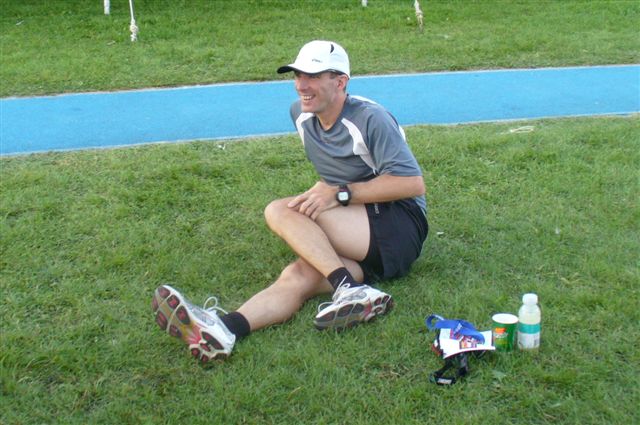
The author, laughing at a well-deserved muscle cramp, after having completed an iron-distance triathlon.

For an interesting discussion of physiological differences in triathletes, see the recently published book Triathlon Science by Joe Friel and Jim Vance.

Pictures from Pixabay and the author.

The message is simple (but it is worth repeating)

Movement, Diet, NOT FOOD, Everyday

A new beginning, of sort, so time to get moving again.

To get the ball rolling, not because of the new year but because of the launch of the No-brainer Fitness Facebook page (yes, I finally did that; one thing off my list, hooray!), I thought I’d re-visit the message of No-brainer Fitness.

Although it is the time of year for lists of resolutions and things to do, don’t be mistaken: This is NOT a list of resolutions.

It is much simpler than that. It is what should always be on your mind, every year, every day, every moment. To the point that it becomes automatic or, as I put it, a “no-brainer.”

About that name

By the way, for those of you curious about it, that is the point of the name “No-brainer Fitness.”

It is what Zen is all about. Far from being a mystical philosophy or esoteric design principle, Zen is about practicing something consciously so much and so systematically that thereafter you simply do whatever it is you have practiced without having to think about it anymore.

Anything you put your mind to long enough, practice hard enough, becomes second nature. Something in which your brain no longer needs to take an active part. Thus, a “no-brainer”.

The other meaning, that of something which makes perfect sense, and does not need to be thought through much, or at all, is also valid. Moving more is such a thing.

So let’s get back to it

One thing you need to know about No-brainer Fitness is that, although I get side-tracked at times, and try to infuse the posts with my own type of humour, I always get back on track.

Therefore, what you need to know about No-brainer Fitness, is that it stands for one single, very simple prescription, and two secondary recommendations:

1) Move more

Movement is the key to fitness and health. It has been shown time and time again, be it in terms of the effect of exercise on body functions, brain activity, and as was recently reported, our ability to age well and remain healthy and active for a long time.

Some the prescription is to move more, move all the time, move everyday. Not necessarily training for a specific sport, which is great and I encourage, but at least get into the habit of NOT being sedentary and using energy-saving devices like cars and elevators all the time.

2) Don’t diet

So you’ve gained some weight over the years (who hasn’t?). Your sedentary lifestyle and sitting job are causing your mid section to expand faster than the rest of the universe? What’s the solution?

Go on a diet, of course!

WRONG!!!

The problem is, in a large proportion (pun intended), that you do not move enough. So the solution cannot be to change what you eat. At least, that is true in the same proportion as the cause of the problem.

So the first recommendation is to NOT go on a special diet, NOT focus on what you eat, and NOT obsess over your weight. And I’m not alone in saying it. (That, by the way, is a link to an excellent and very refreshing blog post by a dietician.)

Rather, get moving more, and slowly learn to listen to your body. Because, guess what, if you listen, it will tell you what it needs, and over time you’ll get to eat better, without counting calories or obsessing about food. (Obsession of any kind, even obsession about training and exercise, it NOT healthy.)

For more specific food advice, I defer to those who know more than I do on the subject. I prefer to stick to a simple (no-brainer) approach: Eat food, not too much, mostly from plants.

3) Cut back on NOT FOOD

Which of course does not preclude me from making further suggestions about what NOT to eat.

You see, the “Eat food, not too much, mostly from plants” statement above is not originally from me. It seems simplistic, but for full effect you have to consider what “food” actually is. And for that, you need to remember that we are, fundamentally, animals.

Animals eat plants and other animals. At least, that’s what omnivores like us do. They don’t eat inorganic matter, stuff that does not grow on plants or that don’t move of their own volition.

The way I like to put it, “food” is anything that comes directly from plants, or that has been transformed mechanically and/or chemically from plants by other living creatures. Another way of putting it: food is biological matter that has been minimally transformed by means other than other animals’ biological processes.

Yes, I know, it can get messy and scientific-y. So often I use a shorter definition: If you can’t find it in nature in the form you eat it, then it’s probably overly processed, and you should pass.

For instance, things like coffee, doughnuts, soft drinks, and booze, are what I consider NOT FOOD. (For more on that, feel free to read a couple of my past posts.) When’s the last time you came across a free-flowing river of coffee? Or a tree in which Coca-Cola bottles grow? Or dug up a plant and found perfectly shaped and wrapped Hershey Kisses in its roots?

You get the point.

Cut back on those NOT FOOD items is my second recommendation; you’ll not only remove unnecessary calories (and in some cases drugs) from your body, but you’ll make room for the real taste of food, and the refreshing feeling of water going down. And that’s why you should do it.

That’s it

The rest, as they say, is details. (That’s also, as they also say, where the Devil lives, but that’s another story.)

If you insist on seeing this as a list of resolutions for the new year, then consider that you don’t need a list. You need only one item:

Get moving more!

You body will do the rest; just pay attention to what it tells you in the process.

I’ve now taught you everything you need to know. But feel free to keep an eye on this blog, and like the brand spanking new Facebook page… (Please?)

Picture from Pixabay.

A bit of advice (about health and fitness advice) for the New Year

New Year, Resolution, Fitness, Health

It’s that time of the year again. Might as well make a good resolution.

New Year, New You, right?

This is the arbitrary time of the year when most of us will make resolutions of one kind or another. Even if we don’t say it out loud.

This is the time of the year that is like manna from Heaven for gyms and fitness clubs.

True, it is often the best of times to sign up, and you can get all sorts of great deals. But it is also the worst of times to sign up, because in all likelihood it will be a wishful waste of money.

By the way, there are other moments of the year when you can get equal, if not better, deals. Low times for gym attendance, like the summer months. But that’s not the point of this post.

My point, and it is a short one, is to suggest a different kind of resolution for the new year. One that is easy to keep, and doesn’t cost you anything. In fact, it may save you a whole lot of money.

The idea is simple: Apply a systematic filter to the advice you hear or read about fitness and health in 2015.

Let’s face it, we all want to be fit and have health for a long, active life. So we are prone to believe those who tell us we can get it, provided we eat this food, or take that supplement, or join this or adopt that. Especially if it means almost not effort on our part.

When it comes to health, we are gullible. And it pays off for many unscrupulous people. Entire business plans are built on that kind of gullibility.

To help you fight that, I’m proposing a kind of checklist that you should use to evaluate the advice you are being given. It is not meant to replace your instinctual willingness to believe, but rather as a sobering second thought. You’ll still need to do the rest of the considering on your own.

So, here are the verifications to make before accepting advice on health and fitness (and, truth be told, anything, really):

1) Is the person providing the advice profiting financially from the advice?

2) In particular, is that profiting financially revolving around the sale of products such as supplements or special items, as opposed to straight out guidance and support?

3) Does the advice include claims that are extraordinary?

4) Is the advice claimed to be something very few people know, or that some conspiracy would normally preclude from being widely known?

Most health-related advice on the web and in magazines these days get a check mark on all four. Steer clear!

Claims of requiring no effort, of guaranteed results, and such, qualify as extraordinary, by the way. For things like that, you need proof, and not just some “before and after” photos which are so easy to fake.

Getting two or more check marks, especially towards the bottom of the list, must trigger an alarm bell in your head. Yes, there are some evil folks on this planet, but there is no great conspiracy of the medical establishment against effective remedies. Otherwise my wife is still waiting for her membership card.

Getting only the first one checked may not be so bad, since there are legitimate service providers (like personal coaches) that are well-meaning. But beware especially of those that cause you to check #2 as well.

Remember that fitness comes from being more active, first and foremost, not from buying products. That’s my advice, and it’s a no-brainer.

For this advice, and any other you are bound to hear in 2015, use the checklist above.

Your wallet will thank you.

New Year, Fitness, Health

Time to celebrate!

Pictures from Pixabay.

Thinking about getting fit in the New Year? Why wait? Start getting fit right now.

Holidays, Exercise, Habits, New Year, Resolutions

Looking forward to all the food and sugar you’ll eat during the holidays?

The holiday season is just around the corner. And then it will be a New Year.

So many of us take the New Year as a signal to start an exercise program it has become a cliché. A tired one at that.

Part of the reason we want to start an exercise program in the new year, of course, is the abusive regimen we put our bodies through during the festive season. Another part of it is the logical attractiveness of a new calendar, with all the associated renewal and new beginning.

But those are illusions, and contribute to the very high rate of failure of those very same resolutions.

Simply put, if you really mean it, there is no point in waiting for January 1st. Why wait? The best time to start a new set of good habits that will lead you to better fitness is today.

As an additional bonus for starting today, having the “excuse” of being on a new tract towards better fitness is an excellent way to limit the damage of over-indulging during the holidays. And it also an excellent conversation topic, and may spread much more joy around by being more reasonable (and limit the spread of mid sections in your entire family).

“But, wait, in order to start now, don’t I need to join a gym, or buy expensive equipment?” I imagine some of you asking.

No. Not really. Not at all, as I’m about to show.

(Though asking for a few useful pieces of equipment as Christmas gifts can also be a very good idea, by the way.)

Here’s the recipe I’ve come up with, based on all my reading and experience, to get you going immediately and have a much more healthy holiday experience and a head start on your fitness for years to come:

1) Start using your body more to move around

You don’t need any special equipment. Just look for opportunities to walk more, take stairs more, not sit as long as you normally do. Every time you move, you score a small victory: make it a game and keep score. As you graduate through the levels of moving around, you might want to reward yourself with a pedometer (to keep a more accurate count) or a FitBit, or just start using your smartphone for much better purposes than reading Facebook updates… After 3-4 weeks on this stage, with new habits in place, move on to the next phase.

2) Start re-building your muscle mass

Yeah, this is the not-as-much-fun part, I must admit, at least at first. But it is oh so important. What is often neglected when talking about reduced metabolism as we age is the fact that we lose muscle mass, and that it is muscle mass that burns the most calories. The best use you can make of a few minutes in the morning is to do some simple exercises like squats, push-ups, sit-ups, etc. Look into the 7-minute Workout and adopt it on a daily basis. Then reward yourself, perhaps with a set of shiny weights or kettle bells, or a very nice dinner out. After this becomes a habit, 3-4 weeks of focused effort, move on to the next phase.

3) Put a sport in your schedule

Play is the best way to spend energy without noticing. And it is fun. If you’ve ever played a sport competitively, or just for fun, when you were younger, pick it up again. If you never did, then become a “big kid” and pick one up. Not competition, just playing. You’ll soon come to realize that it is better to do something than to watch it on TV. Do it with your spouse, with your kids even; a family that plays together, spends quality time together. A brand new badminton racket, or new court shoes, make very nice rewards for being more active. Again, take a good 3-4 weeks to make this a new habit before moving on to the next one, and keep room in your schedule for this from now on.

4) Sign-up for a walking, running, or cycling event

By this point it will be spring time, or very close to it. There are many running shops and fundraising programs that offer training for various local events to be held during the summer; in those events you can walk or run, or bike through various distances. These are great ways to get with a group of people working towards a fitness goal, even as you all work together to help others. And you can do this at your own pace, quite often with coaches that are eager to help you at no charge. The event t-shirt and/or finisher medal make rewards enough for your achievements, though I know a lot of people who conclude such event with a bottle of bubbly… I don’t even need to tell you to do this again each year, or multiple time per year, because once you try it, you’ll adopt it.

You notice a pattern of “effort and reward” emerging? Nowhere am I suggesting you need to spend first, and then exercise: That’s often why people feel particularly bad about failing in their resolutions.

What I’m hinting at is that you can start doing the right thing, right now, with a future reward in mind. When you get to the reward, you can set the next goal. It comes from within yourself, not from feeling bad about having spent money.

Also, note how I’ve not told you to join a gym. You don’t need to. But it could come later, if you feel like it. However, getting fitter right now begins at home and in your daily activities. Again, with minimal expenditure.

One final note about the coming holidays

It is part of the recipe in general, but not a specific step in the program, or it would be “step 0”: Consult the list of NOT FOOD items and make a conscious effort to remove them from your habits.

Do this gradually, not all at once, but do it. Just removing liquid sugars (pops, fruit juices, etc.) makes a HUGE difference. With each step (1-4) outlined above, pick a NOT FOOD item you want to work on reducing and eventually eliminating from your life. Your body will thank you for it by getting fitter faster, and, incidentally, getting leaner in the process.

So, instead of indulging and feeling bad this holiday season, spread the cheers and the word about getting fit. Get a head start on the holidays by starting today.

There’s nothing stopping you from having the best holiday season ever.

Rewards, Habits, Effort, Exercise

A bit of celebrating, when it is as reward for your accomplishments, is always good for you.

Pictures from Pixabay.