A Primer on No-brainer Fitness: E

Movement, Daily

Time to get moving!

In case you were wondering about it, or are generally interested in moving more, this is a kind of “Origin Story” for No-brainer Fitness: E (a.k.a. Everyday).

As the E page indicates, No-brainer Fitness: E is a kind of service to help you put more movement, more exercise, and better food (and less NOT FOOD) into your daily life.

It is not like signing up for a gym membership, a fitness cult, er, I mean class, or turning up at exercise bootcamps multiple times per week. It is a highly individual commitment to doing the simplest thing (though not necessarily the easiest) of moving more, by making it a habit.

As such, it is something all of us can benefit from, no matter what your current level of activity might be.

Some perspective

What is the idea behind this daily service?

It came through the realization that, while I enjoy racing triathlons and marathons, true fitness is something that should happen on a daily basis.

Towards the end of an Ironman(TM) race a few years back, I realized the silliness of what we (some 2,700 of us that day in Lake Placid) were doing.

More to the point, I realized how, while a great deal of fun and very demanding, our accomplishment of completing a long course triathlon would have seemed much less to our great-grandparents. Particularly those used to 12+ hour days of tilling fields, cutting down trees, harvesting, and performing a wide range of physical activities on a daily basis.

Going back even further, our hunter-gatherer ancestors had to keep moving to find their food, run to hunt (not to mention avoid being eaten themselves), and generally carried everything they owned on them without the benefit of cars (or modern backpacks, for that matter).

This is not to put on a pedestal that way of living of days gone by. It is simply a realization that nowadays we take great pride in being able to do certain things that, while challenging, would not have seemed so outlandish to our ancestors. (Except perhaps in the gear needed, and choice of venues.)

Let’s face it, modern life is a lot more pleasant. But in becoming “modern”, we’ve lost a key aspect of our animal nature: quasi-constant movement. We’ve also lost perspective on what it takes for us to be healthy: quasi-constant movement, and real food.

Back to now

In an effort to regain some of that perspective, there is a growing movement to be more active, and it leads a lot of people to endurance sports and “fitness training”. And to a large extent, to obsession about getting fit.

But it is often with the wrong focus: to look a certain way, to perform at a certain level, to lose weight…

What we should be focusing on is movement on a daily basis. What we should obsess about is doing some on a daily basis, never staying put for too long at a stretch. What we should remind ourselves is that skipping one workout is not the end of the world, as long as we keep on moving regularly.

The rest will follow, in time.

That’s why Everyday No-brainer Fitness is a service designed to provide advice and reminders to keep moving on a daily basis.

It is what brings it all together: the exercise, the diet, the lifestyle. The E stands for “everyday”, but it could just as well stand for “everything”.  And now it also stands for “explained”.

All it takes is a desire to get started, and a friendly helper to guide you along…

I’m not saying it is easy, but it is simple. It is definitely a no-brainer. And the beauty of it is that you can get some help to get you started, and keep you going.

So that’s it.

If this sounds interesting, if you are ready to sign-up or need some more information, turn to No-brainer Fitness: E, and fill the form at the bottom.


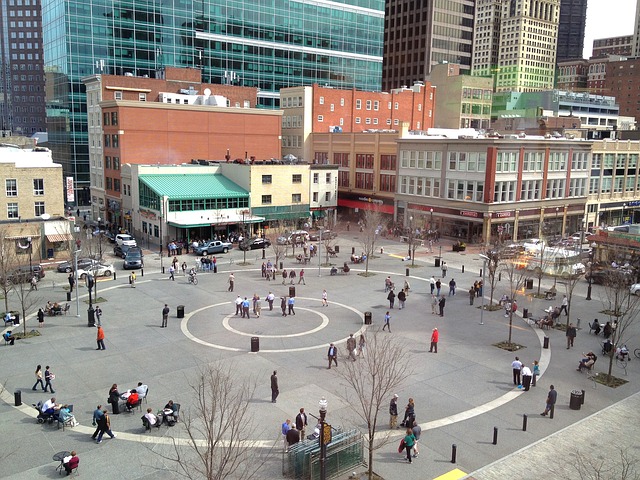
Photo from Pixabay.

Would you rise to the challenge?

Endurance, Fitness, Triathlon, Ironman

The author and his significant other, with Tom Knoll. The 81-year old is the guy in the middle, just to be clear.

A week ago I had the privilege of making the acquaintance of one of the original Iron Men.

Yes, I really mean one of the few who participated in the very first, the “inaugural” Iron Man Triathlon. In 1978. Before it was called Ironman; before it was a commercial brand. Well before you had to register a year in advance to participate.

Tom Knoll was at an even called Tri Mania being held at MIT in Cambridge (MA). It is a kind of traveling fitness expo dedicated to triathlon, visiting many cities over many weekends.

He was there to promote a triathlon race taking place in Atlantic City, and to sell his book, a kind of memoir of that very first Ironman distance triathlon.

There would be a lot to say about how that particular first event came to be, and I don’t want to undercut the sales of his book, but one thing struck me in particular, and that’s what I want to talk about today.

(By the way, the book is a quick read, and only $15, so if you get a chance, buy it. It is what books ought to be: a personal account of events, with a clear perspective and personality, not a manufactured product with an embellished story designed to captivate. Reality is captivating enough…)

Anyway, back to my point.

Tom Knoll was already a runner, and a career military man, when the event took place. A guy floated the idea of putting the event together, and started registering people. The date of the event was chosen in order for it to happen before two of the would-be participants had to ship out of Hawaii (more military folks, as you might guess).

So participants had a couple of months to train.

Yes, you read that right. A COUPLE of MONTHS. Not years, not many months. Two. (2).

And yet they rose to the challenge.

Not to win, not to compete against each other; just to see if it could be done.

Granted, these guys were fairly fit. They knew each other, for the most part, from running events in Hawaii. Some were swimmers with long distance credentials. Some had bikes already (some didn’t, or had not been riding much, or at all, since childhood).

Bottom line: The thought of attempting such a thing (which, just to be clear, had never been done at such distances, but already existed as a sport) was considered a little crazy, but a fun challenge. All they wanted to do was finish.

12 of them finished. Out of 15 who started.

Tom Knoll, although dead last out of the water (apparently, being in the Navy is no guarantee of strong swimming skills), came in 6th overall. He is “Ironman #6”. Only 5 before him ever completed an Ironman distance triathlon.

Here’s the kicker:

He was 46 at the time. The oldest of the bunch. Yet he rose to the challenge.

Not to win, not for recognition, not to go as fast as he could. But because it was a fun challenge.

Nowadays, we are too keen on competing, on going fast, on “being as good as we can be”, and we forget that we should be doing races because they are good for us. We should challenge ourselves not to be fast, but to go beyond our limits. (In a reasonable way, of course, so don’t go jumping into an Ironman race this summer because you read this. But do consider signing up for some race…)

Tom Knoll never participated again, but he continued to run. He has crossed the United States in both directions running. He has raised over a million dollars for charity with his running. He has remained active and fit throughout his life.

He is now 81, and still going strong.

What’s keeping you from rising to the challenge?

Thinking you are too old to begin? Too busy? Not fast enough to compete? Etc.?

Reconsider, please. And just do it because it is fun, and the right thing to do…


Photo credit: Some guy promoting the Atlantic City Challenge, using the author’s significant other’s iPhone.

Another Simple Idea

Movement, Meetings, Everyday

Need to meet? Step right out of your office…

I recently came across a very interesting segment of Quirks & Quarks, the science radio show of the Canadian Broadcasting Corporation.

It was about sitting for long periods of time, and how bad it is for our health. (The segment is from the March 22nd, 2014, show.)

Basically, if you spend lots of time sitting, you are putting the wrong kind of load on your bones, and causing a major slowdown of your metabolism. Even if you exercise regularly, which is better than being a total couch potato, sitting for long periods of time is detrimental to your health.

The only way to compensate is to move regularly. As in every few minutes.

So it reminded me of a tip for moving more that I had been meaning to write about. So here it is.

You’ve probably heard it before, but like most of us you’ve not done it yet. Now’s the time to try it. Take it as a challenge for the coming week.

It’s quite simple: Have a walking meeting.

It doesn’t matter if it is a business meeting, or a personal conversation; instead of sitting in an office, or a conference room, or at a restaurant, or on your couch at home, get up and go for a walk.

This is obviously easier to manage with one-on-one meetings, but it works really well. It adds a dynamic aspect to the discussion.

More importantly, it gets you, and your meeting partner, moving, instead of sitting.

Just don’t spring it on the person at the last minute. It is better to plan for it a little.

If you are a runner, and you know the person you are to meet with runs, you could even make it a running meeting. But that brings about possible complications that are better left for another post.

Walk first, run later…

Try it. Once. This week.

Then make it a new habit…

Photo from Pixabay.

From the Library of No-brainer Fitness

Books, Exercise, Diet, Willpower, Happiness, Paleo

So many books, so little time…

A really short post, for a change. You probably did not think it possible coming from me, yet here it is.

Here are books I’ve recently read, or am currently reading, and that I highly recommend. Perfect for a rainy Sunday afternoon…

The Paleo Diet for Athletes: The ancient nutritional formula for peak athletic performance. By Loren Cordain, Ph.D., and Joe Friel, M.S. Not exactly a day-to-day guide to nutrition since I don’t subscribe to everything that is “paleo”, but certainly an inspiration for reducing carbs and eliminating processed foods and NOT FOOD (a work in progress). I particularly like the pragmatic approach to eating paleo when doing endurance sports, which is of course not a strict paleo diet.

The Willpower Instinct: How self-control works, why it matters, and what you can do to get more of it. By Kelly McGonigal, Ph.D. This book is structured like the lecture series she gives at Stanford University, and contains exercises to be done week after week, so it takes a while to get through it in order to really benefit from the material. But it is worth the effort. One of the key elements for having more willpower is to be fit (exercise, sleep well, etc.), and of course some willpower is useful to keep us moving everyday. So it is a positive feedback loop.

Spark: The revolutionary new science of exercise and the brain. By John J. Ratey, MD. I just started this, after first encountering him in a FranklinCovey lecture and then listening to his TED talk, so too early to give a review, but very promising.

Eating on the Wild Side: The missing link to optimum health. By Jo Robinson. This is from an investigative journalist in the field of food (agriculture, nutrition, “field”, get it?). What’s really interesting is the discussion about changes some 10,000 years of human selection and hybridization of plants have made to what we put in our digestive systems. Basically, a truly paleo diet is impossible nowadays, because the food that existed then no longer exists. Case closed. A quick read, and quite enlightening, and many interesting tips that can be consumed over time.

The Happiness Advantage: The seven principles of positive psychology that fuel success and performance at work. By Shawn Achor. A bit of a personal thing, but highlighting how important it is to have a balanced life, to exercise, eat, and sleep well. Let’s face it: it is all inter-related.

All of the above are easy to find in either paper or electronic versions.

Next on my list is to read Dr. David L. Katz’s book on nutrition and health; once I’ve done that, I’ll likely spend much more time talking about it.

Good reading!

Photo from Pixabay.

In Praise of Coffee

NOT FOOD, Diet, Everyday

Coffee, can’t live without, or can we?

This post could also be called “Almost an Apology for Including Coffee in the List of NOT FOOD”.

A recent post, by which I fully stand, brought me some comments from people very close to me. (Ok, my wife and I had a conversation about it.)

You see, we both love coffee. As I’m sure many of you do.

Yet I went and put coffee on the list of NOT FOOD! Sacrilege!

Well, not quite.

Let’s be honest with ourselves: Coffee is NOT FOOD; it is a drug, albeit a mild one, but a drug nevertheless.

Most of us consume said drug not because we particularly enjoy the taste, but because we believe we need it for going about our daily activities. Or simply as a habit. Much of the blame for that falls squarely on our tendency to get too little sleep (more on sleep hygiene in a later post) and some on “just doing like everyone else”.

It is my contention that given a good regimen of everyday exercise, good sleep, and proper diet, the industry that has been built around coffee would collapse.

Or maybe not. Some people really like coffee. I’m one of those. The bitterer the better. So I drink my espresso black, and I have 2-3 short ones per day, or a short one and an “allongé”.  Almost always before noon.

And I can go days without having any. In fact, I was completely off coffee for many years, at one point in my life. (No, I don’t mean when I was a child, about which I have a funny story, for some other time.)

Coffee is likely here to stay. And that’s OK. As long as we are clear that it is NOT FOOD.

Therefore, when drinking your coffee, beware of the following:

  • It should not be a reflex action. Make it a conscious decision, and be fully aware of what that choice means. For instance, if you don’t like it black, be aware of how much sugar and/or milk/cream/other stuff is in there. Your coffee can all too rapidly become a calorie bomb, and in so doing negate any hoped-for gain in wakefulness by causing an insulin peak and an energy drop later. Then you get trapped in “needing” another coffee to “help” when in fact it is causing more harm. Not to mention the long-term effect of so many calories on your body.
  • A coffee should not automatically be accompanied of something sweet. Forget the doughnut (donut), cookie, chocolate, or whatever you may absent-mindedly just consume with your coffee. Not only is that likely also NOT FOOD, but it probably packs a punch of calories you don’t really need.
  • Coffee should definitely not be consumed regularly in the evening, or even afternoon. While many claim that it has no incidence on their ability to fall asleep, it may have a negative effect on the quality of that sleep. From sleeping badly, to waking up and not being able to fall back asleep. Then, having not slept enough during the night, the cycle of drinking coffee resumes in earnest in the morning.

But it is not all doom and gloom: You are probably not among those I describe in this post. I’m sure you manage your coffee intake well, and that you are aware that it is NOT FOOD. That’s key: knowing this, you can deal with it, and consciously decide to have some, once in a while. Or regularly. But on your terms.

Just in case, try this little trick: When you see a coffee, impose on the image a label that says “NOT FOOD”. That should trigger the correct reaction in your mind.

Then enjoy some, black, no sweets on the side. Or perhaps not black, and some sugar to “kill” the bitterness, but then only a small coffee, and something truly nutritious to dampen the sugar rush.

I know I will.

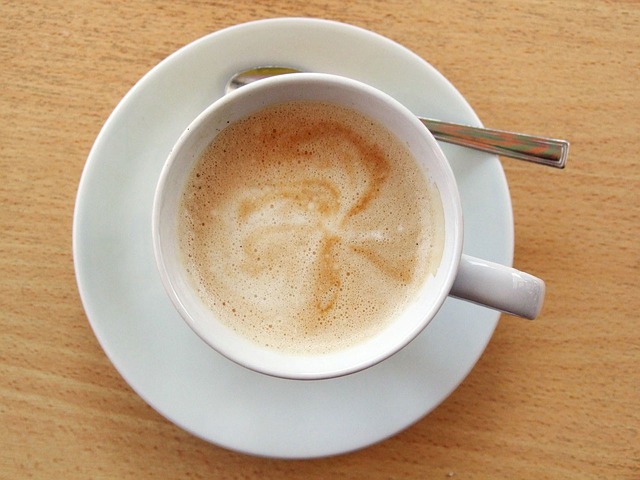
Photo from Pixabay.